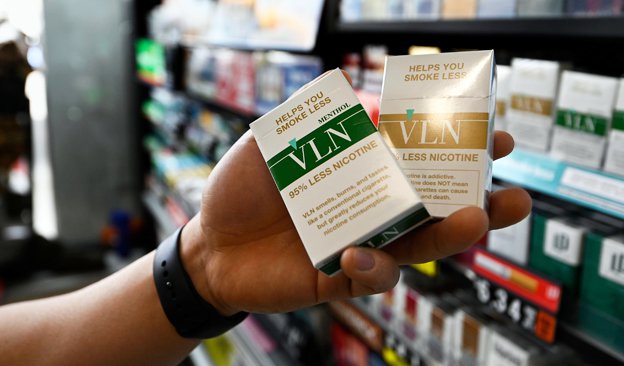
The U.S. Food and Drug Administration issued a proposed rule that, if finalized, would make cigarettes and some other combustible tobacco products minimally or nonaddictive by limiting the level of nicotine in those products. The proposed rule would not ban cigarettes or any other tobacco products. It would also not impact vaping products, heated tobacco products, or premium cigars.
The FDA is proposing to cap the nicotine level in cigarettes and certain other combusted tobacco products at 0.7 milligrams (mg) per gram of tobacco. The average combustible cigarette contains 10–12 mg of nicotine. However, the nicotine content can vary widely from brand to brand, ranging from 6–28 mg.
Many in the industry have commented that the rule is unlikely to gain further traction under the incoming Trump administration. According to Forbes, Trump’s biggest corporate donor for the 2024 election was RJ Reynolds, the owner of many cigarette brands, including Camel, Newport, Pall Mall, and Lucky Strike. Additionally, Susie Wiles, Trump’s 2024 Campaign Co-Chair and incoming Chief of Staff, was a tobacco lobbyist as recently as 2023, including for Swisher, a company that would be heavily impacted by the proposed rule.
If the rule is finalized, the United States would be the first globally to limit nicotine concentrations in some combustible products. The FDA first announced its intent to propose such a rule in 2018. It intends to seek input on the proposal through public comment and the FDA’s Tobacco Products Scientific Advisory Committee.
“Multiple administrations have acknowledged the immense opportunity that a proposal of this kind offers to address the burden of tobacco-related disease,” said FDA Commissioner Robert Califf. “[The] proposal envisions a future where it would be less likely for young people to use cigarettes and more individuals who currently smoke could quit or switch to less harmful products. This action, if finalized, could save many lives and dramatically reduce the burden of severe illness and disability, while also saving huge amounts of money. I hope we can all agree that significantly reducing the leading cause of preventable death and disease in the U.S. is an admirable goal we should all work toward.”
Based on the FDA’s population health model, by the year 2100, this nicotine product standard could prevent approximately 48 million U.S. youth and young adults from starting smoking, according to an FDA press release. The model also projects that more than 12.9 million people who smoke cigarettes would stop doing so one year after the rule becomes effective, including those who would completely switch to non-combusted tobacco products.
Additionally, the model estimates that by the year 2060, the product standard would prevent 1.8 million tobacco-related deaths, rising to 4.3 million deaths averted by the end of the century.
The FDA’s proposal would apply to cigarettes, cigarette tobacco, roll-your-own tobacco, most cigars (including little cigars, cigarillos, and most large cigars), and pipe tobacco. The proposed rule does not include e-cigarettes, nicotine pouches, noncombusted cigarettes (such as heated tobacco products that meet the definition of a cigarette), waterpipe tobacco (hookah), smokeless tobacco products, or premium cigars.
“We’re taking a critical step in the rulemaking process by providing the public with a proposal they can review and engage on,” said Brian King, director of the FDA’s Center for Tobacco Products. “This proposal allows for the start of an important conversation about how we meaningfully tackle one of the deadliest consumer products in history and profoundly change the landscape of tobacco product use in the United States.”