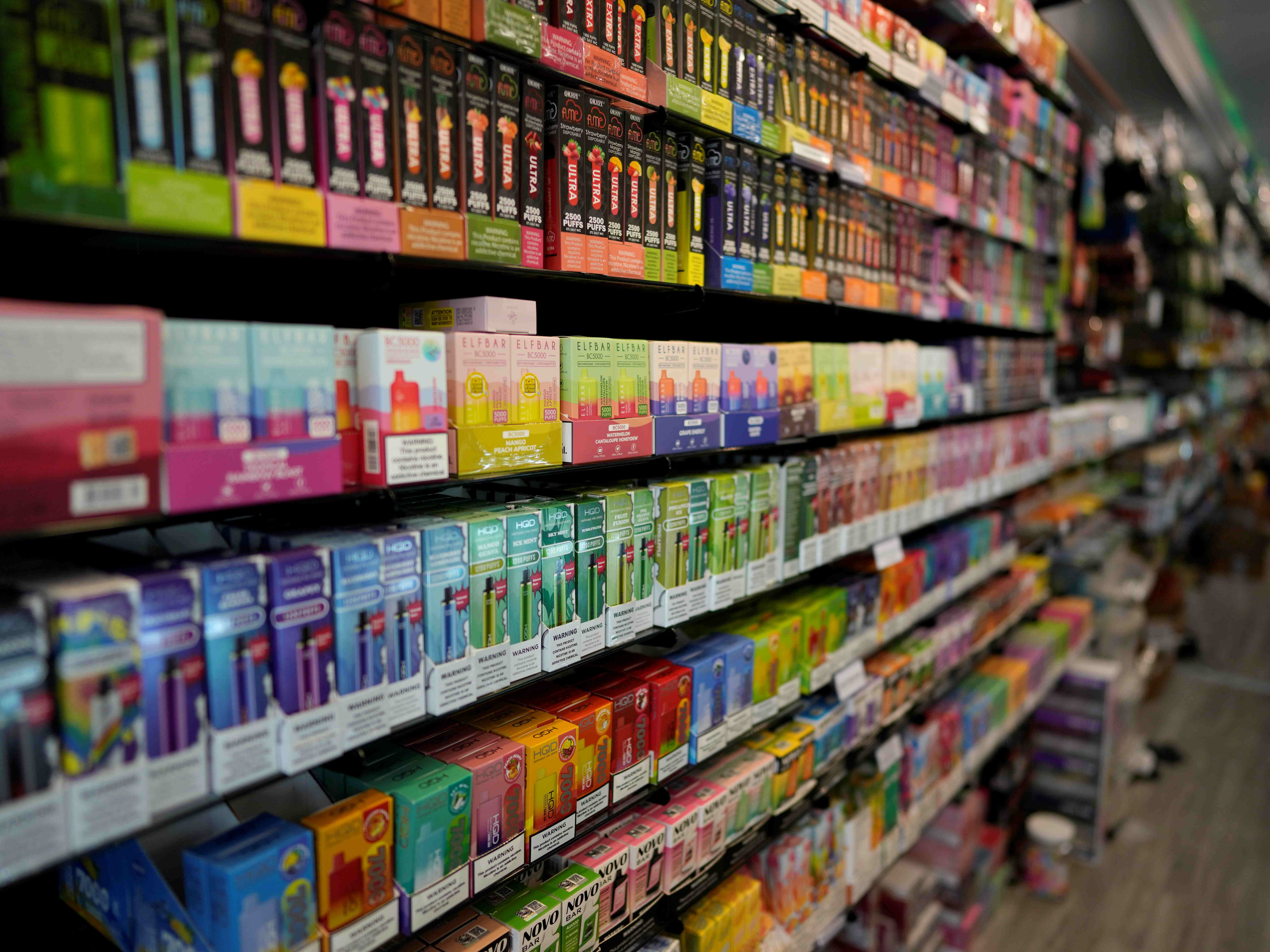
The Supreme Court is scheduled to hear oral arguments on Tuesday regarding whether RJ Reynolds Vapor Co. legally sought a favorable venue to contest the Food and Drug Administration’s rejection of its application to market menthol e-cigarettes.
Although the dispute may appear to be merely technical, the FDA argues that the implications are significant. If the lower court’s decision allowing RJR Vapor’s case to proceed is upheld, the FDA warns that other manufacturers may attempt to circumvent the restrictions imposed by federal law on where such challenges can be filed.
More broadly, the FDA cautions that the 5th Circuit’s ruling could pave the way for other plaintiffs to bring their challenges against federal agency actions in courts they believe will be more favorable to them. The FDA suggests that this kind of forum shopping is “harmful to the Judiciary.”
The case originated in the conservative U.S. Court of Appeals for the 5th Circuit, which is located in Louisiana. Joining the lawsuit are retailers, such as Avail Vapor Texas, from Texas and Mississippi, and the Mississippi Petroleum Marketers and Convenience Stores Association, all of which fall under the jurisdiction of the 5th Circuit.
In an unsigned order from the 5th Circuit, the majority – made up of Judge Edith Jones, a Reagan appointee, and Judge James Ho, a Trump appointee – explained that Avail Vapor and a trade association “are undisputedly in this circuit,” and they were “adversely affected by” the denial because the retailers indicated that they would go out of business if the denial stood.
The FDA argues that the provision requiring it to rule on applications for marketing e-cigarette products does not affect the interests of retailers like Avail or its trade group members. The agency maintains that when it issues an order regarding applications, such as those from RJR Vapor, the regulation “always or nearly always” pertains only to the manufacturer.
Any impact on retailers is described as indirect. Furthermore, the FDA asserts that RJR Vapor cannot depend on retailers to seek judicial review in the 5th Circuit. According to the FDA, the Tobacco Control Act specifies that an individual may only file a lawsuit in a circuit if they are based there.
Therefore, a manufacturer cannot sue based on the residence of a retailer. While there is a legal principle known as joinder that allows lawsuits that could have been filed separately to be brought and considered together, the FDA notes that this principle does not grant additional rights to the parties nor does it expand the court’s authority.
Since RJR Vapor is based and incorporated in North Carolina, it is not permitted to file a petition for review in the 5th Circuit, and it cannot join anyone else’s petition there. In response, RJR Vapor and the retailers argue that the Supreme Court does not have the jurisdiction to review this case at all.
They contend that the general federal law authorizing the Supreme Court to grant review does not extend this power to non-final orders in cases that originated in a court of appeals, rather than a federal trial court.
The case arose after the Food and Drug Administration denied RJR Vapor’s request to introduce three flavored vapes on the market. The FDA said the company failed to meet federal requirements concerning tobacco products’ marketing, but the company contends that the decision was arbitrary and capricious.
The federal appeals courts located there and in D.C. already had precedent on the books unfavorable to the manufacturer.
Under federal law, companies can challenge the FDA denying of a marketing order for a new tobacco product in Washington, D.C., or where the company’s principal place of business is located.
The 5th Circuit’s rule effectively enables it to host any tobacco company’s challenge, so long as its lawsuit is joined by a convenience store or other retail seller within the 5th Circuit’s borders—which span Louisiana, Mississippi and Texas.
No matter which way the justices rule, they are not expected to address the merits of the FDA’s denial. The Supreme Court only took up the question of whether the 5th Circuit was a proper venue.
“There is no circuit conflict over the meaning of this venue provision. And other vehicle problems abound,” the company wrote in court filings urging the justices to turn away the appeal.