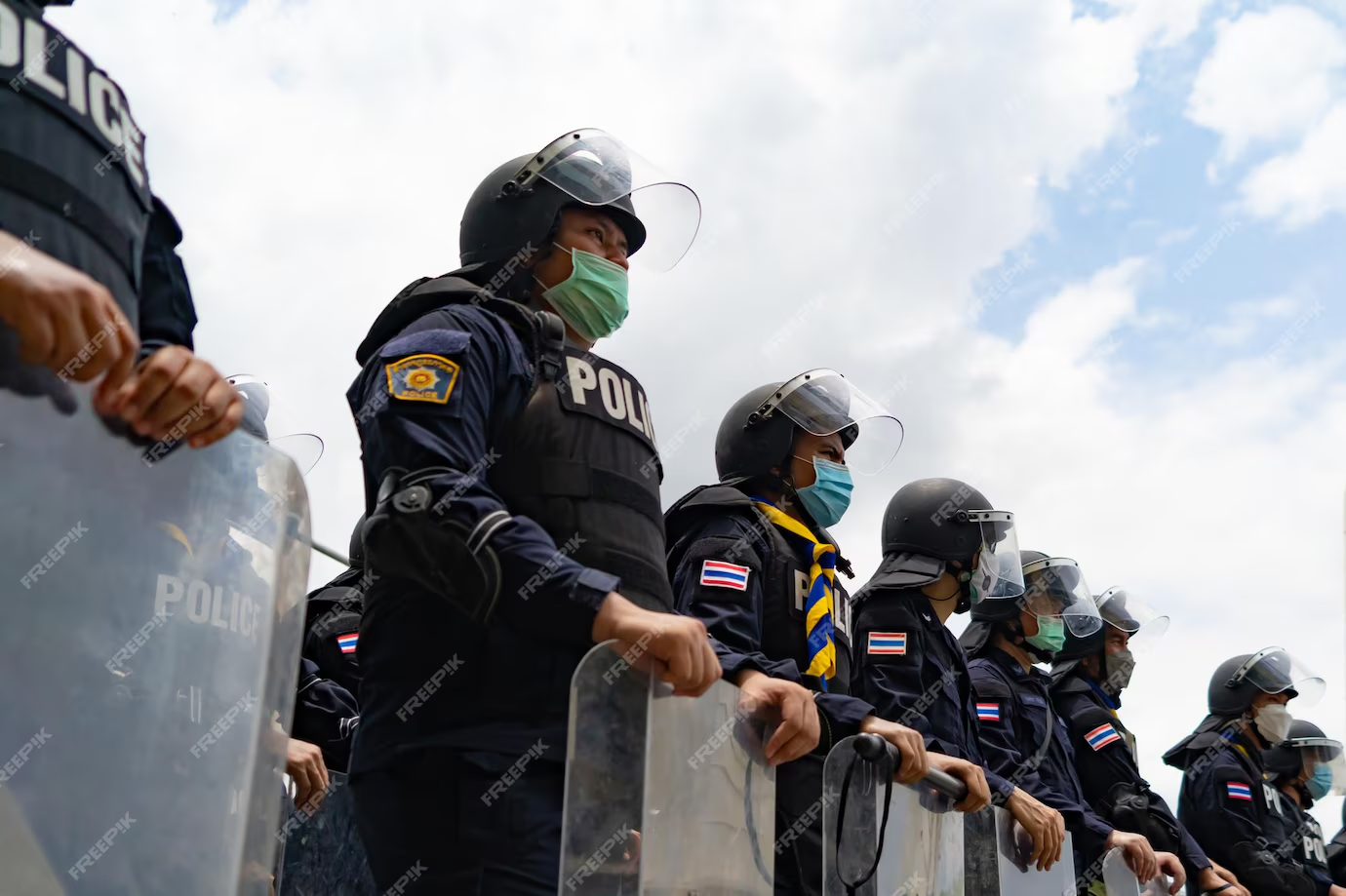
Thai authorities have seized more than 1.9 billion baht (US$57,000) in assets and arrested over 2,300 individuals in a nationwide crackdown on illegal activities linked to e-cigarettes and nitrous oxide, also known as laughing gas, over the past six months, according to the Royal Thai Police.
Deputy National Police Chief Prachuap Wongsuk, who serves as the director of the Anti-Money Laundering Centre, announced the results during a joint press conference with senior officials from the Anti-Money Laundering Office (AMLO), the Metropolitan Police Bureau, and other key police divisions.
Between October 1, 2024, and March 31, 2025, the Anti-Money Laundering Centre investigated 252 cases, leading to the seizure of assets worth 1.9 billion baht. From February 26 to April 6, police arrested 2,337 individuals and confiscated more than 1.6 million vape devices and products, with an estimated value of 296 million baht.
In 22 major cases, authorities tracked financial transactions that enabled the seizure of an additional 202 million baht in assets.
The sweeping operation is part of Prime Minister Paetongtarn Shinawatra’s broader policy to curb the rise of e-cigarette use in Thailand. The strategy involves not only removing illegal products from the market but also targeting offenders’ financial networks through asset seizures.
AMLO stated that offenses involving e-cigarettes, if tied to violations of the Customs Act, are also subject to prosecution under the Anti-Money Laundering Act. The dual approach allows for both criminal penalties and the forfeiture of assets, according to media reports.
Authorities are prioritizing enforcement around schools, warehouses, and online sellers. Efforts also include coordination with the Customs Department to stop smuggling at the border.
Wongsuk urged “continued vigilance,” noting that illegal e-cigarettes and nitrous oxide pose both public health risks.
An recent undercover survey in Taiwan showed that more than a quarter of tobacco retailers failed to verify the age of customers wearing school uniforms, according to the Health Promotion Administration (HPA).
Between May and November of last year, the Consumers’ Foundation carried out its annual compliance check by sending 20-year-old volunteers dressed in high school uniforms to attempt cigarette purchases at 854 retail locations nationwide. The results showed that 26.9% of stores did not request identification.