By Timothy S. Donahue
Key Points:
- Acting USPTO Director Coke Morgan Stewart vacated a PTAB decision denying an inter partes review (IPR) petition filed by Ecto World LLC against RAI Strategic Holdings’ vaping patent.
- The decision establishes new rules around the use of previously submitted prior art (known as IDS-cited art) in patent challenges—creating clearer, but stricter, expectations for petitioners.
- The decision stresses the need for the PTAB to consider prior district court rulings on patent validity when evaluating IPR petitions.
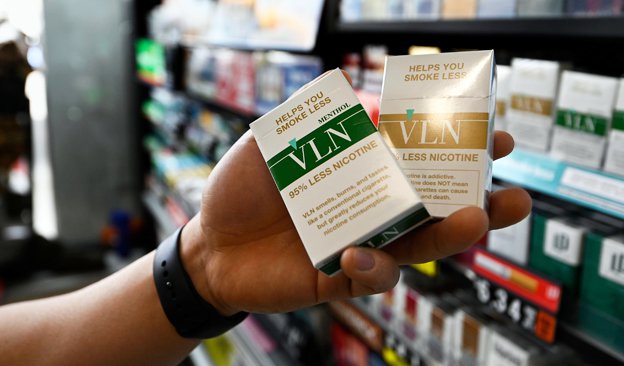
Acting U.S. Patent and Trademark Office (USPTO) Director Coke Morgan Stewart has reversed a prior Patent Trial and Appeal Board (PTAB) ruling that denied a patent challenge from vape device maker Ecto World LLC. The ruling, involving U.S. Patent No. 11,925,202 held by RAI Strategic Holdings, not only revives a major e-cigarette patent dispute, but also establishes a new USPTO precedent that could reshape future patent litigation strategies in the nicotine and cannabis sectors.
In the case—Ecto World, LLC v. RAI Strategic Holdings, Inc., IPR2024-01280 Ecto World sought inter partes review (IPR) of RAI’s patent, which relates to vaping device technology. The PTAB initially denied the petition, arguing that the cited prior art (previous technical documents or patents) had already been considered by the original patent examiner—a concept known as “IDS-cited art” (Information Disclosure Statement).
But in her May 19 decision, Stewart overruled that denial, clarifying how and when previously reviewed information can be used in IPR petitions. In simple terms, the USPTO is now saying: if you want to challenge a patent based on art that the patent examiner already looked at, you need to clearly explain how the examiner made a mistake.
“Where the prior art was previously presented to the USPTO,” Stewart wrote, “a petitioner must provide compelling evidence or reasoning as to why the examiner materially erred in granting the patent over that art.”
What It Means
For companies in the nicotine and cannabis hardware sectors—where patents are increasingly central to competition—the ruling is both a green light and a caution flag. It signals that while challenges to existing patents are still very possible, petitioners must come prepared with a strong, well-explained case if they’re relying on old evidence.
In layman’s terms: you can’t just recycle prior art and hope for a second opinion—you need to explain what the examiner missed the first time.
But Stewart also carved out a narrow exception for what she referred to as “mega-IDSs”—cases where patent applicants flood the USPTO with hundreds or thousands of documents, sometimes more than 1,000 pages long. In those situations, if the examiner simply logged the documents but didn’t substantively analyze them, petitioners may not have to meet the same burden.
“This decision provides important clarity,” said a legal source familiar with PTAB practice. “It helps weed out weak challenges but still allows meaningful review when prior art was overlooked or buried in an avalanche of paperwork.”
Stewart’s decision comes amid a growing number of patent fights in the vaping space. Larger tobacco companies like Reynolds and Altria have increasingly weaponized patents to protect market share, while smaller firms have sought to invalidate broad or overly vague claims that could block innovation.
Ecto World’s petition is one of several efforts by smaller players to push back against such patents. The ruling effectively gives these challengers a second chance—but only if they do the legal homework.
Meanwhile, Stewart’s designation of the decision as precedential—meaning it must be followed by future PTAB panels—marks a clear shift in USPTO policy. It follows her earlier rollback of the so-called NHK-Fintiv rule, which allowed the board to deny patent reviews if there was overlapping court litigation.
Together, these policy changes reflect a broader effort to make patent litigation more predictable and less prone to discretionary denials, which have frustrated many in the vaping and cannabis sectors.
Why It Matters
If you’re a nicotine industry stakeholders defending a patent, expect tougher scrutiny when prior art is in play. If you’re challenging one, know that you must now build a detailed case showing the examiner got it wrong—especially if the documents were already reviewed, the expert said.
At the same time, if the patent was granted based on an enormous IDS filing, the USPTO might not treat that as a full review—opening the door for challengers to make their case. The Ecto World v. RAI decision reaffirms that the PTAB remains a viable battleground for intellectual property disputes—but the rules just got more refined.