By Timothy S. Donahue
Top Takeaways:
- The UK’s ban on disposable vapes begins Today, June 1, aiming to curb youth use and reduce e-waste.
- Retailers report hoarding and stockpiling by consumers ahead of the deadline.
- Critics warn the move may push users back to cigarettes and fuel black-market sales.
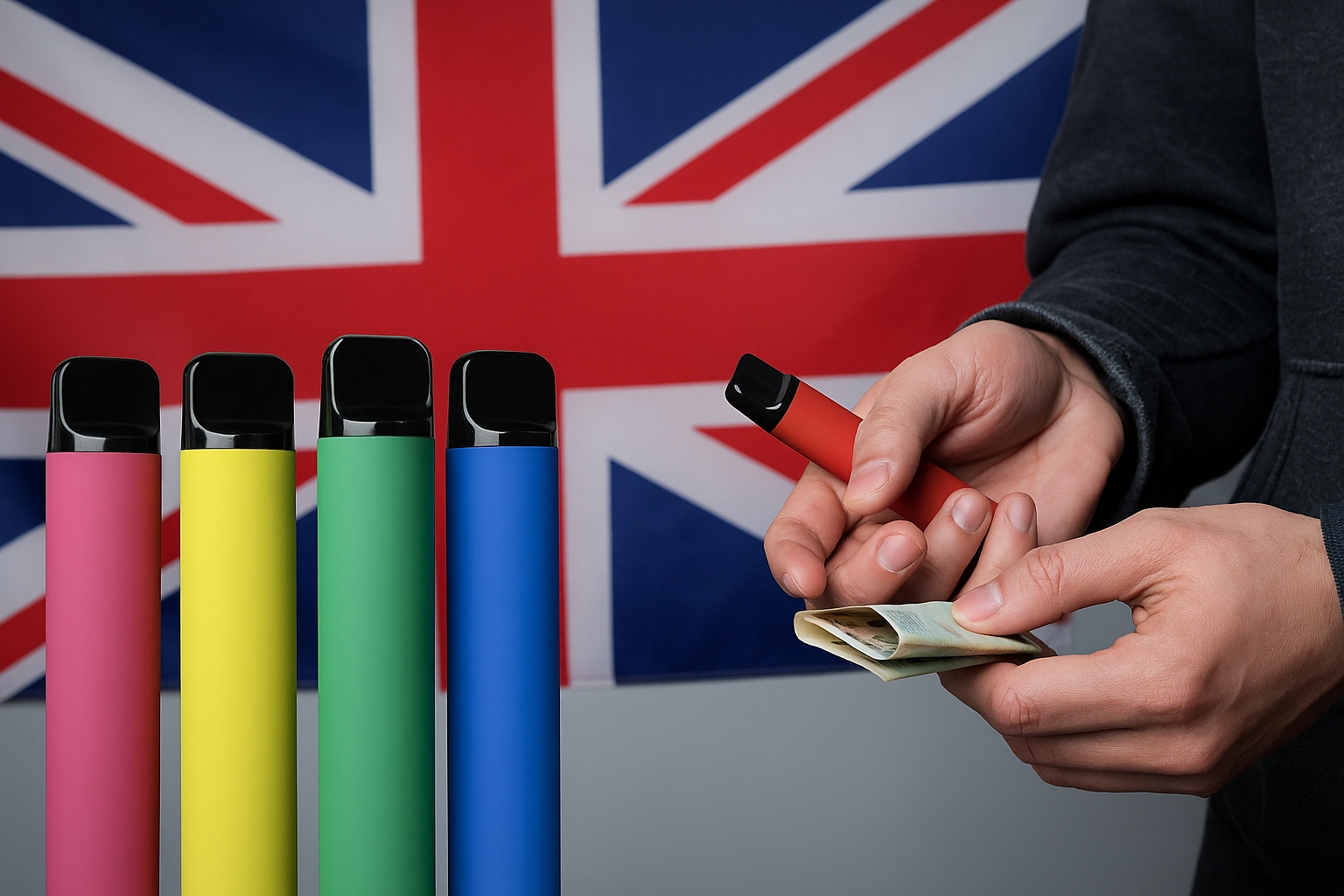
The UK government’s nationwide ban on the sale and supply of disposable vapes officially took effect on June 1, marking a significant step in its broader public health and environmental strategy. The ban covers all single-use vapes and applies across England, Scotland, Wales, and Northern Ireland.
Retailers say the weeks leading up to the ban were marked by a rush of consumer stockpiling, with many shops offering steep discounts to clear inventory. “I’m not sure what we are going to do. I’ve been buying boxes of them from my local discount store,” said one customer in a BBC interview. Dan Marchant, co-founder of the UK Vaping Industry Association, added, “Buying a disposable vape is like buying a packet of cigarettes – just nip to the shop and get one over the counter.”
Under the new rules, Trading Standards officers will be responsible for enforcement. Businesses caught selling banned products face immediate fines of £200 and could incur more severe penalties, including prosecution. Retailers are encouraged to shift toward refillable, rechargeable vape models and ensure the proper disposal of remaining stock.
Environmental Goals
The move follows rising concern over both the environmental toll of disposables and their popularity among youth. According to the Department for Environment, Food & Rural Affairs (Defra), nearly five million disposable vapes were discarded each week in 2023. The products, often containing lithium-ion batteries, contribute significantly to e-waste and have been linked to fires in waste processing facilities.
Mary Creagh, Circular Economy Minister, emphasized the importance of the legislation: “For too long, single-use vapes have blighted our streets as litter and hooked our children on nicotine. That ends today.”
At the same time, public health advocates and vaping industry leaders are divided over the potential consequences. Critics argue that removing a popular reduced-risk product from the market could drive former smokers back to combustible cigarettes. A report by the Future Health Research Centre warned that up to 200,000 users might relapse without access to affordable alternatives.
Hazel Cheeseman, chief executive of Action on Smoking and Health (ASH), noted that the new refillable models are “very similar to single-use vapes,” and questioned how much impact the change would actually have on usage trends.
Policy Balance
While the UK government frames the ban as a dual win for youth protection and sustainability, the long-term results remain uncertain. Supporters believe it could lead to cleaner streets and better public health outcomes, while skeptics point to gaps in cessation support and the potential for an unregulated black market.
The effectiveness of the policy will likely depend on enforcement, consumer education, and the availability of viable alternatives. Regulators and health officials are expected to monitor the transition closely in the coming months.