Top Takeaways:
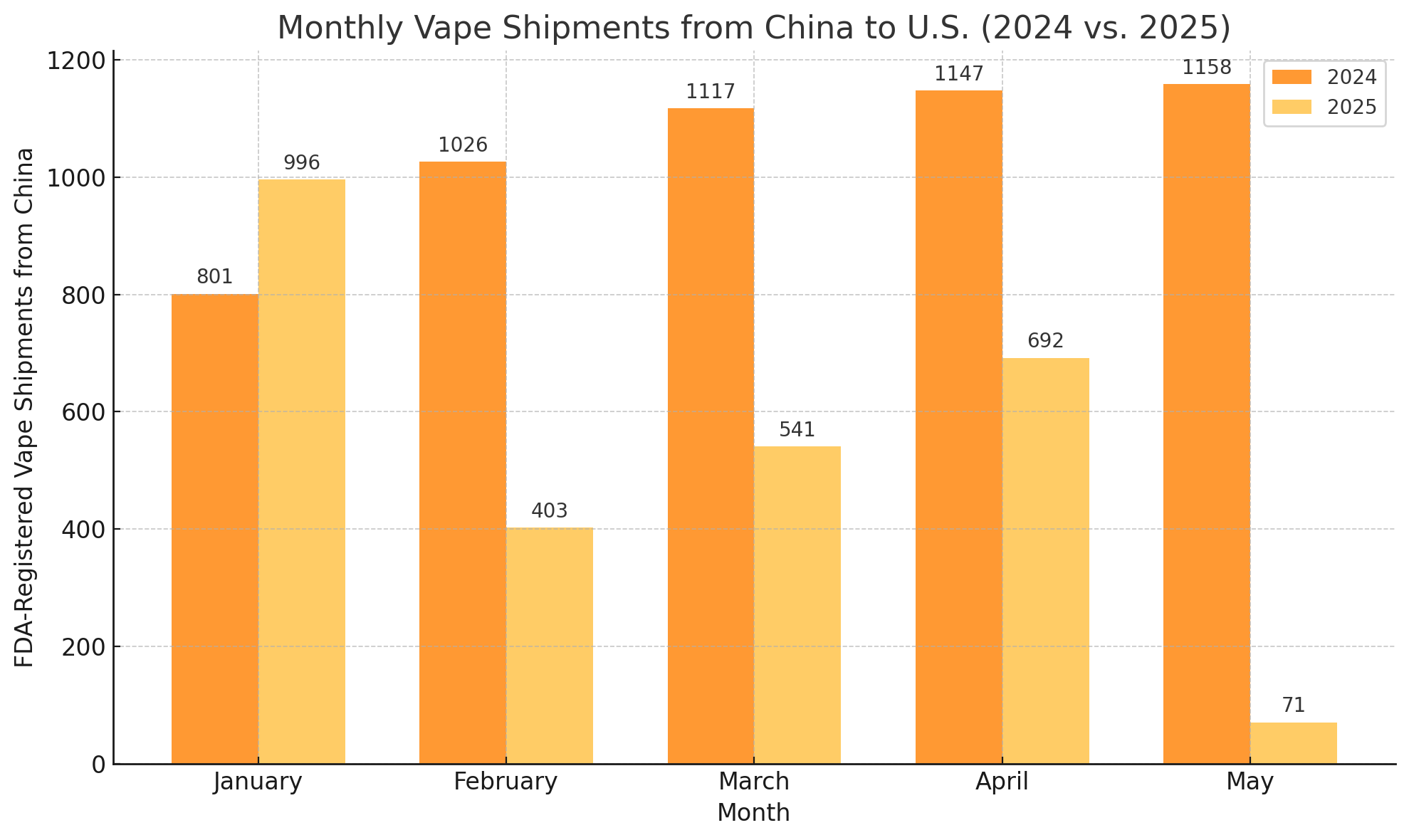
- Imports of Chinese vapes like Geek Bar have collapsed under a combination of steep U.S. tariffs and federal enforcement, with shipments dropping from nearly 1,200 to just 71 in May year-over-year.
- Retailers are reporting severe shortages and rising prices, with some suppliers now receiving only 10 boxes per week, down from 100, due to reduced production and import limitations.
- Despite enforcement and price hikes, consumer demand remains resilient, with users continuing to purchase products even amid legal uncertainty and potential cost increases.
U.S. retailers are struggling to restock popular disposable vape brands like EB Designs and Geek Bar as imports from China have plunged in recent months under intensified federal enforcement and aggressive tariffs imposed by the Trump administration.
According to data from the U.S. Food and Drug Administration, only 71 vape shipments from China were recorded between May 1 and May 28, compared to nearly 1,200 during the same period last year. The sharp drop-off follows months of declining import volumes and reflects both the economic strain of tariffs and a broader crackdown on unauthorized flavored vapes, industry sources told Reuters.
“Due to increased tariffs, rising production costs, and reduced supply chain capacity, the manufacturer has informed us that they will be reducing supply volume in the near term,” one regional U.S. Geek Bar wholesaler told customers in an April 22 email reviewed by the news agency.
The disruption stems in large part from the Trump administration’s decision to impose steep tariffs on Chinese-made goods. Those levies initially peaked at 145% in April before settling at 30%, dramatically increasing the cost of importing vaping products into the U.S. The impact has been especially acute for brands like EB Designs and Geek Bar, which lack FDA marketing authorization but had been widely available due to historically lax import enforcement.
One vape retailer, speaking on condition of anonymity, said their supplier had gone from receiving 100 boxes of Geek Bar vapes weekly to just 10. Another imposed strict purchase limits. “There were a lot of supply chain issues during COVID-19,” the retailer said. “But I’ve never seen this.”
Despite the bottlenecks, industry insiders suggest that sales are likely to continue. “If the price goes up, the price goes up,” one U.S. distributor said. “We’re talking about nicotine here.” He noted that consumers dependent on vaping are unlikely to stop purchasing even if prices rise by $5 or more. Geek Bar devices currently retail for about $20.
Luis Pinto, spokesperson for British American Tobacco’s U.S. division, confirmed that tariffs are having an impact but said it likely won’t be enough to curb consumer use. “It will increase prices but probably not to the point where it is a barrier to usage,” he said.
Most of the world’s vape devices are manufactured in Shenzhen, China. Some of these facilities produce legal products for multinational tobacco firms such as Japan Tobacco International and Philip Morris, but many also manufacture unregulated vapes that are not cleared for sale in the U.S.
The FDA has ramped up enforcement against unauthorized imports, supported by actions from Customs and Border Protection. In recent months, the agency has made headlines for high-profile seizures and increased pressure on retailers, distributors, and logistics providers handling illicit shipments.
The collapse in Chinese vape imports comes at a time when the U.S. market for smoking alternatives remains large but fragmented. While brands like Vuse (BAT), NJOY (Altria), and Logic (Japan Tobacco) are the only ones with full FDA authorization, dozens of unauthorized products — especially flavored disposables — still command a significant share of convenience store and online sales.
The Biden administration had largely continued the FDA’s enforcement-first approach, though industry insiders argue that the FDA’s opaque and prolonged premarket tobacco product application (PMTA) process has contributed to the rise of the gray market.
Meanwhile, brands like Geek Bar — manufactured by China’s Guangdong Qisitech — operate in a legal gray area. While their products are not authorized for sale in the U.S., they remain popular due to their wide variety of flavors and relatively low prices.
Guangdong Qisitech did not respond to a request for comment.
As the combination of tariffs and enforcement tightens access to Chinese vapes, the market may see increased pressure on U.S.-based distributors and further consolidation around the few brands that have secured FDA authorization. However, unless domestic manufacturers step in to fill the supply gap, shortages and price hikes could continue to frustrate consumers — and retailers — for months to come.