Top Takeaways:
- 22nd Century Group has secured expanded state authorizations for its VLN reduced nicotine cigarettes and partner products, now reaching up to 45 states with several new launches expected in the second half of 2025.
- The company aims to have VLN products available nationwide by the close of the FDA’s public comment period on its proposed Low Nicotine Mandate in September 2025.
- Critics warn that reduced nicotine cigarettes could lead to increased cigarette consumption, as smokers may use more to achieve desired nicotine levels.
22nd Century Group, Inc. (Nasdaq: XXII) announced a significant expansion of state-level approvals for its proprietary and partner brands of reduced nicotine cigarettes.
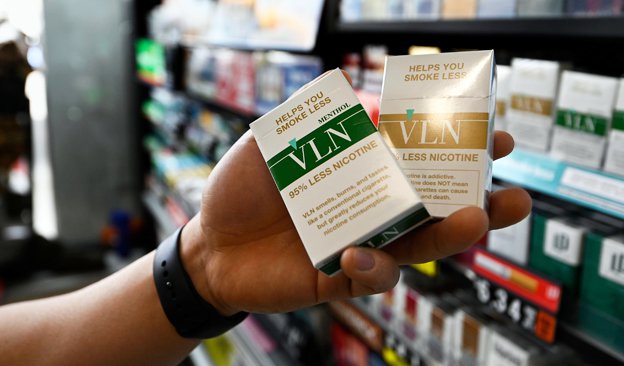
The company said it now holds authorization to sell its VLN Gold and Green products in 41 states and its newly introduced VLN Red in 21 states. In total, 22nd Century’s VLN and Smoker Friendly-branded cigarettes—engineered to contain 95% less nicotine than conventional products—are authorized for sale in as many as 45 states, depending on the SKU. The move increases the company’s U.S. market presence ahead of a potential federal nicotine mandate.
“The most recent state authorizations will open even more new markets as we drive toward approval to sell VLN-based products in all 50 states,” said Larry Firestone, CEO of 22nd Century Group. “This demonstrates to the FDA that VLN based products can be available on a nationwide basis by the close of its proposed Low Nicotine Mandate comment period in mid-September.”
The FDA’s proposed mandate, originally issued under the Trump administration in 2018 and reissued in January 2025, would require all combustible cigarettes sold in the U.S. to have minimally addictive levels of nicotine. 22nd Century’s VLN is currently the only authorized combustible product that complies with this threshold.
According to Firestone, over 2,000 retail outlets are already preparing to roll out VLN and partner VLN brands in the second half of 2025, with additional retail partnerships in development. The company has also begun to explore international expansion.
“With more than 272,000 U.S. retail outlets that sell tobacco products, 22nd Century and its partners have a tremendous untapped market opportunity,” Firestone said.
The company emphasizes that its technology, based on proprietary tobacco plants and patented biosynthesis modifications, enables the production of combustible cigarettes with 95% less nicotine than traditional varieties.
The strategy isn’t without critics. Public health experts and tobacco harm reduction advocates have long debated whether low-nicotine cigarettes might encourage compensatory smoking—where users consume more cigarettes to maintain their nicotine intake.
A 2022 review published in Addiction noted that while very low nicotine content cigarettes reduced dependence and intake in many studies, there is still concern that some smokers may smoke more frequently or inhale more deeply.
The U.S. Centers for Disease Control and Prevention has acknowledged this concern, though it has also cited research indicating that, under controlled conditions, reduced nicotine cigarettes lead to lower overall exposure to toxicants.
The potential for such unintended consequences is likely to be a central issue in the FDA’s ongoing regulatory process. In the meantime, 22nd Century is positioning itself as the only company ready to meet the agency’s proposed mandate with a compliant, legal, and scalable combustible product.