Top Takeaways:
- Office of the U.S. Trade Representative (USTR) on Oct. 20, 2025 determined under Section 301 that Nicaragua’s labor-rights, human-rights and rule-of-law violations are “unreasonable” and “burden or restrict U.S. commerce.”
- Among the possible responsive actions: suspending Nicaragua’s benefits under Dominican Republic‑Central America‑United States Free Trade Agreement (CAFTA-DR) and imposing tariffs of up to 100% on Nicaraguan imports — a move that could significantly impact the country’s handmade-cigar exports to the U.S. market.
- While the report doesn’t target cigars explicitly, Nicaragua is a major exporter of handmade cigars to the U.S., and its current tariff rate on cigars is 18%. The threatened sanctions could dramatically raise that rate and reshape the trade in premium cigars.
By Timothy S. Donahue
In a decisive escalation of trade enforcement, the Office of the United States Trade Representative (USTR) stated it had found that the Republic of Nicaragua’s “acts, policies, and practices” concerning labor rights, human rights and the rule of law are “unreasonable and burden or restrict U.S. commerce” under Section 301(b)(1) of the Trade Act of 1974.
A report released by USTR on October 20 found that Nicaragua’s practices include forced and child labor, suppression of workers’ rights to organize, property seizures, and dismantling of judicial protections. The findings could lead to various trade sanctions.
“Section 301 authorizes the Trade Representative to take all appropriate and practicable actions, subject to the direction of the President, to achieve the elimination of such acts, policies, and practices,” states the resolution published in the Federal Register.
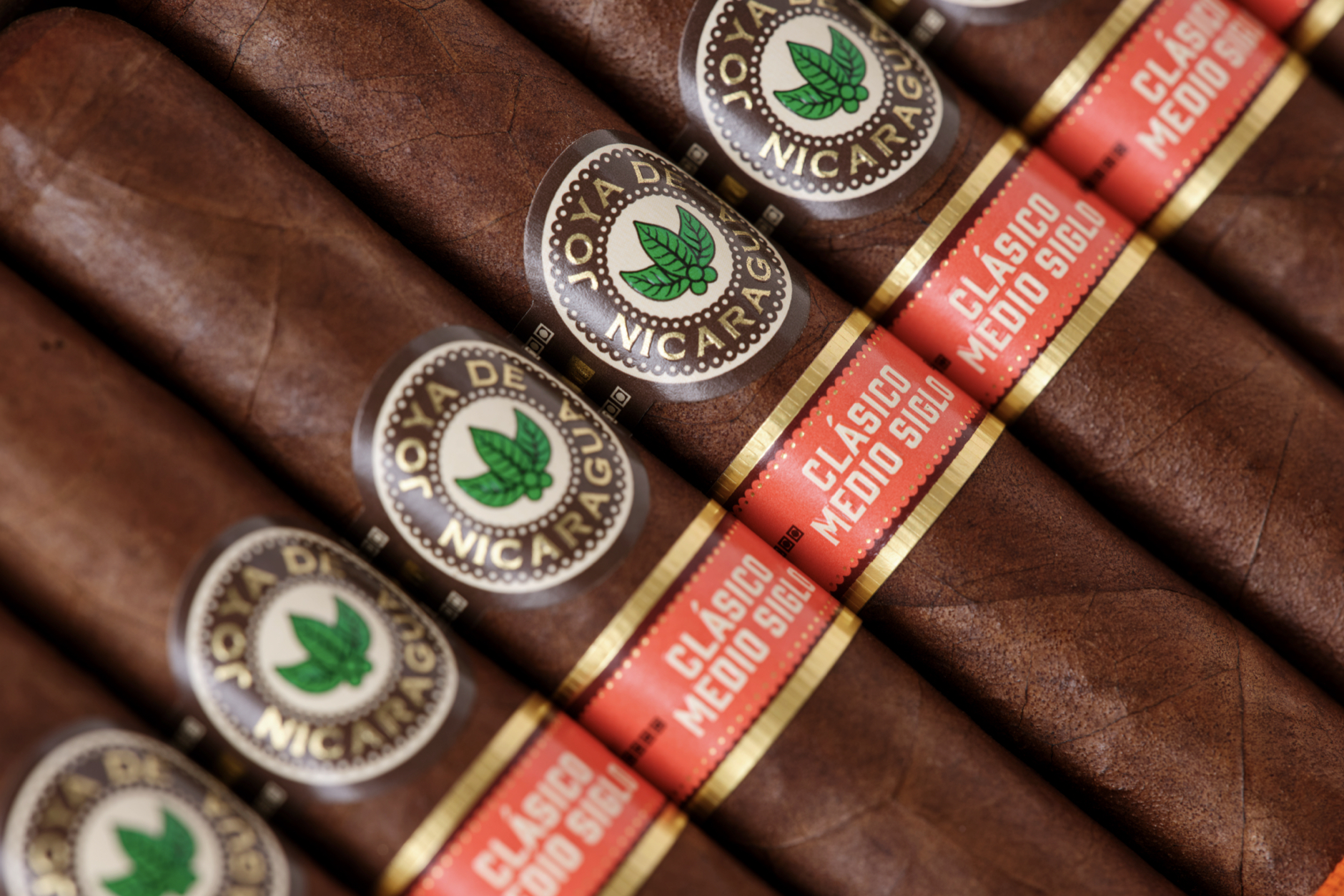
Although the report does not specifically target the tobacco or cigar industry, it comes at a time when Nicaragua is the leading supplier of handmade premium cigars to the U.S. and currently benefits from the Central America-Dominican Republic Free Trade Agreement (CAFTA-DR). Experts say the impact on the premium cigar market could be significant if USTR proceeds with its proposed retaliatory measures.
Industry Implications
The USTR outlines four possible responsive actions:
- Suspension of all CAFTA-DR benefits for Nicaragua immediately or phased out within 12 months.
- Suspension of some CAFTA-DR benefits under the same timetable.
- Imposition of tariffs up to 100% on all imports from Nicaragua, under the same timetable.
- Imposition of tariffs up to 100% on selected sectors of Nicaraguan exports, with further tariffs phased in.
The premium cigar industry faces high stakes. Nicaragua now supplies over half of all U.S. premium handmade cigar imports — the U.S. market remains dominant and closely connected with Nicaraguan leaf, production, and export capacity.
Under the current system, handmade premium cigars from Nicaragua face an 18% tariff. Increasing tariffs to 100% would make Nicaraguan cigars uncompetitive for many U.S. importers. This change would likely force brands to absorb huge cost increases or shift production elsewhere, such as Ecuador or Honduras.
Importers and retailers may face higher wholesale costs that lead to increased shelf prices. Cigar-industry experts estimate that an 18% tariff alone added more than $1 to $2 per cigar in retail price; a 100% tariff would significantly amplify these effects, according to Domain Cigars LLC co-founder Daniel Lance.
In a recent YouTube commentary, Lance addressed the proposals head-on. “That’s not a joke … What if your favorite Nicaraguan cigar suddenly cost twice as much?” he asked.
He said his company, which contracts production solely in Nicaragua under CAFTA-DR and supports over 5,000 U.S. brick-and-mortar retailers, already has over $750,000 worth of finished goods in transit, produced under current rules and pricing. Lance said sweeping tariffs would “turn a humidor into a cryo-door,” meaning cigars may sit for years because the high prices would drive consumers away.
Retailers and industry groups are already raising concerns. The Premium Cigar Association (PCA) has previously highlighted that many U.S. stores operate on narrow margins and cannot absorb sudden cost increases without passing them on to consumers or cutting back on inventory. Likewise, the Cigar Rights of America (CRA) warns aficionados about the potential for fewer premium cigar lines and small-batch options if Nicaraguan output or U.S. imports falter.
From a field perspective, Nicaraguan manufacturers and U.S. importers are already reviewing logistics and contingency plans. With inventory lead times measured in months and replenishment cycles now open to revision, some brands are considering relocating manufacturing and potentially sourcing leaf from the Dominican Republic or Honduras — although at potentially higher costs and with different tobacco profile implications.
Speaking Out
The USTR’s notice begins a comment period that lasts until November 19. Interested parties — including cigar manufacturers, importers, retailers, and consumers — can submit written comments or request to testify before a final remedy is decided and the President gives approval.
The cigar industry is preparing for a time of uncertainty. Given the scale of U.S. imports from Nicaragua and the premium cigar industry’s reliance on production under CAFTA-DR, the sector faces three plausible if drastic outcomes:
- A negotiated settlement short of full sanctions — maintaining current trade flows but triggering stricter labor-rights compliance.
- A moderate tariff increase <100%, forcing incremental cost-shifts but preserving U.S. access to Nicaraguan products.
- Full suspension of CAFTA-DR benefits plus a near-100% tariff, leading to major supply-chain realignments, price hikes for consumers, and potential contraction of Nicaraguan factory output.
The industry is at a critical turning point. The Trump Administration’s decision on whether to implement 100% tariffs will significantly impact how cigar brands, importers, and retailers adjust their sourcing, pricing, and inventory strategies to survive in an increasingly unpredictable U.S. tariff policy environment.
However, Congress or Trump himself could take action to exclude the premium cigar industry from these and future tariff hikes. Lance’s appeal to Washington, D.C. is structured around four requests:
- Exclude premium cigars (HS code 2402) from any new tariffs and/or CAFTA-DR suspension.
- Establish a verified compliance safe harbor for companies that can demonstrate full labor and human rights adherence in Nicaragua.
- Use a low cap and gradual phase-in for any tariff increases and grandfather existing contracts and inventory.
- Maintain regional cumulation (supply chain inputs across Central America) for compliant operators.
“We support enforcement that targets bad actors,” said Lance. “We do not support blanket penalties that punish responsible companies such as ours and thousands of American small businesses.”
The CAFTA-DR threat has a history. The Section 301 investigation was initiated in 2024 during President Joe Biden’s administration by former U.S. Trade Representative Katherine Tai.
The Biden administration examined possible violations by Nicaragua’s major textile industry, especially whether the use of forced or child labor allowed for prices that U.S. companies couldn’t match. That investigation started after Milliken & Company, one of the largest textile companies in the world, accused a Chinese-owned business in Nicaragua of using cotton from Xinjiang, a region heavily populated by Uyghurs, a group the Chinese government has been accused of mistreating.
For now, the premium-cigar community will be watching closely as trade policy, human rights scrutiny, and product supply converge—all under the unresolved question of whether U.S. trade leverage will induce structural change or trigger market shocks, especially if the U.S. decides to raise tariffs on other cigar-producing countries in the CAFTA-DR, such as Costa Rica, the Dominican Republic, El Salvador, Guatemala, and Honduras.