By Timothy S. Donahue
Top Takeaways:
- Possession of e-cigarettes is illegal in Singapore and can trigger fines, confiscation, deportation, and reentry bans.
- The warning is targeting deployed personnel tied to the U.S. Navy presence supporting 7th Fleet operations in Southeast Asia.
- Enforcement has intensified since Sept. 1, and vaping liquids containing etomidate carry severe criminal penalties.
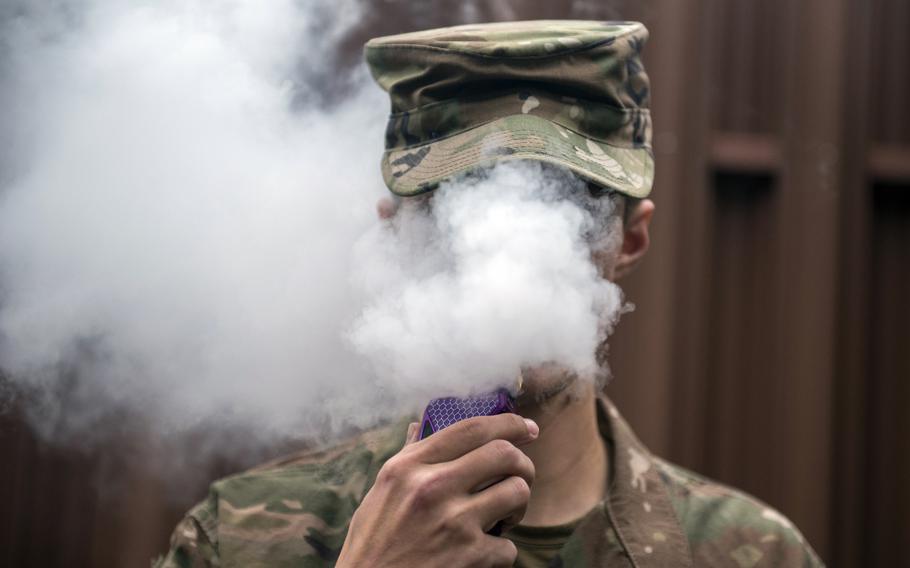
The U.S. military advises service members to leave electronic cigarettes at home when traveling to Singapore, where owning vaping products is illegal and can lead to hefty fines, confiscation, deportation, and permanent bans on reentry.
The warning was broadcast on American Forces Network TV as Singapore increased enforcement of its long-standing vape ban since September 1. Under Singapore law, importing, selling, and possessing e-cigarettes are prohibited, no matter the nicotine content.
Vaping is illegal in Singapore,” the government states on its public website, warning that many devices contain addictive and harmful substances and pose a public health risk. Foreigners caught with vaping products face fines and confiscation for a first offense, with deportation and reentry bans possible for repeat violations.
Singapore hosts the U.S. Navy’s Logistics Group Western Pacific/Task Force 73, which manages logistics and support operations for the Yokosuka-based 7th Fleet across Southeast Asia. Destroyer Squadron 7, also based in Singapore, commands the littoral combat ships that rotate through the region.
The U.S. 7th Fleet has not confirmed if any sailors recently violated Singapore’s vaping laws. Cmdr. Matthew Comer, a fleet spokesman, said service members get mandatory training before visiting foreign ports.
“The Navy conducts legal and cultural training prior to every foreign port visit to ensure Sailors serve as exemplary ambassadors while operating and living overseas,” Comer said in an email to Stripes.com. He referred further questions to Singapore’s official vaping information website.
Enforcement efforts have also increased around etomidate, a potent anesthetic that Singapore classifies as a controlled substance and that has been found in some illegal vaping products. So-called “Kpods” — vape liquids often mixed with etomidate — have become an increasing public concern, according to a December 16 report by The Straits Times citing social service agencies.
Under Singapore law, individuals who import, sell, or distribute e-vaporizers containing etomidate face penalties of up to 20 years in prison and 15 strokes of the cane, according to the government’s website.
Singapore has upheld some of the world’s strictest vaping bans as part of its broader tobacco-control efforts, standing in contrast to the growing legalization of nicotine pouches, heated tobacco, and e-cigarette products across much of Europe and North America.