By Timothy S. Donahue
Top Takeaways:
- New York has initiated a multi-site pilot program to test safer systems for collecting and disposing of discarded vaping devices.
- The initiative involves regulatory review, real-world operations testing, and comprehensive cost-structure analysis.
- A final report will inform potential statewide policies and program implementations related to New York’s solid waste goals.
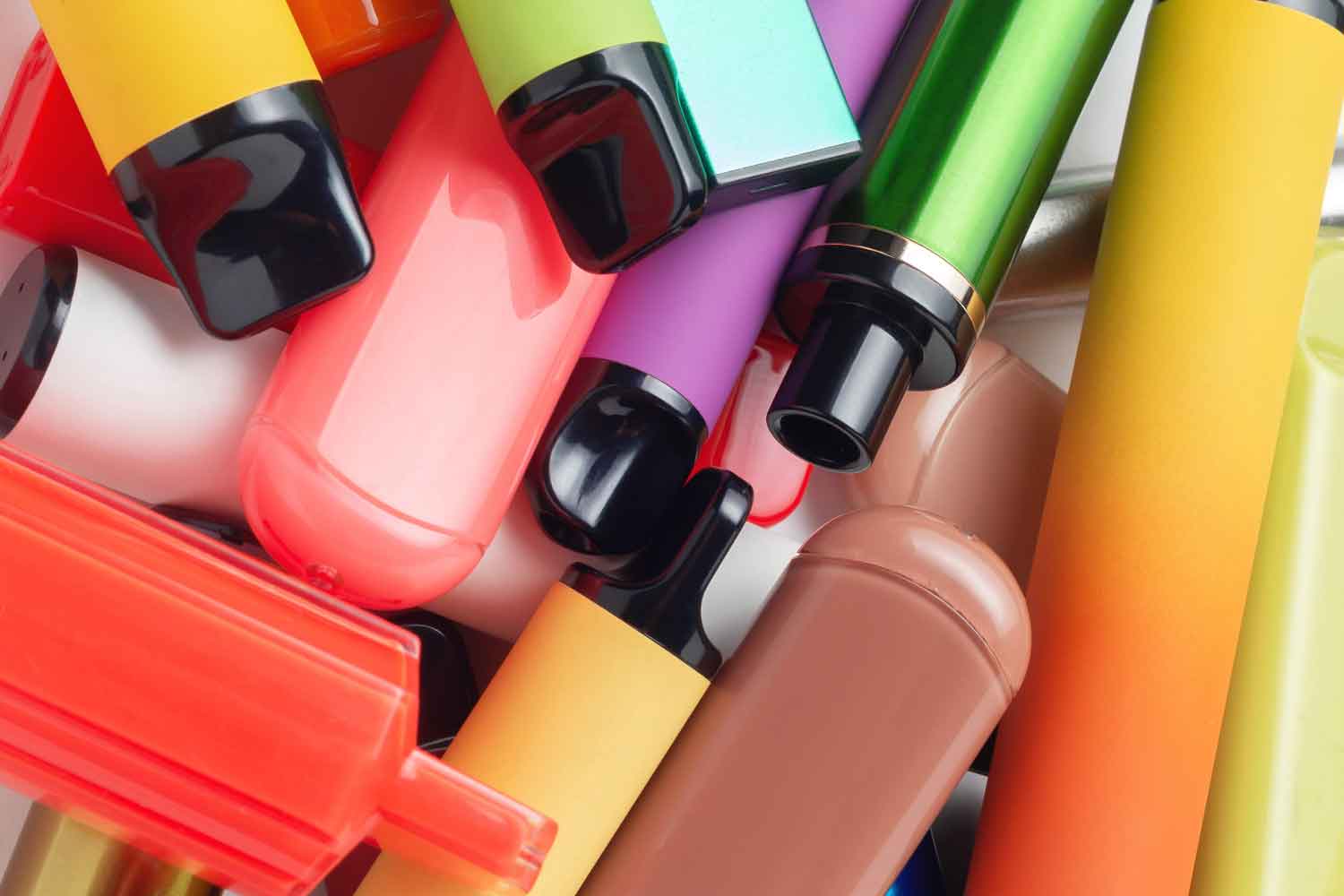
New York state environmental and waste management officials have launched a new pilot program aimed at addressing what organizers describe as one of the fastest-growing and most complex waste streams in the United States: discarded e-cigarettes and vaping devices.
The New York State E-Cigarette and Vaping Device Collection Program Pilot is being led by the Center for Sustainable Materials Management at the State University of New York College of Environmental Science and Forestry and the Product Stewardship Institute (SUNY ESF), with the goal of creating a scalable model for the safe handling, collection, and disposal of vape products across the state, according to reports.
“Vape devices are a unique waste challenge—they contain batteries, plastics and nicotine residues that require careful handling and disposal,” said Kathryn Walker, executive director of the Center for Sustainable Materials Management at SUNY ESF in Syracuse. “By working together across sectors, New York is taking proactive steps to protect public health and the environment while building a practical road map for responsible vape product management.”
According to the project partners, the pilot will focus on both regulatory analysis and real-world operational testing. The program will begin with a comprehensive review of existing state and federal policies regulating vaping device waste, including how discarded devices relate to hazardous materials regulations (nicotine in e-liquid), battery-handling guidelines, and consumer product disposal standards.
A key part of the initiative will be a live collection pilot conducted across at least five locations representing different types of communities throughout New York State. These sites will be used to evaluate collection logistics, receptacle needs, staff training requirements, and downstream processing and disposal procedures.
The project team will also evaluate the entire cost structure of a compliant vape waste program, including infrastructure, labor, transportation, and proper disposal or recycling of device parts. Operational data will be collected throughout the pilot to assess efficiency, safety, and levels of public participation, according to reports.
An advisory committee made up of public agencies, environmental groups, waste management professionals, and industry stakeholders will provide technical input and oversight. The organizers stated that the committee’s role is to ensure the pilot accurately mirrors real-world conditions while taking into account regulatory, operational, and community viewpoints.
“PSI specializes in moving from concepts to pilots to policies that result in performance,” said Scott Cassel, founder and CEO of the Product Stewardship Institute. “This pilot—built on collaboration across government, industry and recyclers—will give New York the playbook to protect workers and residents while managing vape waste responsibly.”
The final phase of the program will concentrate on policy development. Findings from the pilot will be summarized into a formal report that outlines operational lessons learned and provides policy and program recommendations for a potential statewide rollout of vape device collection infrastructure.
The initiative is also being promoted as a tool to support the New York Department of Environmental Conservation and its existing Solid Waste Management Plan. Organizers said the pilot aligns with the state’s broader goals to reduce waste, enhance recycling systems, and promote circular economy strategies across various product categories.
Experts say the pilot is one of the most organized state-level efforts so far to establish a formal end-of-life management system specifically for e-cigarettes and vaping devices—an area that remains largely undefined despite rapid market growth and increased regulatory oversight.
Vape recycling projects are working in other states, albeit slowly. Citizens for a Safe and Clean Lake Superior (CFSCLS) in Michigan is expanding its disposable vape collection program throughout Marquette County after receiving a grant.
The nonprofit received the money from the Community Foundation of Marquette County to expand its collection program to five locations in the county.
“About a year and a half ago, I started noticing just how many vapes I was seeing out on the sidewalk in my neighborhood. They seemed to be being littered, just like cigarettes,” said CFSCLS Director Jane Fitkin. “I started looking into the environmental hazards associated with that, because these are devices that contain not only liquid nicotine waste in them, but they also contain a lithium battery.
“When they’re littered on the ground, that leaches heavy metals and toxic chemicals into our environment, which is really dangerous for our ecosystems.”
CFSCLS started its pilot program on December 1, 2024, and has since collected over 4,000 vapes.