By Timothy S. Donahue
Top Takeaways:
Industry voice: Filtrona established itself as a leader in filtration innovation and sustainability at WNC.
Regulatory alignment: The company emphasizes science-based solutions to meet stricter global regulations.
Measured progress: Filtrona reported a 51% emissions reduction and zero waste sent to landfills across operations.
Filtrona is reinforcing its role as a key supporter of next-generation tobacco products, using the global platform at the World Nicotine Congress 2026 to emphasize sustainability, innovation, and regulatory alignment as the industry’s main challenges.
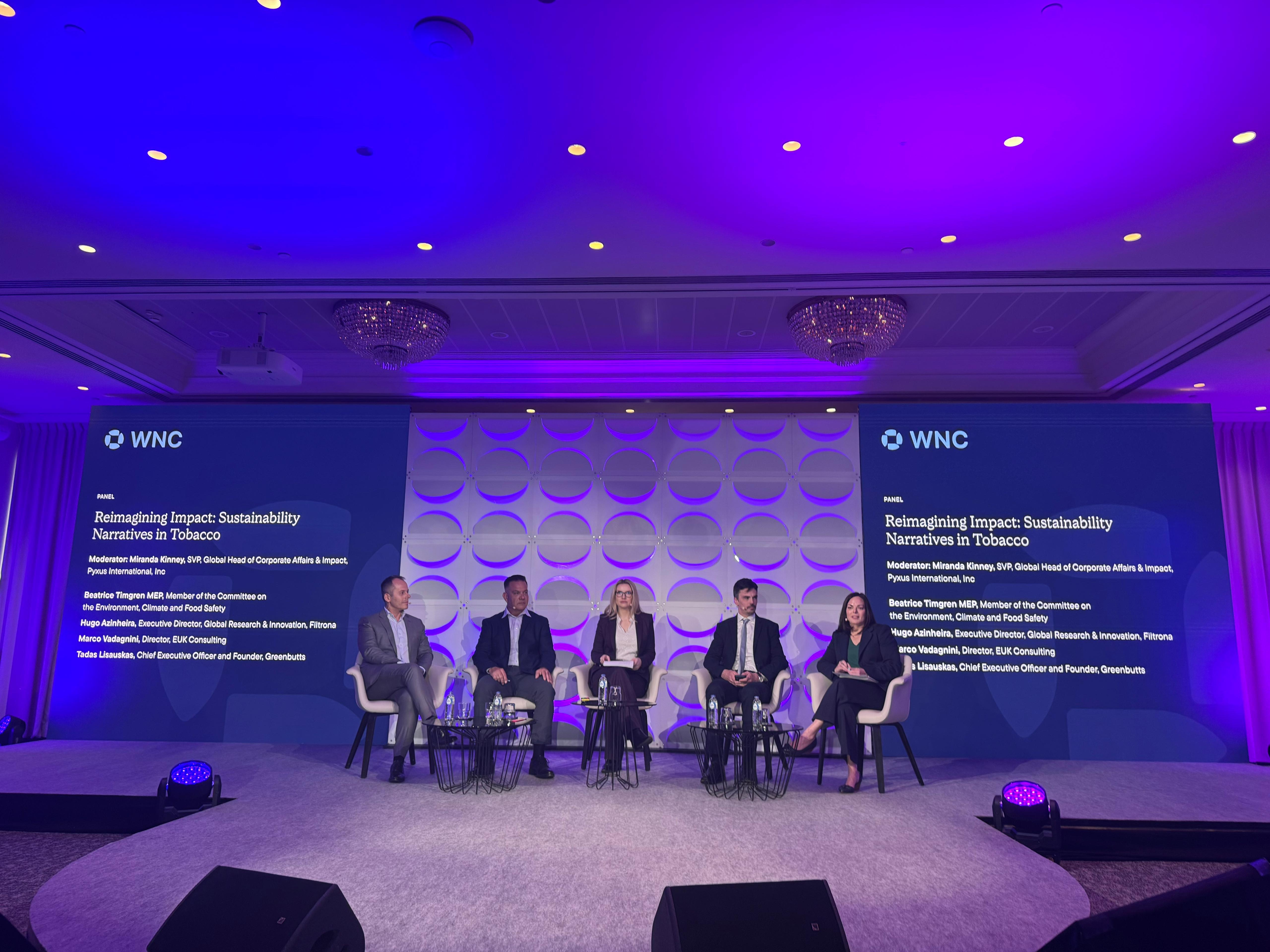
At the Brussels event, Hugo Azinheira, executive director of global research and innovations, joined policymakers and industry leaders on a panel focused on how sustainability narratives are reshaping the tobacco industry.
“As regulatory expectations intensify and sustainability becomes a defining industry imperative, Filtrona is playing a leading role in driving practical, science-based solutions that enable progress,” Azinheira said.
The discussion focused on how filtration technologies are advancing in response to environmental pressures and regulatory requirements, especially as manufacturers face increasing scrutiny over product design, waste, and lifecycle impact.
“By integrating innovation, sustainability, and regulatory insight, we are helping the industry to navigate regulatory complexity, reduce environmental impact, and deliver products that meet the expectations of a more accountable future,” he said.
Filtrona, the world’s largest independent manufacturer of specialty filters for tobacco and next-generation products, has increasingly positioned itself at the center of that transition—especially as demand grows for biodegradable filters and low-impact materials for cigarettes and heated tobacco products.
The Singapore-based company highlighted measurable progress on its sustainability strategy, including achieving zero waste to landfill across all manufacturing locations and reducing Scope 1 and 2 greenhouse gas emissions by 51%.
It also reported 37% renewable energy use across operations and a 30% reduction in overall energy consumption, signaling operational improvements alongside product innovation.
Those gains come as regulators worldwide continue to focus on environmental impacts related to tobacco products, from cigarette filter waste to broader carbon footprint issues.
Filtrona stated that its strategy is designed to assist customers in meeting those expectations while ensuring performance and compliance.
The company’s expanding portfolio includes advanced filtration systems for both traditional cigarettes and next-generation products, such as heated tobacco, where filtration increasingly helps distinguish products and supports regulatory submissions.
At WNC, the message was clear: as the nicotine industry evolves, filtration is no longer just a component—it increasingly serves as a regulatory, environmental, and innovation lever.