By Timothy S. Donahue
Top Takeaways:
- Enforcement shift: FDA is moving from deadline-based enforcement to application-quality reviews
- No safe harbor: Unauthorized nicotine products remain illicit products, regardless of PMTA status
- Market questions: New FDA product lists could create conflicts with state directory laws
The FDA’s new guidance on tobacco enforcement priorities does not legalize unauthorized nicotine products, but it does establish a new framework that could reshape how the agency approaches enforcement against manufacturers of vaping products and nicotine pouches.
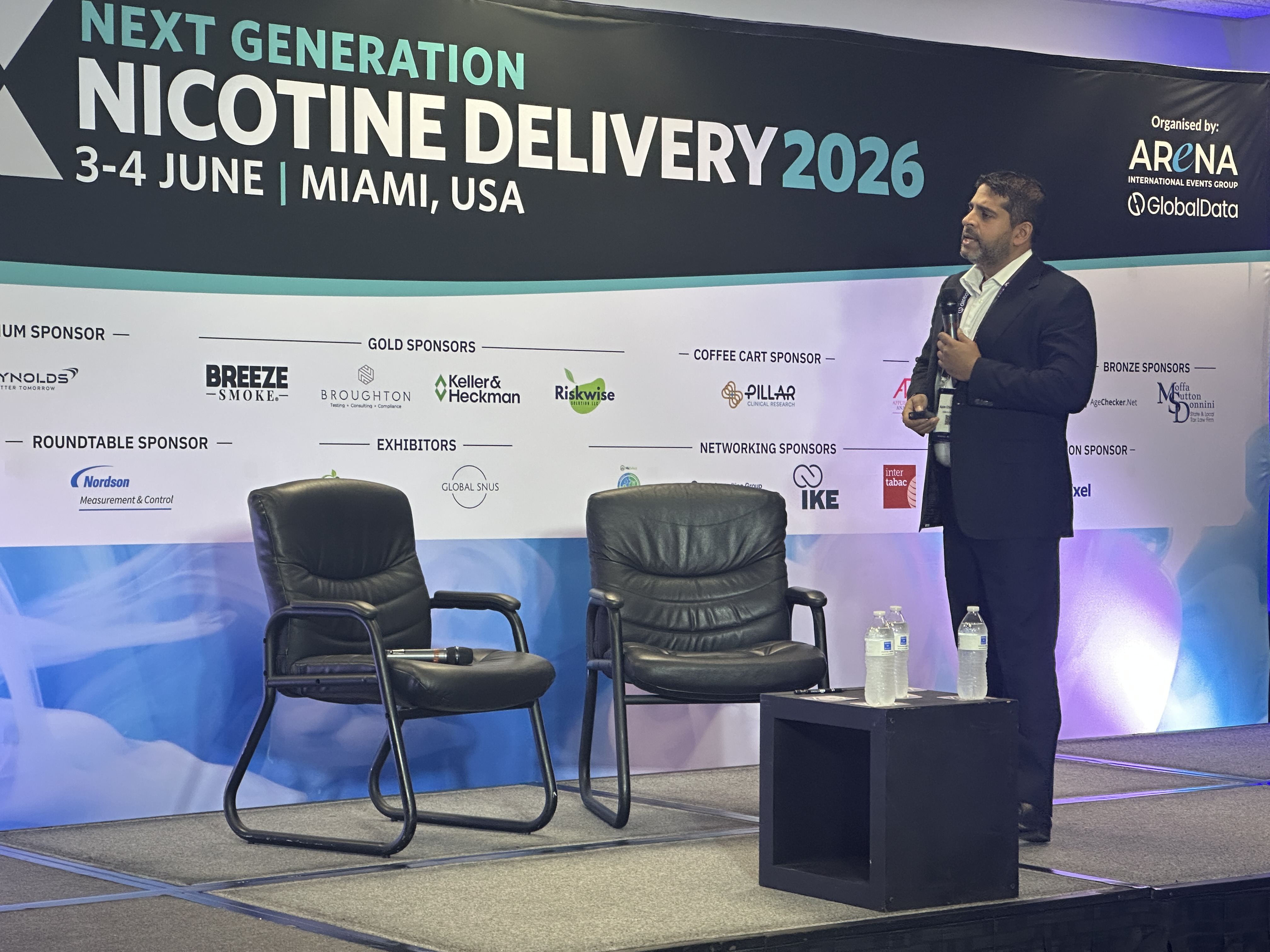
Speaking at the Next Generation Nicotine Delivery 2026 conference in Miami, Azim Chowdhury, a regulatory and public policy attorney and partner at Keller and Heckman, described the policy as a significant shift away from the deadline-driven enforcement approach that has characterized much of the premarket tobacco product application (PMTA) era.
“It’s important to understand historically how we got here, and the fact that [the U.S. Food and Drug Administration] has not changed the key baseline, which is that unauthorized products still remain unauthorized,” Chowdhury said. “FDA has not changed with this guidance document the fact that technically speaking, only products that have a marketing granted order are allowed to be sold in the United States.”
According to Chowdhury, the guidance effectively creates what he described as three categories of products.
“What this new guidance ultimately does is create three buckets,” he said. “You have the green bucket, which is the list of limited products that have received marketing granted orders. Then you have the yellow bucket of products that are unauthorized, but under this new guidance document are not going to be prioritized for enforcement. Then you have, of course, the red bucket, which are products that are unauthorized and will be prioritized for enforcement.”
The most significant change, he argued, is that the FDA is moving away from evaluating products primarily based on the timing of applications. “For many years, what mattered was when you submitted the application, not necessarily the contents of that application,” Chowdhury said. “Now things are changing. FDA is moving away from deadline-focused or timeliness-focused enforcement policies, and now they’re focusing on the contents of the application.”
That distinction could be especially important for manufacturers of nicotine pouches and electronic nicotine delivery systems (ENDS), where PMTA status has often been viewed as a key indicator of enforcement risk.
Chowdhury stressed that acceptance letters and submission tracking numbers should not be mistaken for authorization. “For many years, there was a lot of confusion in the marketplace about the acceptance letter and even having an STN,” he said. “Many companies believed, because of the lack of enforcement, that simply submitting an application, getting an STN generated, and eventually an acceptance letter was a green light to come to market.
“None of that was ever true.”
The attorney also highlighted how the new framework could affect the growing number of state directory laws regulating nicotine products. “I think it’s important again, the November 4, 2021 date,” Chowdhury said, referring to the implementation of the PMTA final rule. “A lot of those products that are still pending and getting on state registries and have not been denied may not necessarily meet the filing criteria of the final rule.”
As a result, he warned that manufacturers could face a situation in which products are legal for sale under state directory laws but are absent from the FDA’s future enforcement-priority lists. “We likely will end up with a lot of discrepancies between some of these state directories and what ultimately might end up on the FDA public list,” Chowdhury said.
Regarding flavored vaping products, Chowdhury said the FDA is maintaining its long-standing requirement that manufacturers demonstrate benefits beyond those of tobacco-flavored alternatives. “We already know that flavored products are going to be subject to the higher standard,” he said.
He noted that the FDA continues to require evidence that a flavored product provides an additional benefit to adult consumers compared with a tobacco-flavored product, despite ongoing litigation challenging aspects of the agency’s approach.
Products likely to remain enforcement priorities include those without qualifying PMTAs, those viewed as targeting youth, devices disguised as other products, those with unusually high nicotine levels, and counterfeit or illegally imported products.
Looking ahead, Chowdhury said several major questions remain unanswered, including when the FDA will publish its anticipated public product list and how retailers, distributors, customs officials, and state regulators will use it.
“There’s always unintended consequences,” he said. “What happens here with this eventual lower-priority list and what products are listed, how it conflicts with potential state laws, there could be unintended consequences. There could be confusion in the market.”