By Timothy S. Donahue
With the United Kingdom’s nationwide ban on disposable vapes set to take effect on June 1, stakeholders across the nicotine industry are sounding alarms over unintended consequences, regulatory blind spots, and the urgent need for consumer education.
The legislation is designed to tackle two primary concerns: rising youth vaping rates and mounting environmental waste. But a new report from the Future Health Research Centre warns the move could push up to 200,000 current vapers back to combustible tobacco if viable alternatives are not readily accessible.
“The government has committed welcome and strong action to reduce smoking and tackle youth vaping,” said Richard Sloggett, the report’s author and a former government health advisor. “However, these findings show that urgent work is needed to ensure that efforts to reduce youth vaping do not have the unintended consequence of increasing the numbers smoking—particularly among younger people.”
When asked about the upcoming ban, 12% of users said they would likely return to smoking, while 54% plan to switch to another type of vape. Another 15% indicated they might stop vaping altogether, and 9% would consider nicotine replacement therapies like patches or gum.
Industry modeling suggests the ban could lead between 175,000 and 378,000 people to quit vaping altogether. However, an estimated 90,000 to 200,000 may revert to smoking—an outcome that runs counter to the government’s smokefree ambitions.
Steve Brine, former public health minister and chair of the Commons Health and Social Care Committee, called the upcoming ban a “massive step in the right direction” but stressed the importance of execution. “The government needs to make sure that those using disposable vapes are aware of the ban, the alternatives to switch to following its introduction, and the dangers of taking up or returning to smoking,” he said in a statement.
Environmental Imperative, Emerging Loopholes
The environmental rationale for the ban is equally pressing. More than 5 million single-use vapes are discarded weekly in the UK, often containing lithium-ion batteries and plastics that are not recycled properly. Material Focus, a waste reduction non-profit, has tracked over 1.2 billion disposable vapes sold since 2022, with more than 750 million ending up in landfill or incinerators.
“Vapes are a strong contender for being one of the most environmentally wasteful, damaging, and dangerous consumer products ever made,” said Scott Butler, executive director at Material Focus. The group documented a 71% increase in battery fires in waste streams over the past two years, linking many incidents directly to discarded vape batteries.
Butler also expressed concern that so-called “big puff” and pod-based vapes, which closely resemble disposables, may soon flood the market in attempts to skirt the ban. “Without proper enforcement and retailer take-back schemes, these new formats could replicate all the same problems,” he warned.
Material Focus is advocating for mandatory in-store take-back programs and expanded public recycling infrastructure, including drop-off boxes in parks, schools, and transport hubs. Butler added: “It should be as easy to recycle a vape as it is to buy one.”
Greenwashing, Market Evasion
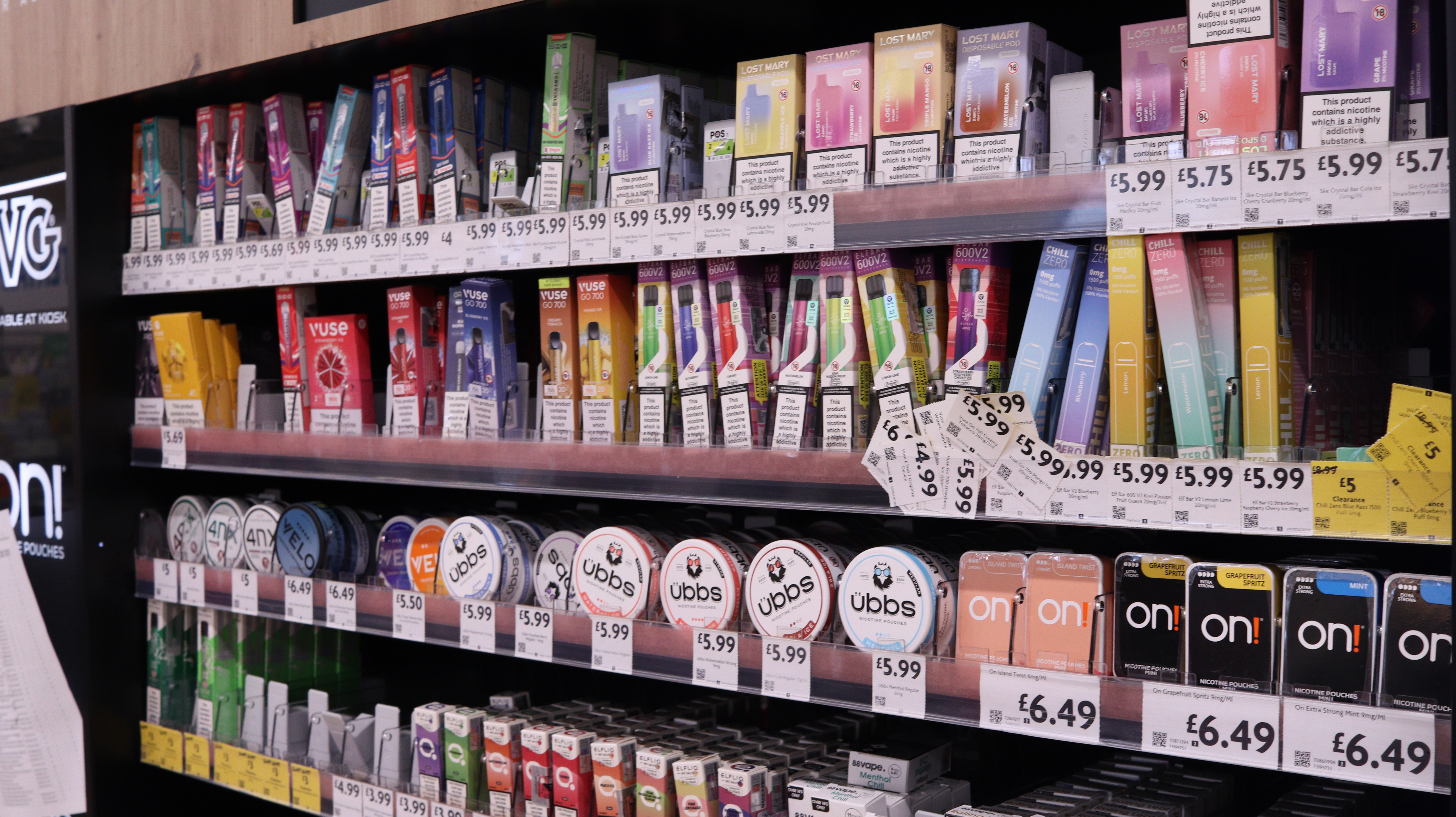
While many companies are pivoting to reusable devices in good faith, industry observers have identified attempts to exploit loopholes in the ban. Some manufacturers are releasing so-called “rechargeable” vapes with fake or non-functional charging ports, hoping to evade regulation.
Others, such as the SKE Bar, have introduced products labeled as reusable but encased in thick, unnecessary plastic. “Promoting these as ‘eco-friendly’ is misleading and likely violates the UK’s Green Claims Code,” said one compliance expert. “If a refill is nearly as large as the full product, it defeats the environmental purpose.”
The Advertising Standards Authority has also warned that terms like “sustainable” and “green” must be substantiated with clear evidence. Misleading environmental marketing, or greenwashing, could face legal consequences
Public Health Messaging
Health authorities are urging adult vapers not to panic. The ban applies only to single-use, non-rechargeable vapes. Refillable alternatives remain legal and are widely available, often at lower costs over time.
Scott Crosby, associate director at the Humber and North Yorkshire Tobacco Control Centre for Excellence, said: “Switching to a refillable device now could save you money within weeks. A chat with a professional stop smoking adviser can help ensure you’re getting the right level of nicotine to quit and making the most of vaping as a quit aid.”
The NHS continues to support vaping as a harm-reduction tool. Vapes are currently used in some hospitals and mental health settings, and refillable devices are offered through the national Swap to Stop program.
In North East Lincolnshire, Councilor Stan Shreeve urged residents to transition responsibly. “This new law is an important step forward for both public health and the environment,” he said. “But we must be clear that vaping is a far less harmful alternative for adults trying to quit smoking.”
Retailers are encouraged to prepare now by stocking compliant devices, clearly labeling products, and educating customers on the coming changes. Local authorities are ramping up communication efforts, including signage and targeted outreach, to reduce consumer confusion and avoid enforcement issues at the point of sale.
What’s Next?
Industry experts agree that successful implementation will depend on clear guidance, retailer compliance, and continued support for adult nicotine users.
“The ban presents an opportunity to improve both public health and environmental outcomes, but it needs to be matched by pragmatic, well-enforced regulation,” said Sloggett. “Otherwise, we risk undermining years of progress.”
With June 1 fast approaching, retailers, manufacturers, policymakers, and public health advocates face a critical test. Whether the disposable vape ban becomes a model for responsible regulation or a case study in unintended consequences will depend on what happens next.