Top Takeaways:
- Texas lawmakers approved a compromise bill banning only Chinese-made disposable vapes filled with e-liquid overseas.
- The bill was scaled back after pushback from tobacco companies, consumers, and conservatives.
- Refillable devices and products filled in the U.S. remain legal, aligning the law with recent PMTA-style measures in other states.
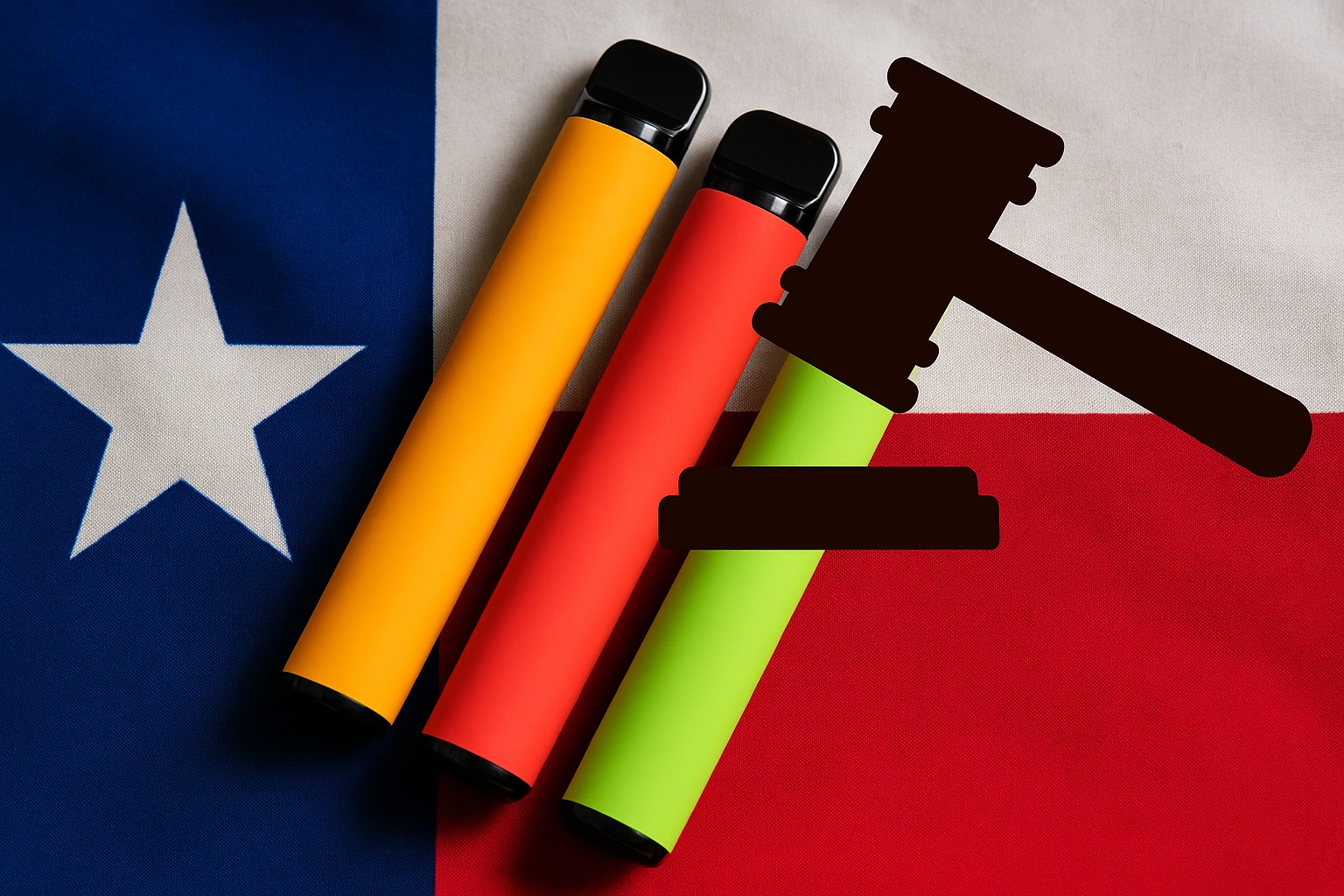
After weeks of heated debate and industry opposition, Texas lawmakers over the weekend passed a scaled-back version of its controversial vaping bill that initially threatened to outlaw nearly all mass-market vaping devices.
Instead, the revised legislation narrowly targets prefilled disposable vapes made in China, sparing refillable products and those manufactured or assembled with Chinese parts but filled in the United States (essentially banning Chinese e-liquid).
The final version of Senate Bill 2024, passed Sunday by both chambers, represents a significant shift from the original proposal, which would have banned any vaping product “wholly or partly manufactured in China” or containing even a single component made in the country. The bill now awaits the signature of Governor Greg Abbott.
From Blanket Ban to Narrow Target
The initial bill, approved by the Senate on April 23, appeared to favor tobacco giant Altria, whose NJOY vapes are assembled in non-Chinese factories using Chinese-made parts. But a more aggressive version passed by the House on May 28—with language banning all products containing Chinese-made components—would have even outlawed Altria’s offerings.
The sweeping language set off alarms across the nicotine industry. Stakeholders ranging from vape shop owners to major tobacco firms warned that the measure would devastate Texas’ vapor market by effectively banning everything from disposable vape pens to open-system mods and cannabis cartridges. With most components in the global vapor supply chain originating in China, nearly every product would have been affected.
Consumer advocates and libertarian lawmakers also raised objections, criticizing the bill as overly broad and likely to push thousands of adult ex-smokers back to cigarettes or the unregulated black market.
Final Bill Mirrors Tennessee’s PMTA Registry Model
In the end, lawmakers in a conference committee adopted a compromise. Under the final version, Texas will ban the sale of any vaping device that contains e-liquid (or other consumable substances) manufactured and filled in China. Products that are merely assembled in China—but filled with American-made e-liquid—will remain legal.
The approach is similar to laws recently enacted in Tennessee and Louisiana, which created state-level registries of U.S. Food and Drug Administration-authorized or pending premarket tobacco product applications (PMTAs). In Texas, the PMTA-compliant products—all filled in the U.S.—will continue to be sold legally.
Notably, this carve-out protects products like JUUL, NJOY, and others that undergo final assembly and filling domestically, despite sourcing parts from overseas.
Additional Provisions Remain in Place
SB 2024 still includes several provisions that further restrict the Texas vape market. It bans the sale of:
- Vapes with “child-appealing” packaging or food-like branding,
- Devices shaped like everyday objects such as highlighters or smartphones,
- Any product containing cannabinoids, kratom, or other non-nicotine substances deemed inappropriate by the state.
Industry Reaction and What’s Next
Industry insiders cautiously welcomed the compromise as a step back from what many saw as regulatory overreach.
“It’s far from perfect, but at least the revised bill doesn’t criminalize nearly every vape on the market,” said one Texas vape retailer who asked to remain anonymous. “This buys us some time and keeps our stores open.”
If Governor Abbott signs the bill into law, Texas will join a growing number of states enacting state-level restrictions on imported disposable vapes and unapproved products as federal enforcement lags.
The revised bill may also become a model for other states looking to curb illegal flavored disposables without dismantling the broader vaping industry—a key harm reduction tool for adult combustible smokers.
For now, retailers in Texas are bracing for new compliance checks while waiting for clarification on enforcement timelines and allowable inventory.