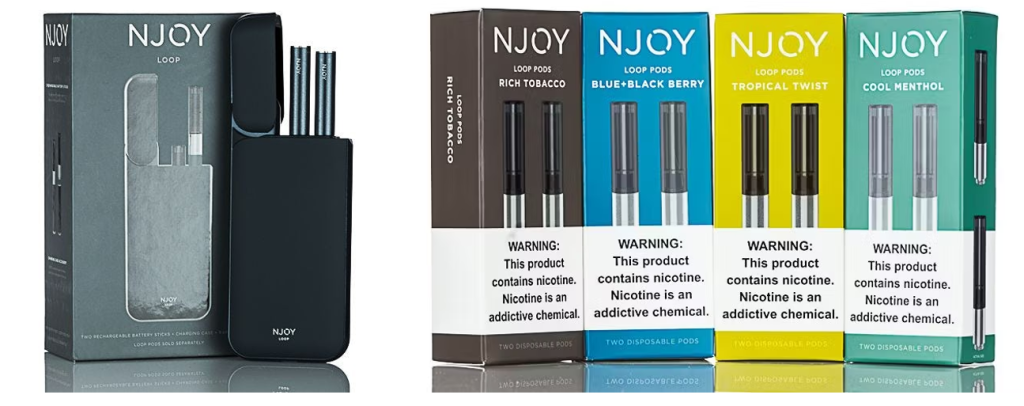
NJOY LLC, a wholly owned subsidiary of Altria Group, filed suit against the U.S. Food and Drug Administration on August 21 in federal court in Louisiana, accusing the agency of unlawfully delaying its review of applications for flavored e-cigarettes.
The company claims such delays violate statutory time frames established under the Family Smoking Prevention and Tobacco Control Act and unfairly block adult smokers from access to reduced-risk alternatives.
According to the complaint, the FDA’s December 2020 denial of NJOY’s flavored-product PMTAs cited only one deficiency: the company had not proven the flavored variants would promote “complete switching” among adult smokers more effectively than its Rich Tobacco and Menthol varieties—products that had received authorization.
In March 2021, NJOY responded with longitudinal data showing switching rates for flavored variants were 29% to 68% higher than those for its approved products after six months of use. Despite this, the FDA has remained silent.
The situation is further complicated by internal FDA documents obtained via a Freedom of Information Act request. These reveal that epidemiology staff concluded NJOY had adequately addressed the noted deficiency and that its flavored products were associated with higher cessation rates.
Meanwhile, the Office of Health Communication and Education reportedly affirmed that NJOY’s voluntary safeguards—extensive sales restrictions and reporting measures—sufficiently mitigated concerns about potential youth initiation.
NJOY’s suit highlights widening tensions between the nicotine industry and regulators. The company claims that the FDA’s delay—spanning years beyond the 180-day statutory review period—unlawfully freezes legitimate product options, even as illicit flavored disposables continue to flood the market.
Under the suit, NJOY seeks judicial relief including a declaration that the FDA’s delay is unlawful under the Administrative Procedure Act, an order compelling prompt agency action via injunction or writ of mandamus, and reimbursement of costs and legal fees. The complaint also requests the court maintain oversight jurisdiction going forward.