By Timothy S. Donahue
Top Takeaways:
- COP11 will debate “forward-looking” controls on nicotine pouches alongside tougher rules for vapes and other new products.
- NGOs are pressing for strict regulation or even bans on nicotine pouches, while WHO-aligned documents call for strong curbs on filters and cigarette-butt waste.
- Harm-reduction experts accuse COP11 of sidelining safer nicotine products and framing tobacco harm reduction as a tobacco-industry narrative.
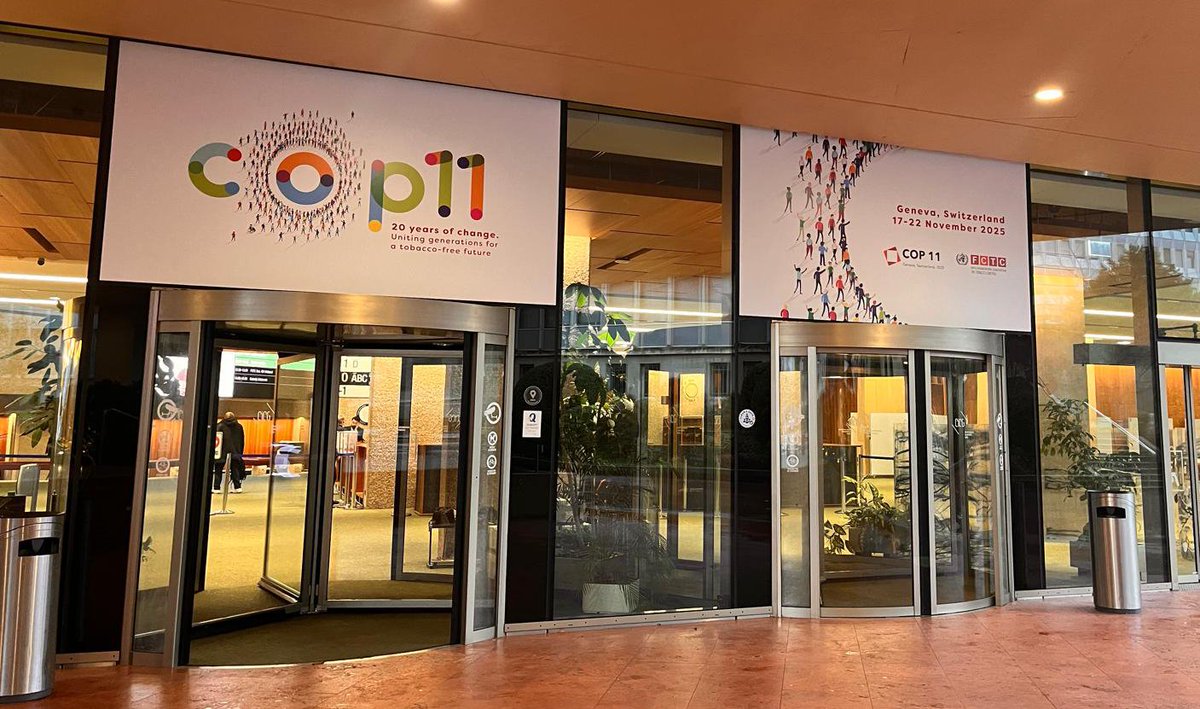
The 11th Conference of the Parties (COP11) to the WHO Framework Convention on Tobacco Control (FCTC) starts in Geneva this week, with governments expected to discuss stricter global rules on new nicotine products, including nicotine pouches. There is also anticipation of proposals to reduce cigarette butt litter and tighten regulations on e-cigarettes and other non-combustible nicotine products.
Under “forward-looking tobacco control measures,” draft COP11 documents encourage Parties to consider stronger regulation of emerging products such as next-generation nicotine delivery systems, and even non-nicotine herbal devices, citing “risks to human health.”
A separate policy brief from the Global Center for Good Governance in Tobacco Control recommends that Parties adopt a decision under agenda item 4.5, utilizing FCTC provisions to regulate vaping products and nicotine pouches, including through strict controls or bans. There are 183 states that are party to the FCTC.
Public health NGOs are already leveraging COP11 side events to advocate for stricter regulations on pouches. One session organized by the Smoke Free Partnership will argue that the “Swedish model” is being misused to promote snus and nicotine pouches as harm-reduction tools, and will present data showing an increase in pouch and snus use among women and young people in Nordic markets.
Global advocacy groups like Campaign for Tobacco-Free Kids argue that regulating or even banning nicotine pouches aligns with FCTC obligations “to implement measures for preventing and reducing nicotine addiction,” and they outline policy options ranging from strict FCTC-style regulation to outright bans on manufacturing, importing, exporting, and selling.
At the same time, environmental discussions are expected to focus on cigarette filters. WHO-linked materials estimate that 4.5 trillion cigarette butts are discarded each year and describe plastic filters as a major source of toxic microplastics.
Andrew Black, acting head of the Secretariat of the WHO FCTC, stated before the meeting that “getting rid of filters altogether” would help the environment because filters “do not biodegrade” and cause significant plastic pollution.
Industry observers warn of potential negative outcomes. Some worry the filter ban discussion could lead to policy reversals or substitution effects, regulatory uncertainty for manufacturers of filtered products, and unintended consequences for tobacco farmers.
Greenbutts, an eco-friendly cigarette butt alternative, CEO Tadas Lisauskas, said the WHO must address the need for practical, balanced solutions that consider both environmental concerns and the livelihoods of tobacco farmers and manufacturers.
“Unfiltered cigarettes would reintroduce hazards society moved away from generations ago,” Lisauskas said. “A policy intended to protect public health should not expose consumers to additional, immediate physical harm.
“Pretending that filters must be banned to solve littering is a false choice. The environmental problem can be solved without removing a proven exposure-reduction feature.”
Tobacco-harm-reduction (THR) advocates and consumer groups warn that COP11 may shift toward a stance they view as hostile to lower-risk products.
A briefing from Knowledge•Action•Change’s Global State of Tobacco Harm Reduction project argues that the WHO FCTC’s current stance against “safer nicotine products” like vapes and pouches “undermines progress on global public health,” noting “a growing body of evidence that shows safer nicotine products are significantly safer than combustible cigarettes,” while “the WHO seems resolutely set against tobacco harm reduction.”
The same briefing criticizes the COP process for what it describes as limited transparency and participation, especially for consumers who have switched from smoking to vapes or nicotine pouches.
The Association of Harm Reduction Advocates stated that COP11’s provisional agenda “frames harm reduction as a tobacco-industry narrative and avoids referencing the article of the FCTC that recognizes harm reduction,” and said that, for a treaty claiming to be evidence-based, “this sends the wrong signal.”
Former senior WHO officials also shared their opinions. In a recent commentary, tobacco harm reduction experts Dr. Derek Yach and Dr. Tikki Pang stated that rejecting tobacco harm reduction at COP11 could result in millions of preventable deaths and called on governments to include products like vapes and nicotine pouches in tobacco control strategies when appropriate.
Another THR briefing described the WHO’s current stance on reduced-risk products as “dangerous and irresponsible,” stating that alternatives like vaping and nicotine pouches “are saving lives in countries where governments have embraced them,” while WHO “continues to dismiss these tools without transparent justification.”
Consumer advocacy groups share these concerns. The World Vapers’ Alliance warns that COP11 discussions could lead to bans on flavored vaping, tighter nicotine restrictions, new taxes, and other limitations; its operations director Liza Katsiashvili said, “Banning flavors won’t save lives; it sends smokers back to cigarettes,” and urged delegates to “listen to the facts or repeat costly mistakes.”
Michael Landl, director of the World Vaper’s Alliance, described the conference as an echo chamber stuck in outdated, anti-science thinking that fails smokers. “Harm reduction isn’t a marketing ploy, it’s a public health necessity supported by hard data,” he said. “Consumers’ lives matter more than ideology or the views of wealthy WHO donors like Michael Bloomberg. It’s time consumers got a real seat at the table.”
The Consumer Choice Center has also accused the FCTC of “silencing the very people it claims to protect” by holding mostly closed-door sessions and limiting consumer involvement.
For the nicotine and tobacco industry, the week-long meeting is expected to reveal how willing Parties are to regulate filters, nicotine pouches, and other non-combustible products—and whether harm reduction arguments will gain support in a forum many experts say remains largely skeptical of science-backed safer nicotine options.
South African healthcare consultant Professor Praneet Valodia has urged COP11 to adopt “evidence-based, transformative” policies that incorporate THR into global tobacco control. He called for independent scientific committees to assess non-combustible nicotine products and said consumer experience should be part of policy discussions. Valodia stressed that COP11 should support local policymaking and provide reliable information to users in line with FCTC Article 1d.
“I am hoping that COP11 will bring about transformative change in assisting over a billion smokers throughout the world,” he wrote, adding that South Africa shows “a lack of evidence… to show a reduction in cigarette smoking because of interventions promoted in the FCTC.”
The availability and promotion of e-cigarettes and other nicotine products among Parties, along with the actions governments can take will be the focus of a ministerial roundtable on the first day of the meeting.
Speakers will include Belgium’s Deputy Prime Minister and Minister of Health and Social Affairs, Frank Vandenbroucke; Uruguay’s Minister of Public Health, Dr. Cristina Lustemberg; and the European Commission’s Director-General for Health and Food Safety, Sandra Gallina, among others.
The Taxpayers Protection Alliance (TPA) announced that it would hold the “Conference of the People (Good COP)” on November 19 in Geneva, parallel to the World Health Organization’s COP11. Good COP will be a “rapid-response and fact-checking forum” to counter discussions from the WHO’s Framework Convention on Tobacco Control.