Top Takeaways:
- Philippine growers say COP11’s Agenda Item 4.1 could end government support for tobacco farming and impose manufacturing quotas, risking jobs nationwide.
- The sector supports more than 2.1 million jobs, according to the National Tobacco Administration, while exports now account for about 80 % of locally grown leaf.
- The PTGA urges delegates to balance public-health goals with the economic realities of tobacco-dependent communities in the Philippines.
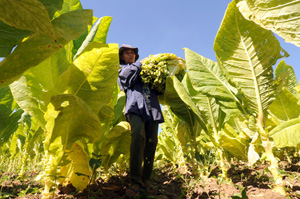
The Philippine Tobacco Growers Association Inc. (PTGA), which represents about 50,000 farmers nationwide, voiced urgent concerns ahead of the 11th Conference of the Parties (COP11) to the WHO Framework Convention on Tobacco Control (FCTC), warning that proposed measures under Agenda Item 4.1 of the Expert Group Report could “destroy farms and entire communities.”
According to the PTGA, the report recommends ending government support for tobacco cultivation, limiting industry profits, imposing manufacturing and import quotas, and restricting commercial sales.
PTGA President Saturnino Distor cited data from the country’s National Tobacco Administration estimating that the tobacco industry supports more than 2.1 million jobs nationwide, including farming, manufacturing, and distribution. He urged delegates at COP11 to carefully consider “the social and economic consequences of the proposed policies before adopting them.”
Distor also mentioned the Sustainable Tobacco Enhancement Program (STEP), a Department of Agriculture-led initiative aimed at modernizing tobacco farming methods and shifting production toward alternative nicotine markets such as vapes and e-cigarettes. “It can be seen through STEP that tobacco farming in the country still has a future, especially if safer alternative products gain recognition,” he said.
While domestic tobacco demand has declined, Distor noted that about 80% of locally grown leaf is now exported. He warned that the combination of proposed WHO measures, existing industry challenges such as rising excise taxes and illicit trade, and shrinking local consumption “could wipe out what remains of the sector.”
For industry stakeholders, COP11 marks a crucial moment. Farmers and growers in the Philippines are urging that their livelihoods—and the broader rural economies reliant on tobacco—be included in global policy discussions. They argue that policies focused on strict prohibition might overlook solutions that support both public health and agricultural livelihoods.