By Timothy S. Donahue
Top Takeaways:
- Ohio Supreme Court will determine whether the state can use consumer protection law to target non-FDA-authorized flavored vapes.
- Lower courts ruled the effort is federally preempted, citing that “only the federal government can enforce” the FDCA.
- A separate preemption case on Ohio’s ban of local flavor restrictions is also pending before the same court.
The regulatory tug-of-war over flavored vapes in Ohio is headed for the state’s highest court.
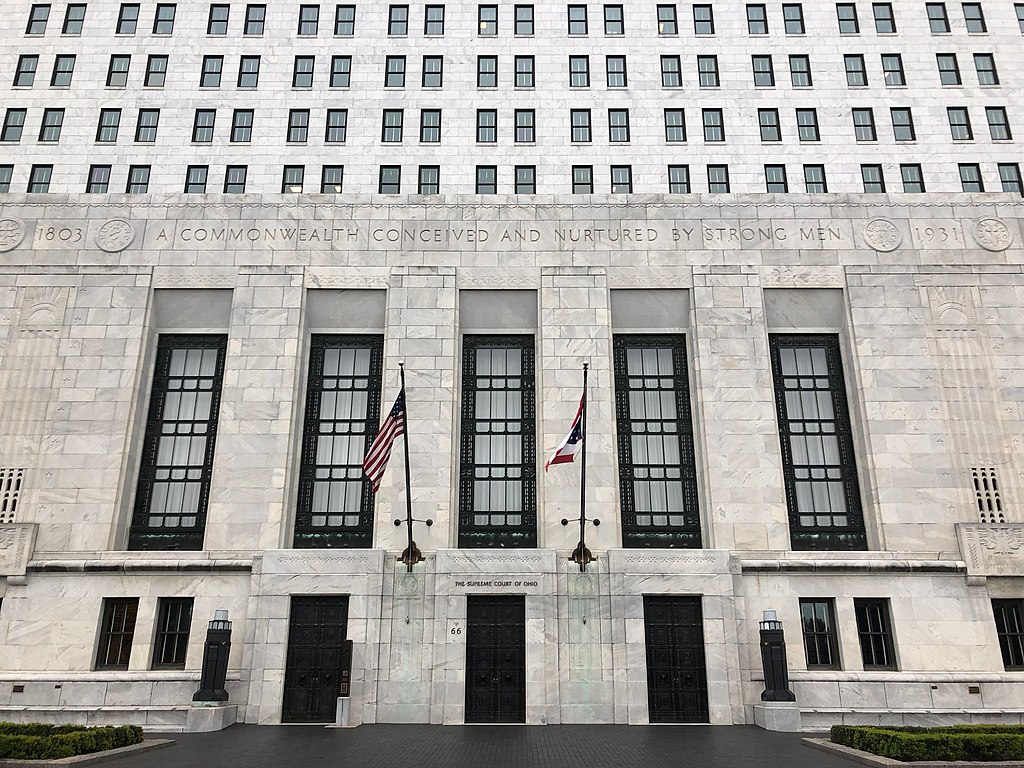
The Ohio Supreme Court has agreed to hear an appeal by Attorney General Dave Yost after lower courts rejected his attempt to use Ohio’s consumer protection statute to challenge the sale of flavored e-cigarettes that are not authorized by the U.S. Food and Drug Administration.
In July 2024, Yost filed lawsuits against three Ohio vape retailers, alleging they violated Ohio’s core consumer protection law by selling flavored vape products that had not been cleared through the FDA’s premarket tobacco product application (PMTA) process.
“You don’t have any idea what is in those vape cartridges,” Yost said when announcing the suits. “This is a consumer protection issue, particularly when it comes to our youngsters that are still developing, the idea these unregulated, unauthorized vapes are on the market is a real danger.”
Ohio’s Fifth District Court of Appeals wasn’t persuaded. Citing U.S. Supreme Court precedent, the panel wrote that “only the federal government can enforce” the Food, Drug, and Cosmetic Act (FDCA), which requires FDA authorization before new tobacco products can be marketed.
“The State’s claim that the e-cigarettes are not in compliance with the FDCA is a claim that would not exist in the absence of the FDCA,” the judges wrote. “Therefore, the State is impliedly preempted from bringing this action.”
In other words, because the alleged violation hinges on federal authorization requirements, Ohio cannot use its own laws to assume the FDA’s enforcement role — at least according to the lower courts.
The Ohio Supreme Court, currently under 6-1 Republican control, will now decide whether that interpretation will stand. The case sits within a broader policy split inside Ohio’s Republican leadership.
Gov. Mike DeWine has repeatedly pushed for stronger tobacco controls, including banning flavored tobacco products and strengthening enforcement of Ohio’s 21-and-over sales law. Meanwhile, the legislature passed — and overrode DeWine’s veto to enact — a statewide preemption law declaring tobacco and nicotine regulation “a matter of general statewide concern that requires statewide regulation.”
That statute bans cities from adopting their own flavored tobacco bans and from independently enforcing age restrictions. Lower courts struck it down as unconstitutional for its “blatant disregard of the Home Rule Amendment.” That case is also pending before the Ohio Supreme Court.
Taken together, the two cases could define the regulatory perimeter for nicotine products in Ohio: whether enforcement power lies exclusively with the FDA, whether the state can use consumer protection tools as a workaround, and whether local governments retain authority to go beyond the state’s laws.
A ruling in Yost’s favor could allow states to use general consumer fraud statutes to indirectly enforce federal tobacco marketing rules. A ruling against him would reinforce the federal government’s exclusive authority over PMTA compliance — limiting state-level legal strategies targeting unauthorized products.