By Timothy S. Donahue
Top Takeaways:
Health-first strategy: China’s draft 15th Five-Year Plan (2026–2030) emphasizes public health and prevention as key priorities in national policy planning.
Tobacco-control backdrop: National health initiatives continue to aim for reducing smoking rates to approximately 20% by 2030 as part of the Healthy China 2030 strategy.
Industry context: Although the plan does not specify tobacco or nicotine regulations, its focus on health governance offers a broader policy framework for the industry.
China is preparing to enter a new phase of national development as policymakers finalize the country’s 15th Five-Year Plan (2026–2030), a policy framework that will guide economic, technological, and social priorities for the rest of the decade.
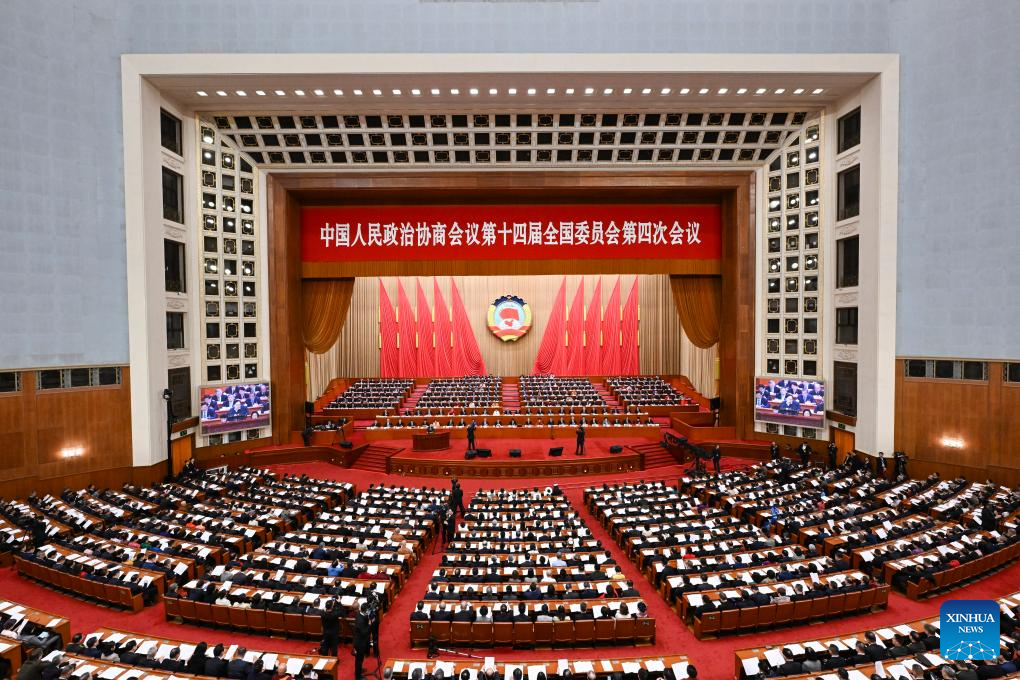
The plan was reviewed during China’s annual “Two Sessions” legislative meetings in Beijing, where lawmakers examined the Government Work Report and the draft outline for the upcoming five-year planning cycle. The meetings—formally the sessions of the National People’s Congress and the Chinese People’s Political Consultative Conference—are widely regarded as the country’s most significant annual policy-setting event.
One of the main themes of the upcoming plan is to place a greater emphasis on public health and prevention, including ongoing expansion of health promotion programs and efforts to lower smoking rates nationwide.
The strategy indicates a wider shift in national policy that more and more incorporates public health goals into long-term economic and social planning.
China’s Patriotic Health Campaign, first launched in 1952 to address disease prevention and sanitation issues, remains a key institutional mechanism supporting that approach. Over time, the program has grown into a nationwide framework that includes environmental health, public health education, and tobacco-control policies such as smoke-free public spaces.
These initiatives also support the country’s broader Healthy China 2030 strategy, which seeks to lower the national smoking rate to approximately 20% by the end of the decade, down from about 26.6% in recent years.
Although the draft Five-Year Plan does not specify new regulatory measures targeting tobacco or nicotine products, the health-first policy framework supports long-standing government priorities on prevention, population health, and reducing tobacco-related risks.
China’s tobacco industry operates under a government-controlled monopoly, and regulatory oversight has expanded in recent years to include newer nicotine products. Starting in 2026, smokeless nicotine products like nicotine pouches were officially added to the country’s tobacco monopoly regulation, requiring licensing and distribution rules similar to those for traditional tobacco products.
Authorities have also increased oversight of the e-cigarette industry, including restrictions on manufacturing capacity and expanded compliance measures aimed at enhancing regulatory control throughout the supply chain.
Beyond health policy, the Five-Year Plan highlights broader economic goals centered on technological innovation, industrial modernization, and environmental sustainability.
China plans to increase national research and development spending by at least 7% each year from 2026 to 2030 as part of a broad effort to boost technological competitiveness and drive productivity growth.
Government officials state that the five-year planning system continues to be a core part of China’s development approach.
“The five-year plans have served as a strategic blueprint and development milestones,” a spokesperson from the Chinese Embassy in Slovenia said during a recent policy briefing on the new plan. “They have closely linked scientific top-level design with practical innovation, turning long-term national goals into tangible results step by step.”
Officials also stressed that the planning framework represents a long-term governance approach aimed at balancing stability with economic transformation.
“The five-year plan is not merely a document but a key governance approach that defines the direction of China’s development,” the spokesperson said, noting that the system allows policymakers to translate long-term national objectives into phased policy actions.
China’s previous planning cycles have guided major national initiatives ranging from industrial modernization to poverty alleviation and infrastructure development.
According to Chinese officials, the upcoming plan will maintain that tradition while emphasizing more on innovation-driven growth, green development, and enhancements in public well-being.
“China’s development is inseparable from the world, and the world’s development is also inseparable from China,” the embassy spokesperson said. “As China advances its modernization, it will continue to create opportunities for cooperation and shared development.”
Chinese Premier Li Qiang stated during the session that the government plans to refine the country’s tax structure as part of broader fiscal reforms, including adjustments to the consumption tax system.
Li said authorities plan to strengthen local tax frameworks by expanding revenue sources for regional governments, revising the scope and rates of the consumption tax, and shifting the point of tax collection for some products further along the supply chain.
Again, although the report did not specify which sectors might be affected by the proposed changes, tobacco products have traditionally accounted for the largest share of consumption tax revenue in China. As a result, any discussions about amendments to the consumption tax system tend to draw significant attention from businesses and analysts tracking the tobacco and next-generation nicotine industries.
For companies operating in or supplying the Chinese market, understanding how consumption taxes are structured—and the significant role tobacco plays within that system—remains an important factor when assessing potential regulatory or market developments.
For industries involved with tobacco and next-generation nicotine products, China’s new planning cycle does not yet specify particular regulatory changes. However, the plan’s emphasis on public health, prevention, and long-term health governance provides an important policy context for monitoring the sector’s evolution over the next decade.