By Timothy S. Donahue
Top Takeaways:
Anti-smuggling push: Philip Morris International donated 7 drone systems to Lithuania to combat illicit cigarette trafficking from Belarus.
New tactics: Authorities are focusing on balloon-based smuggling in addition to traditional vehicle routes.
Surveillance focus: The drones will assist in tracking and monitoring, not intercepting, contraband activity.
Philip Morris International is supporting Lithuania’s efforts to combat illegal tobacco by donating drone systems to assist authorities in monitoring cigarette smuggling activities that are increasingly using unconventional techniques.
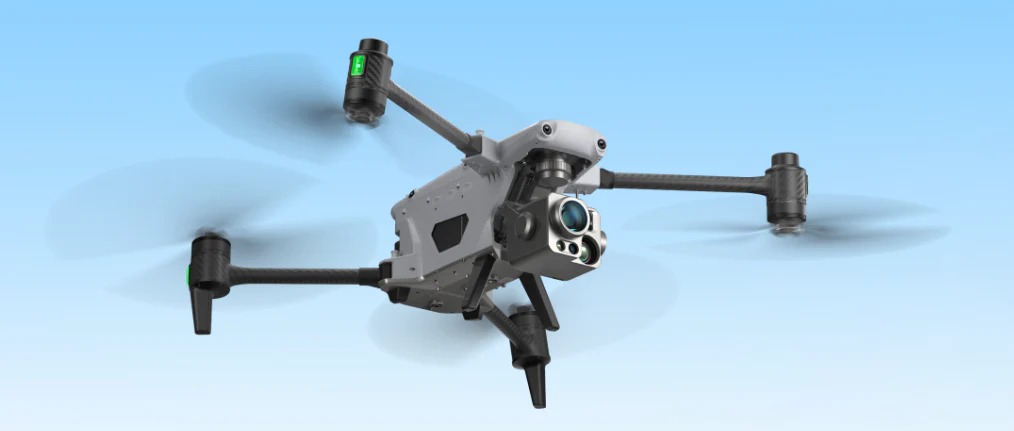
The company has supplied seven Autel Alpha drone systems to the Lithuanian government, with the equipment expected to be operated by the Lithuanian Riflemen’s Union as part of broader anti-smuggling efforts.
The move comes as Lithuania tightens enforcement along its border with Belarus, a major source of illegal cigarette shipments into the European Union. Prime Minister Inga Ruginienė stated that smuggling techniques have moved beyond conventional transportation routes.
“Contraband is also moved by cars and heavy transport, often in larger quantities,” she said. “We have seizures and detained smugglers, but this will remain an ongoing effort.”
Authorities have recently highlighted balloon-based smuggling, where cigarettes are transported across borders using airborne devices and then collected at designated drop points.
The donated drones are equipped with high-resolution cameras and thermal imaging, and they can operate at altitudes higher than 5 kilometers, enabling authorities to track flight paths and identify landing zones. Mindaugas Lukas of the Lithuanian Riflemen’s Union said the systems will mainly support surveillance activities.
“The main purpose is to monitor landing sites and track individuals arriving to collect the contraband,” Lukas said. “This is not a countermeasure system—it cannot intercept balloons effectively. It is about observation over a wider area.”
Philip Morris International stated that the equipment choice was made based on expert advice. “We are not military experts,” said Michał Mierzejewski, PMI’s vice president for Northern and Eastern Europe. “Experts advised us on what was needed and how the drones could be used in different situations, and we followed those recommendations.”
The drones are made by Autel Robotics, a Shenzhen-based company with worldwide manufacturing facilities. While Lithuanian law generally restricts the use of Chinese-made drones due to security concerns, exceptions may be allowed for specific cases such as intelligence gathering and anti-smuggling efforts.
Cigarette smuggling from Belarus continues to be a persistent problem for Lithuanian authorities and the wider EU market, with illegal trade ongoing and challenging enforcement, tax collection, and legal supply chains.