By Timothy S. Donahue
The CEO of Universal Corporation, Preston D. Wigner, told current and potential investors that the company’s century-old tobacco platform continues to generate strong, reliable cash flows — and that Universal is now building what he described as the second engine for the next era: a growing food-ingredients segment designed to scale into a meaningful earnings contributor.
Speaking Jan. 13 at the ICR Conference 2026 in Orlando, Florida, Wigner, who also serves as chairman and president of Universal, said the company is executing a three-pillar strategy: maximize and optimize tobacco, grow its ingredients segment, and strengthen Universal for the next 100 years.

“It’s an exciting time to be at Universal,” Wigner said, noting that he is a relatively new CEO, having become Universal’s boss in October 2024. He described a business at the center of global agricultural supply chains — a “vital link” between growers and customers — and confirmed that Universal’s scale, sustainability systems, and financial strength give it room to expand in both tobacco and ingredients.
“The majority of what we buy is contracted through farmers — 200,000-plus farmers around the world,” he said. “We process and sell that to our large portfolio of companies. That business has generated strong and consistent cash flows for us over the years, .”
Vital Link
Wigner opened with the company’s core identity. He said Universal is a supply chain specialist operating between farmers and global buyers, built for complexity and consistency.
“In simple terms, we’re the vital link between international farmers and suppliers and international customers,” he said. Universal connects farmers “to a global marketplace” and customers to the agricultural products they need to meet evolving consumer expectations.
The model matters most in the tobacco segment, where Wigner emphasized a point investors often overlook: tobacco leaf is neither interchangeable nor one-size-fits-all. “Tobacco is not a commodity; it’s a varietal,” he said. “What’s grown in the U.S. is different than what’s grown in Zimbabwe or Brazil.”
He pushed the logic further. Even within a single plant, tobacco leaves differ by stalk position and characteristics. “On a tobacco plant, the plant might have 20 separate leaves,” Wigner said. “All those different leaves and positions, they satisfy our customers’ unique needs.”
Universal’s role, he said, is to absorb that complexity at scale, then do what smaller competitors and integrated operations cannot: sort, process, allocate, and deliver tobacco leaf precisely to customer specifications across global markets. Wigner described the worldwide market for leaf tobacco outside China as being largely purchased by three competitive groups: global leaf suppliers, vertically integrated customers, and local and regional suppliers.
He emphasized Universal’s scale and financial strength as differentiators. “As the leading global leaf supplier, we are larger,” Wigner said, adding that Universal’s financial position allows it to invest in growth and provide value to customers.
Vertically integrated manufacturers, he said, may face structural inefficiencies in sourcing. They often want specific leaf positions but must buy the entire plant when contracting directly with farmers.
“One of the big benefits that we provide… those customers may only need certain types of leaf positions. They don’t need that whole plant,” Wigner said. “But when they buy that plant… they have to buy the whole thing.”
By contrast, Universal buys the entire plant and allocates those inputs across a broad customer base. Wigner said that the approach creates efficiency, lowers risk, and positions the company to grow share, including by providing more supply chain services and participating in next-generation product supply chains.
Local and regional suppliers represent another competitive group, he added, but lack key differentiators — especially sustainability systems, farmer support, and geographic diversification that reduces the impact of weather and geopolitical disruptions. “They don’t have any of that,” he said.
He stressed that Universal’s competitive edge lies in its supply chain capabilities, built on four pillars: sourcing, agronomy, processing, and logistics. Regarding sourcing, Wigner said Universal acquires leaf across a diverse set of markets through defined outlets. “We don’t buy on a speculative basis,” he said.
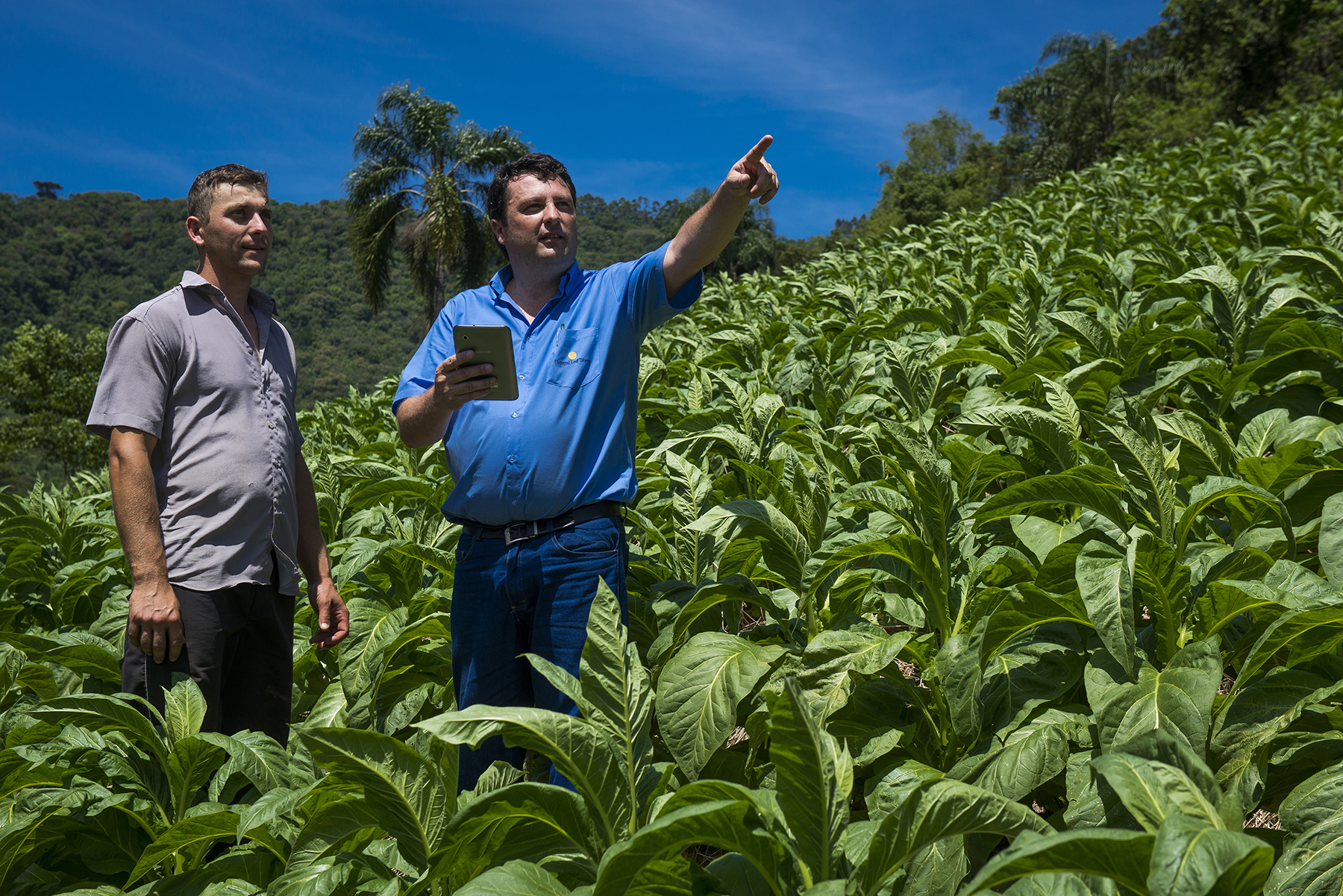
Wigner repeatedly emphasized that farmer performance underpins Universal’s performance. The farmer is a valued stakeholder in Universal’s tobacco business. “Farmer success is our success,” Wigner said. The company deploys agronomists who educate growers on best agronomic practices, monitor compliance with sustainability programs, and collect the data that customers and investors expect Universal to report.
“We have strict sustainability programs we expect them to follow,” he said.
During processing, Universal’s facilities are designed for high volume and tight specifications.
“We’ve got processing facilities in all the key markets,” Wigner said, describing large operations “built for volume” that can meet customer demands.
Logistics remains a key barrier to entry, he added, particularly in rural and challenging operating environments. “We’re experts at logistics… in places that are difficult to operate in,” Wigner said, describing an end-to-end supply chain from farm to factory, factory to port, and port to customer.
Wigner said Universal’s tobacco business has performed well and that he believes there is still room to do more: increase volume, grow market share, and strengthen the company’s footprint to ensure that assets generate expected returns.
Second Engine
If tobacco is Universal’s durable cash-flow machine, Wigner positioned Universal Ingredients as the company’s growth platform for the next era. “It’s a new segment for us with food ingredients,” he said, describing a business selling into food and beverage markets in the U.S. and globally.
Wigner said the ingredients strategy began in 2018. Since then, Universal has built a segment through acquisitions and subsequent investment — moving from a strategy on paper to an integrated operating platform. “We thoughtfully, carefully acquired companies to give us the functions that we needed for a platform,” he said. “We invested in that platform… and now they’re operating.”

Those acquisitions expanded capabilities across multiple categories.
On the fruit side, Wigner said Universal can process fruit juices, purees, essences, dry by-products, and functional fruit ingredients. On the vegetable side, the platform includes dehydrated vegetable capabilities in multiple forms, “from granules to powders and everything in between,” including blends. The company also acquired botanical extracts and flavoring products, expanding into plant-based extracts and broadening its flavor profile and library.
Then came integration and investment.
Universal expanded commercial sales and marketing to operate across the platform rather than as separate companies. Wigner said that the approach creates cross-selling opportunities among existing customers and enables market expansion. Instead of “three separate companies selling three separate products,” he said, Universal built commercial sales that can “sell across the platform.”
R&D and product development were another focus, he added — vital capabilities in ingredients where competitive advantage stems from functionality, science, and customer collaboration. “We want to co-create products with our customers,” Wigner said. “What we’re looking at is value-added products with higher margins.”
Universal also invested heavily in expanding manufacturing capabilities, including a $30 million-plus expansion at its extracts and flavors business in Pennsylvania. That expansion added extraction capabilities, bulk blending, and aseptic packaging under one roof — a configuration Wigner described as relatively unique.
Aseptic packaging, he said, provides logistical advantages and sustainability benefits for customers by reducing cold-chain handling and delivering shelf-stable solutions.
Now, Wigner said, Universal wants scale and returns. “We built it, we’ve invested in it,” he said. “Now we’d like to see a return on that investment.”
Next 100 Years
Throughout his presentation, Wigner repeatedly returned to sustainability, framing it not as a marketing theme but as a strategic differentiation— especially in Universal’s tobacco division. “When we talk about Universal, we always talk about sustainability,” he said. “It’s also a strength and a competitive advantage for us.”
He described sustainability as vital to both stewardship and business discipline, adding that it’s tied to customer requirements, investor expectations, and helping farmers succeed. Wigner said Universal’s guidelines include setting standards, educating farmers, monitoring compliance, collecting data, and reporting progress transparently. “We take sustainabiity very seriously,” Wigner said. “It’s good business for us because our customers value it, but it’s also good stewardship.”
He also highlighted the company’s financial performance. Wigner said Universal has made steady progress over the past five years, noting that adjusted EBITDA has risen each year and cash flow has increased year over year. However, tobacco remains the cash generator, he said, and those cash flows have funded investment, debt reduction, and shareholder returns.
Universal has used its credit facility to acquire ingredient businesses and is paying down debt, he said, while maintaining what he called conservative leverage and protecting the company’s credit standing. “We’re really fiscally conservative on our debt levels,” Wigner said, adding FY2025 year-end leverage was around “two and a half times adjusted EBITDA.” Wigner also highlighted Universal’s dividend record as central to the company’s investor proposition. He noted that FY2025 was the company’s 55th consecutive annual increase.
He closed the presentation by returning to the broader message. Universal is executing a strategy to extend the company’s strength for decades. That strength will be supported by a leading tobacco platform and a growing ingredients segment with significant runway for development. “We’re building this for our next 100 years,” he said.
Ingredients, he acknowledged, still requires work — from building brand recognition and trust among customers and vendors to scaling commercial momentum. He said progress is evident, investments have been made, and the next stage is performance.
“The ingredients side is really exciting,” Wigner said. “We’re putting in the work. We’re making progress.”
This story first appeared in Tobacco Asia magazine.