
By Timothy S. Donahue
Top Takeaways:
- Kratom surge: Category expands its footprint at TPE with dozens of dedicated booths, signaling growing retail and consumer interest
- Innovation vs. demand: High-tech disposables and nicotine alternatives dominate, yet weak ordering signals a cautious U.S. vape market
- Category shift: Oral nicotine, wellness, and alternative products gain share as vaping faces inventory pressure and regulatory friction
The mood wasn’t dead—but it wasn’t booming either. At the Total Product Expo 2026, the global nicotine and alternative products industry arrived with new technology, bigger devices, and broader category expansion. What it didn’t show—at least not convincingly—was momentum.
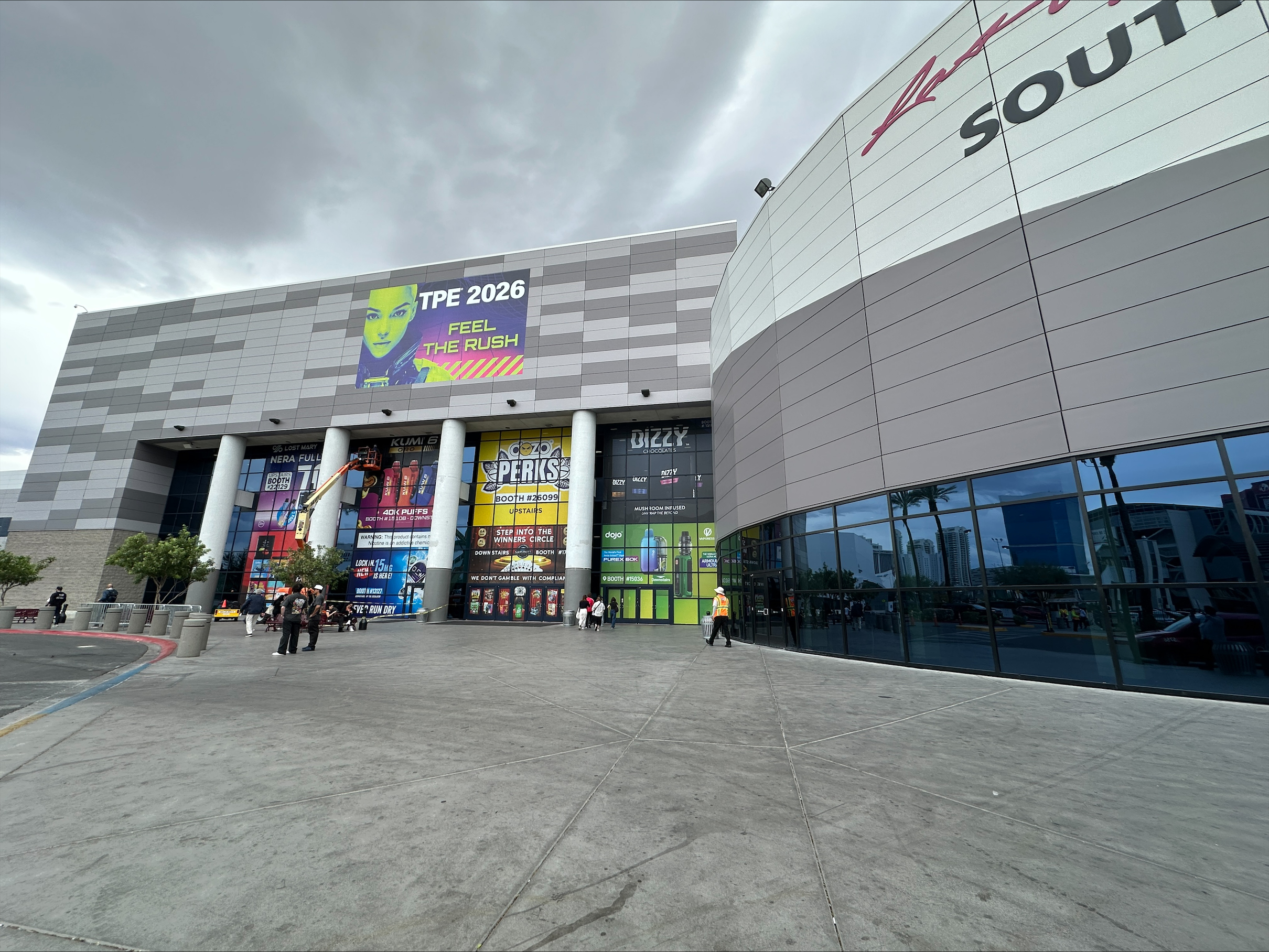
Held March 31 to April 2 at the Las Vegas Convention Center, TPE 2026 brought together manufacturers, distributors and retailers across the tobacco, vapor, oral nicotine and emerging wellness categories. The show floor told two stories at once: one of aggressive product innovation and category expansion, and another of a U.S. vape market that remains cautious, inventory-heavy, and increasingly complex to navigate.
Innovation pushes forward, demand hesitates
From a product standpoint, TPE 2026 delivered exactly what the industry has come to expect from the trade show: more technology, more customization, and bigger numbers. “The expo confirms a future where product innovation heavily favors high-tech disposables, non-traditional nicotine sources, and functional wellness alternatives,” according to the Wingle Group overview report.
The dominant theme in vaping was clear—devices are becoming increasingly sophisticated and customizable.A major trend was the integration of heater-liquid separation (HLS) systems, designed to preserve flavor and reduce leakage. Technologies such as SKE’s Fresh Lock+ and ALD’s FlowLock reflect a push toward engineering-led differentiation rather than simple form-factor changes.
At the same time, puff counts continued to climb. Devices offering 40,000 to 80,000 puffs were commonplace, with brands such as Hyper Bar, KangerTech and Uwell showcasing high-capacity disposables featuring dual chambers, adjustable airflow and multi-level nicotine and cooling controls.

Customization is emerging as the new battleground. Products such as the Uwell Koko Bar 60000 and Juice Head iFlex Freeze allow users to adjust nicotine strength, cooling levels, and flavor intensity—effectively turning disposable vapes into semi-configurable devices.
Even the form factor is evolving. Some devices are being designed to resemble lifestyle accessories, such as Hyper Bar’s “mini bag” format, signaling a continued push toward consumer personalization and branding. But innovation wasn’t limited to nicotine.
The return—and expansion—of nicotine alternatives also stood out. Several brands introduced products featuring 6-methylnicotine (often branded as Nixodine or NoNic6), a nicotine substitute that largely faded in 2025 but is now re-emerging across multiple disposable formats. “This renewed expansion… was prominently featured in new disposable pods,” the Wingle report noted.
Oral products, caffeine pouches, nootropic blends, and even mushroom-based formulations were widely displayed, reflecting a broader shift toward functional delivery systems. “The pouch market continues its expansion and diversification… extending beyond traditional nicotine pouches,” the report said.
Kratom, cannabis and wellness products also expanded their presence, introducing new delivery formats such as tablets, beverages and inhalable systems. Taken together, the show made one point clear: innovation is not slowing down.
A calm show floor and a cautious market
If the products were pushing forward, the market sentiment wasn’t. Multiple participants described TPE 2026 as quieter, more restrained, and less commercially active than in previous years. “The atmosphere… was not one of collapse, but of restraint,” one attendee noted, describing the event as feeling more like a reunion than a deal-making environment.
That sentiment was especially evident in the vape section. Traffic patterns reinforced the divide. According to one exhibitor, the first floor—dominated by cigars and traditional products—saw steady foot traffic, while the vape-heavy second floor felt noticeably less crowded.
The difference wasn’t merely physical—it was commercial. Exhibitors said distributor conversations were underway, but they rarely led to orders. One phrase came up repeatedly: “Keep us updated.” In practice, that meant interest without commitment.
“Distributors still stopped by booths, sampled products and exchanged updates,” one exhibitor said, but discussions often stalled when it came to purchasing decisions. For many, that was the real signal of TPE 2026.
Not a collapse in demand—but a hesitation to restock. Inventory pressure appears to be a primary driver. Some exhibitors reported that hundreds of thousands of units are sitting in downstream channels, limiting appetite for new products despite continued innovation.
Regulatory pressure is also shaping behavior. Participants noted a more cautious tone among exhibitors, with smaller booths, fewer promotions, and more guarded conversations—reflecting concerns about enforcement and compliance risks in the U.S. market.
Even competition is changing. Nicotine pouches were frequently cited as a factor pulling demand away from vapes, offering lower cost and longer use per unit. A disposable vape retailing for $15 to $20 may last about a week, while a can of pouches can last a similar length of time at a lower price point, one participant noted.
The ALP booth stood out among nicotine pouch manufacturers. Its “General Store” and “Saloon” themes attracted crowds, and ALP ads could be seen throughout Vegas, including on the Monorail and numerous major hotels. “ALP is the next big brand. It should also be the next pouch brand to be authorized by the FDA (U.S. Food and Drug Administration),” one store owner who has attended “at least” seven previous TPE’s said.

Expansion beyond vaping: what comes next
While vaping may have set the mood, it didn’t define the entire show. TPE 2026 highlighted a broader transformation underway across the nicotine and adjacent product landscape. According to Wingle, e-cigarettes still accounted for roughly 30.8% of booth specialization, while cigarettes/cigars (24.8%), accessories (17.9%), and wellness/stimulation products (14.1%) made up a significant share of the floor. That diversification matters.
It reflects a market that is no longer centered solely on vaping but increasingly spans oral nicotine, alternative stimulants, and functional wellness categories. For the TPE, however, there was also a noticeable decline in cigar the number of exhibitors. Even those that did have booths were less extravagant than what has traditionally been at the event.
Some said it because of the TPE’s new dates; the TPE was typically held at the end of January. This year’s April date was just before the 2026 PCA (Premium Cigar Association) Convention & Trade Show, which was held April 17–20, 2026, in New Orleans, Louisiana. “It was impossible for us to have our big booth at both TPE and PCA. To have it in Vegas and then shipped to Louisiana in enough time for it to be set up. It wasn’t possible. The PCA is a bigger cigar show, so we just have a very small exhibit here at TPE,” one major cigar manufacturer told Nicotine Insider.

Vape product manufacturers were also in decline. Many attendees said this was due to intensifying regulatory pressure on unauthorized vape products in the U.S. Manufacturers appear to be expanding into adjacent categories that may face fewer barriers—or at least different ones.
At the same time, the show reinforced that innovation alone may not be sufficient. For many attendees—particularly international manufacturers—TPE 2026 served as a test of whether the U.S. market was recovering. “For many… the answer appeared to be no—or at least, not yet,” according to one attendee.
That may be the most important takeaway. The industry continues to innovate, diversify, and expand. But in the U.S.—still the world’s most valuable vape market—distribution, regulation, and inventory realities are shaping what actually moves.
TPE 2026 didn’t signal a downturn, but it didn’t signal a rebound either.


