By Timothy S. Donahue
Top Takeaways:
- Record crop: Zimbabwe tobacco production is projected to exceed 360,000 tons, another all-time high.
- China influence: Chinese-backed contractors now dominate much of the country’s tobacco financing and exports.
- Farmer strain: Growers warn that rising deductions and debt are turning many into “laborers” for contracting firms.
Zimbabwe’s tobacco industry is booming again, but not everyone in the fields is rejoicing.
The country is on pace for another record crop, with production expected to exceed 360,000 tons in 2026, driven largely by smallholder farmers operating under contract arrangements backed by Chinese companies.
That growth has cemented Zimbabwe’s position as Africa’s largest tobacco leaf producer, continuing a dramatic rebound from the sector’s 2008 collapse, when output plunged to just 48,000 tons after the country’s controversial land reform upheaval.
The crop is booming again. The Tobacco Industry and Marketing Board said Zimbabwe harvested 355,000 tons in 2025, up sharply from 306,000 tons the previous year, while planted acreage has expanded by another 15%.
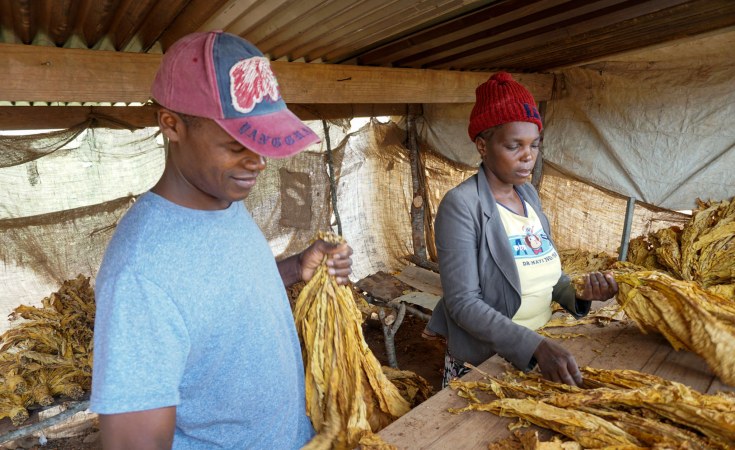
The engine of that growth: contract farming. Today, roughly 95% of Zimbabwe’s 127,000 registered tobacco farmers operate under contract agreements, with contractors supplying seed, fertilizer and financing in exchange for guaranteed access to the harvested crops.
Chinese firms have become dominant in that system. According to TIMB chief executive Emmanuel Matsvaire, Chinese companies now account for about 60% of Zimbabwe’s tobacco exports by value. But as exports and production rise, concerns among growers are mounting, he told local media.
“Farmers are compelled to return to the field and stick with contract farming, hoping that they will at some point break even,” farmer Davis Tembo said, describing how debt can accumulate after poor weather or weak yields.
Industry groups say many farmers remain trapped because they lack the formal land titles required to access traditional bank financing. George Seremwe, president of the Zimbabwe Tobacco Growers Association, said that fees and deductions continue to erode profits.
“Farmers are rendered mere laborers of the contracting companies and a number of them become trapped in debt,” he said.
At the same time, Zimbabwe is working to reduce its dependence on raw leaf exports. Officials confirmed that Philip Morris International plans to resume operations in Zimbabwe, while the government seeks to expand domestic cigarette manufacturing and other tobacco processing.
Finance Minister Mthuli Ncube recently said Zimbabwe aims to significantly increase local value addition, as cigarette production currently accounts for only about 11% of tobacco output.
The expansion, however, is attracting increasing scrutiny from health and environmental advocates. The World Health Organization has warned that tobacco cultivation in Africa continues to rise even as global tobacco farming declines, raising concerns about deforestation and food security.
For Zimbabwe, tobacco remains one of the country’s most important cash crops. And for many farmers, even mounting debt is preferable to no market at all.