By Timothy S. Donahue
Top Takeaways:
- Stable profitability: Scandinavian Tobacco Group maintained EBITDA margins despite lower reported sales and currency headwinds.
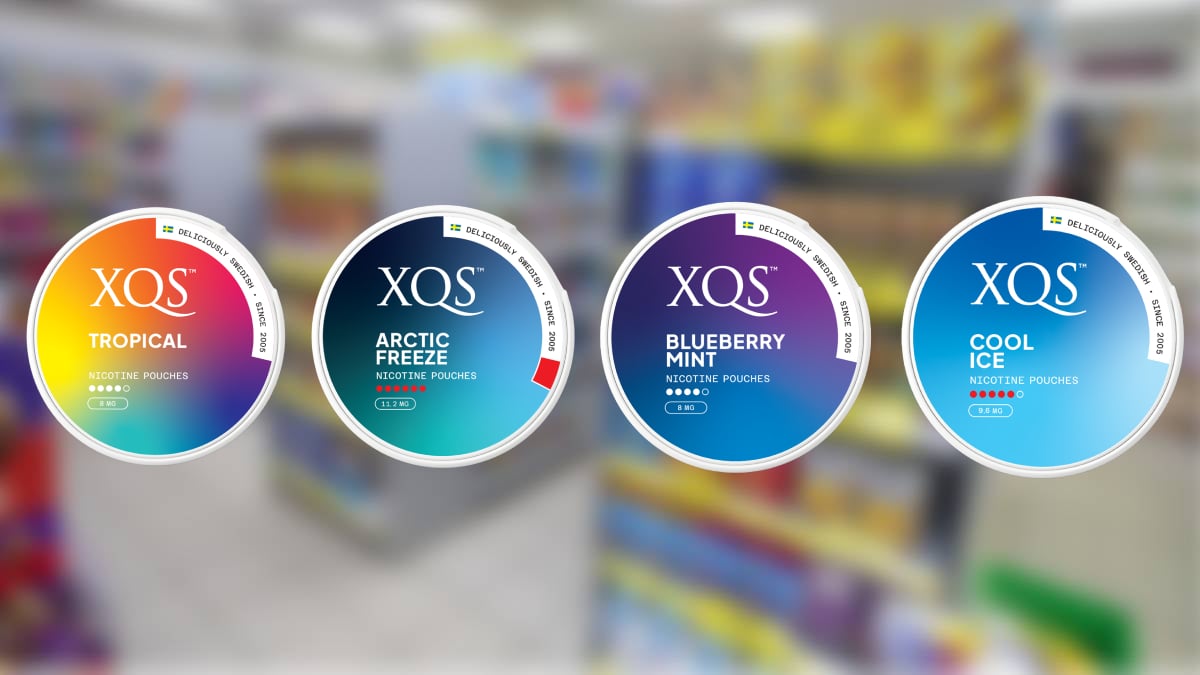
- Pouch growth: STG said its XQS nicotine pouch brand continued to gain market share in Sweden and other key markets.
- Focus 2030: The company says its long-term strategy focuses on stabilizing cigars, expanding handmade brands, and scaling nicotine pouches.
Scandinavian Tobacco Group says its long-term “Focus 2030” strategy is beginning to show traction, with gains in nicotine pouches, improving cigar market share trends, and stable profitability despite currency headwinds.
Reporting first-quarter 2026 earnings, STG posted net sales of DKK 1.9 billion, with results pressured by a 5.2% adverse currency impact largely tied to the weaker U.S. dollar.
Despite softer sales, EBITDA margins before special items improved to 17.2%, up from 16.1% the previous year. “First quarter of 2026 marks the beginning of our new strategy, Focus 2030, and hence it’s still early days,” CEO Niels Frederiksen said during the earnings call. “We are off to a good start, and we follow the plans we outlined in relation to the launch of the strategy last November.”
Frederiksen said the company’s immediate priorities remain stabilizing its machine-rolled cigar and smoking tobacco business, expanding its handmade cigar segment, and expanding its nicotine pouch operations. “We have grown our handmade cigar business measured by organic net sales, and our nicotine pouch brand, XQS, has continued to take market share in Sweden,” Frederiksen said.
STG said XQS market share in Sweden increased from 10.7% in the first quarter of 2025 to 13.6% this quarter. The company also said that nicotine pouch volumes across Sweden, Denmark, and the U.K. grew an estimated 38% for STG during the quarter, outpacing overall market growth of 21%.
“Our Power Brand, XQS, continued to take market share in the important Swedish market,” Frederiksen said.
Still, reported next-generation product sales declined 23% organically during the quarter, which executives attributed primarily to shipment timing issues and distributor inventory adjustments rather than to weak underlying demand. “We’ve had some timing of deliveries in Q1, but we also have a distributor that have lowered their level of inventories,” CFO Marianne Rørslev Bock said. “That is temporary.”
Executives repeatedly emphasized caution regarding quarterly volatility, especially in smaller nicotine categories. “When we look at the first quarter of 2026 and take the three important markets for us, Sweden, Denmark and the U.K., we see the category growing 21%, we see our volumes growing by 38%,” Frederiksen said. “This indicates different numbers.”
Beyond nicotine pouches, STG said handmade cigars achieved 8% organic net sales growth, supported by U.S. branded products, retail stores, and online operations. The company highlighted key premium cigar brands, including Cohiba, Macanudo, CAO, and Alec Bradley, as central to its growth strategy.
Frederiksen also cited recent limited-edition collaborations with Cohiba and the Miami-based factory El Titan de Bronze as examples of how STG plans to strengthen consumer engagement through innovation and premium positioning.
On the combustible side, STG said its machine-rolled cigar market share in Europe appears to be stabilizing after several years of declines. “We are mindful that one quarter does not change a trend,” Frederiksen said. “But during the quarter, our market share positions have stabilized within machine-rolled cigars in Europe.”
The company’s Mehari’s cigarillo brand — which marks its 50th anniversary this year — is undergoing a major redesign and relaunch as part of STG’s new “Power Brands” strategy. “With this redesign, we are essentially relaunching the brand while staying true to what makes it unique,” Frederiksen said.
Executives also addressed ongoing pressure in the online cigar market, where competition and pricing dynamics continue to squeeze margins. “It’s a combination of challenges with passing on tariff and other price increases to consumers in an intense competitive environment,” Frederiksen said.
In response to competition, the company recently introduced free shipping on its largest online platform, a move executives described as part of a broader effort to defend market share.
Meanwhile, STG continues to implement a major global SAP enterprise software rollout, which executives say should improve operational visibility and support future digitalization efforts. “I certainly think that for us, having standardized our processes has given us much more transparency and much more insight also into our data,” Bock said.
The company maintained its full-year 2026 guidance, projecting flat to slightly negative or positive organic sales growth, and reiterated expectations that geopolitical risks, tariffs, and global uncertainty will remain major business factors throughout the year.