By Timothy S. Donahue
Top Takeaways:
- Price pressure: Record tobacco deliveries are driving prices lower across Zimbabwe
- Farmer strain: Some growers say current prices are below production costs
- Global trend: Oversupply is affecting major tobacco-producing countries beyond Zimbabwe
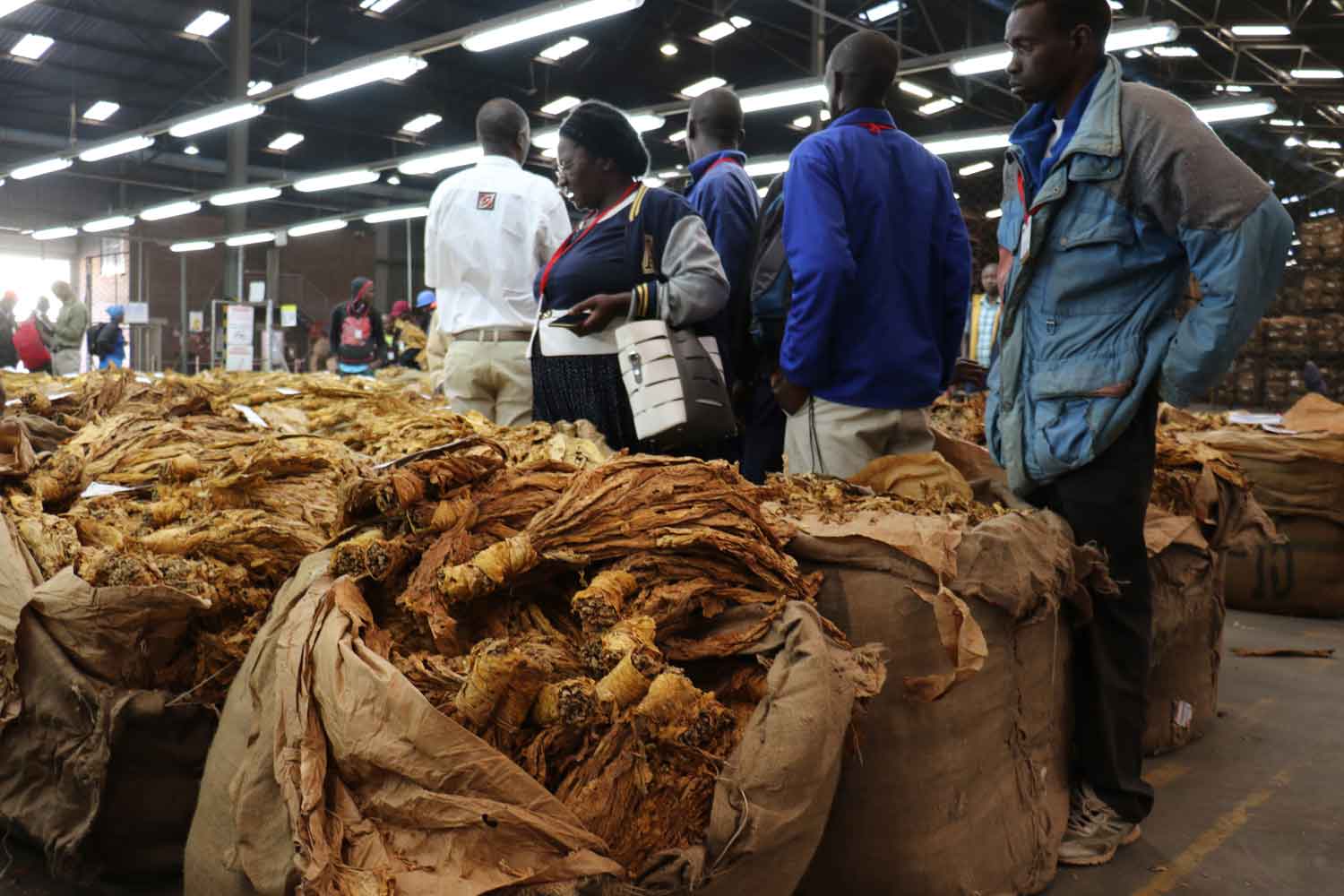
Zimbabwe’s record tobacco crop is proving a mixed blessing for growers, as an oversupplied market is pushing prices lower and raising concerns about farmers’ profitability heading into next season.
Farmers across the country’s tobacco-growing regions say weak prices are making it increasingly difficult to cover production costs, despite strong harvest volumes. The situation mirrors broader concerns emerging across the global leaf tobacco market as production expands in several major tobacco-growing countries.
“I received far less than I expected,” said Forget Kasamu, a small-scale tobacco farmer from Mount Darwin who has grown tobacco for 45 years. “I’ve been a tobacco farmer for 45 years, but I can’t believe what happened today after selling my tobacco. It fetched US$1.10 per kilogram.”
Kasamu said he sold 10 bales via the Tobacco Sales Floor auction system and received approximately US$800. “I don’t know how I’m going to get through this,” he said. “I still have transport costs of US$18 per bale, and I have six workers who need to be paid.”
The concerns come despite Zimbabwe delivering one of its largest tobacco crops on record this season, reinforcing a growing trend across the global leaf market. Earlier this month, leaf merchant Pyxus International reported in its recent quarterly report that “the global tobacco market has moved into an oversupply position,” citing higher production in Africa and South America as key drivers.
Zimbabwean farmers are now experiencing firsthand the consequences of that market shift. “The prices this season are not appetizing,” said Charles Mutikwa, a contracted grower from Wedza in Mashonaland East. “Contracting companies like Northern Tobacco are paying better than the auction floors.”
Contract farming continues to offer some insulation against market volatility. According to Northern Tobacco, contracted farmers are generally receiving between US$2.50 and US$5.50 per kilogram, significantly above some prices reported on auction floors.
“Our average prices range between US$2.50 and US$5.50 per kilogram because we are committed to maintaining long-term relationships with our farmers,” said Kelvin Choga, coordinator of small-scale farmers at Northern Tobacco. “As a contracting company, we provide farmers with inputs, fertilisers, pesticides and transport assistance to ensure their tobacco reaches the selling floors.”
Auction operators, meanwhile, stress that prices are set by market forces rather than by selling floors. “We do not impose prices,” said Celani Ndlovu, head of sales and marketing at Tobacco Sales Floor. “Our role is to facilitate transactions and earn a commission on sales conducted through our platform. The merchants determine the prices.”
According to Zimbabwe’s Tobacco Industry and Marketing Board (TIMB), pricing challenges are not unique to Zimbabwe.
“Our assessment is that the current low prices are a result of prevailing supply and demand dynamics,” said TIMB public relations representative Chelesani Tsarwe. “This challenge is not unique to Zimbabwe. Other major tobacco-producing countries, including Brazil, Malawi, Tanzania and Zambia, are experiencing similar market conditions due to increased production,” she said.
Agricultural economist Willard Munangi said many growers entered the season without fully appreciating how dramatically higher production could affect prices. “The prices are not appealing because the crop flooded the market, resulting in lower prices,” Munangi said. “Many farmers failed to make a profit this season.”
The situation highlights the cyclical nature of global tobacco production. After several years marked by supply concerns and elevated crop costs, rising production in Africa and South America appears to be restoring supply availability for manufacturers while creating new financial pressure on growers.