By Timothy S. Donahue
Top Takeaways:
Rules unchanged: Japan’s health ministry will not tighten restrictions on secondhand exposure to HTPs, citing insufficient evidence.
Review continues: The ministry plans to continue studying HTP emissions and health risks before revisiting the regulations in about three years.
Major market: HTPs account for roughly 40% of tobacco use among Japan’s smokers, making the decision significant for major HTP manufacturers.
Japan will keep its separate indoor-use rules for heated tobacco products (HTPs)in place. Japan’s Ministry of Health, Labor and Welfare said Thursday that it will refrain from regulating HTPs as harshly as combustible cigarettes.
The ministry concluded that current scientific evidence is insufficient to determine the health effects of secondhand exposure. The decision preserves rules that generally prohibit cigarette smoking in restaurants, hotels, and other public facilities but permit HTP use in designated rooms at certain restaurants, cafes, karaoke venues, and other establishments.
The ministry presented its position at a meeting of an expert panel reviewing Japan’s secondhand-smoke regulations. Officials said they will continue examining the health effects of HTP emissions and revisit the issue in about three years, as product use continues to grow.
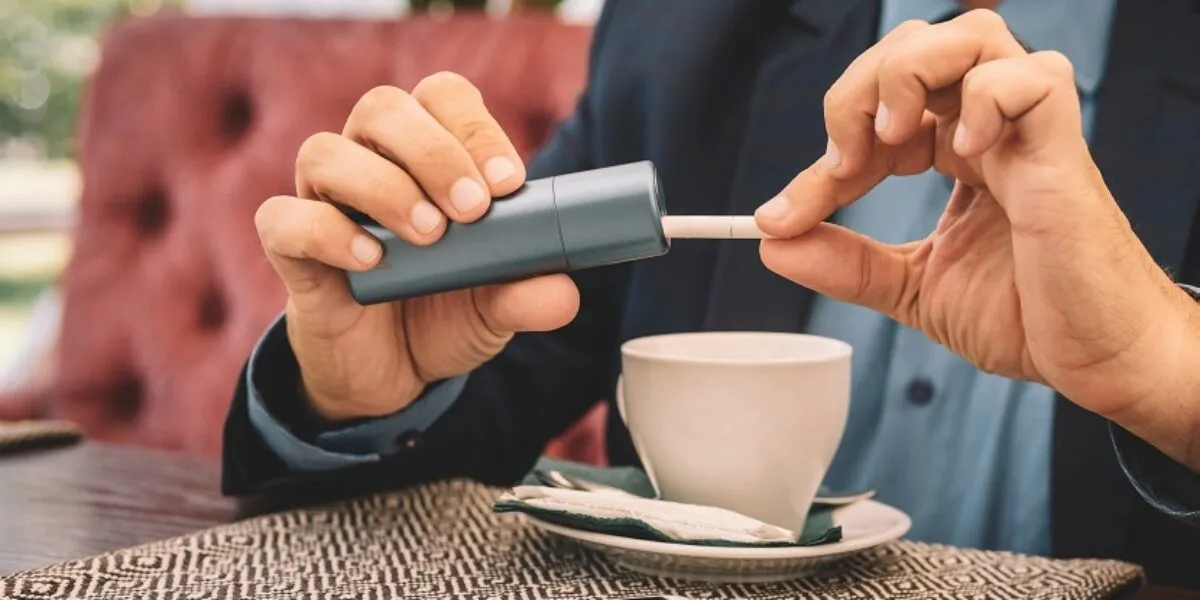
Japan is one of the world’s largest and most established markets for heated tobacco products, including Philip Morris International’s IQOS, Japan Tobacco’s Ploom, and British American Tobacco’s glo. HTP users now account for about 40% of Japan’s tobacco users, according to health ministry data. The products are regulated differently from combustible cigarettes under parts of Japan’s revised Health Promotion Act.
The law, which took full effect in April 2020, generally prohibited cigarette smoking in restaurants, bars, and other public facilities but allowed HTP use in designated indoor rooms where eating and drinking may continue. The provision was subject to review after five years.
Since last fall, the ministry panel has considered whether restrictions on HTP use should be brought in line with those governing combustible cigarettes. The review followed a ministry assessment of scientific literature released in May.
The assessment found evidence that HTP use releases harmful chemicals into the surrounding air and that emissions from some products may contain higher levels of certain carcinogenic substances than cigarette smoke. However, reviewers found the evidence directly linking secondhand HTP exposure to adverse health outcomes to be limited or not adequately evaluable.
The lack of sufficient evidence was central to the ministry’s decision not to strengthen the regulations at this time. Some public health experts urged the government to adopt a precautionary approach rather than wait for long-term epidemiological evidence.
“HTPs contain tobacco leaves like regular tobacco products, and it has been shown that the users of these products see greater risks of cardiovascular diseases, clearly exposing people around them to the same harmful substances,” Kota Katanoda, a panel member and scientist at the National Cancer Center Japan’s Institute for Cancer Control, told the meeting.
“It’s only natural to interpret this as meaning that HTPs pose health risks for those around their users,” Katanoda said.
The ministry will continue to monitor the scientific evidence rather than permanently preserve the current regulatory distinction. A future review could again consider whether HTP use should be subject to the same indoor restrictions as cigarette smoking.
Separately, the ministry plans to strengthen oversight of certain establishments that qualify as “smoking facilities,” including eligible bars. These businesses will be required to report their operations to municipal authorities.