By Timothy S. Donahue
Top Takeaways:
Record crop: Zimbabwe closed its 2026 marketing season with a record more than 357 million kilograms of tobacco sold.
Prices under pressure: Average prices fell to US$2.49/kg from about US$3.30/kg a year earlier as global oversupply.
China remains top buyer: China accounted for 34% of Zimbabwe’s tobacco export volume during the marketing season.
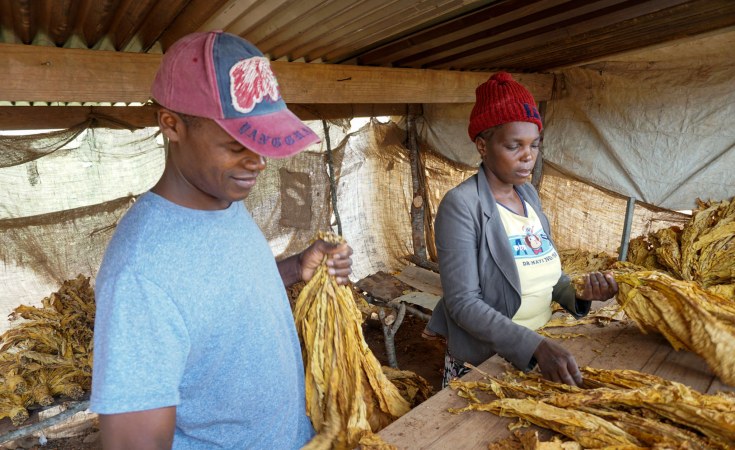
Zimbabwe produced more tobacco than ever before. Whether farmers ultimately benefited is a more complex question.
Zimbabwe officially closed its 2026 tobacco marketing season after growers set a new national production record for the second consecutive year. However, the bumper crop came amid weaker international prices, highlighting the growing challenge facing one of the world’s largest flue-cured tobacco producers: producing more leaf in a market that increasingly has too much of it.
According to the Tobacco Industry and Marketing Board (TIMB), growers delivered more than 357 million kilograms during the marketing season, surpassing the 354.8 million kilograms marketed in 2025. The season, which began in March and concluded with final mop-up sales this week, marks another milestone in Zimbabwe’s emergence as Africa’s largest tobacco producer under the country’s Tobacco Value Chain Transformation Plan.
However, the production gains were offset by a sharp decline in prices.
TIMB data showed the average selling price fell to US$2.49 per kilogram, down from about US$3.30 per kilogram last season. Industry officials attributed the decline to increased global tobacco production, larger carryover inventories, and subdued international demand—conditions that have weighed on leaf markets across several producing regions this year.
Those market conditions have become a recurring theme across the global leaf industry.
Executives at both Universal Corporation and Pyxus International recently told investors that abundant crops in key sourcing regions, including parts of Africa and South America, have created an oversupplied market, enabling buyers to purchase higher-quality tobacco at lower prices and adopt more selective procurement strategies. That environment has benefited global merchants but has placed additional pressure on farmgate prices.
Despite a weaker pricing environment, tobacco remains Zimbabwe’s most valuable agricultural export and a cornerstone of the country’s rural economy.
China continued to dominate export demand, accounting for 34% of Zimbabwe’s tobacco export volume since the marketing season opened in March, according to TIMB. China has consistently been Zimbabwe’s largest tobacco export destination, purchasing flue-cured tobacco for the state-owned China National Tobacco Corporation.
The record crop also reflects years of investment to expand production.
Zimbabwe launched its Tobacco Value Chain Transformation Plan in 2021 to increase production to at least 300 million kilograms annually, expand local processing, and create a US$5 billion tobacco industry. The country surpassed the 300-million-kilogram milestone last year and has continued to increase output through expanded smallholder participation, improved agronomy, and favorable growing conditions.
Still, regulators acknowledged that record production alone is no longer sufficient.
The decline in average prices has prompted renewed calls from TIMB and grower groups to diversify into horticulture and other high-value crops to protect against future market volatility and climate-related risks. The board has increasingly emphasized that long-term success should be measured not only by production volumes but also by higher farmer incomes, expanded local value addition, and broader export markets.
For the global tobacco industry, Zimbabwe’s 2026 season reflects the current state of the leaf market. Supplies are plentiful. Buyers remain disciplined. Production continues to rise.
But until global demand catches up, record harvests are unlikely to translate into record returns for growers.