By Timothy S. Donahue
Top Takeaways:
- Ban signed: Gov. Gavin Newsom signed AB 762, prohibiting single-use, battery-embedded nicotine vapes.
- Two-stage rollout: Manufacturing and import restrictions begin Jan. 1, 2027, with retail sales prohibited Jan. 1, 2028.
- Reusable standard: Legal devices will need to meet the law’s requirements for rechargeable batteries and refillable or replaceable liquid components.
California’s disposable vape ban is no longer awaiting the governor.
Gov. Gavin Newsom signed AB 762 on Monday, making California the latest state to target single-use nicotine vaping products and setting up a two-stage phaseout that begins next year. The governor’s office confirmed the signing on Sept. 28.
The law, authored by Assemblymember Jacqui Irwin prohibits the manufacture or importation of new or refurbished battery-embedded vapor inhalation devices beginning Jan. 1, 2027. Retail sales will be prohibited starting Jan. 1, 2028.
The legislation targets nicotine and tobacco vaping products and does not apply to cannabis vaping devices.
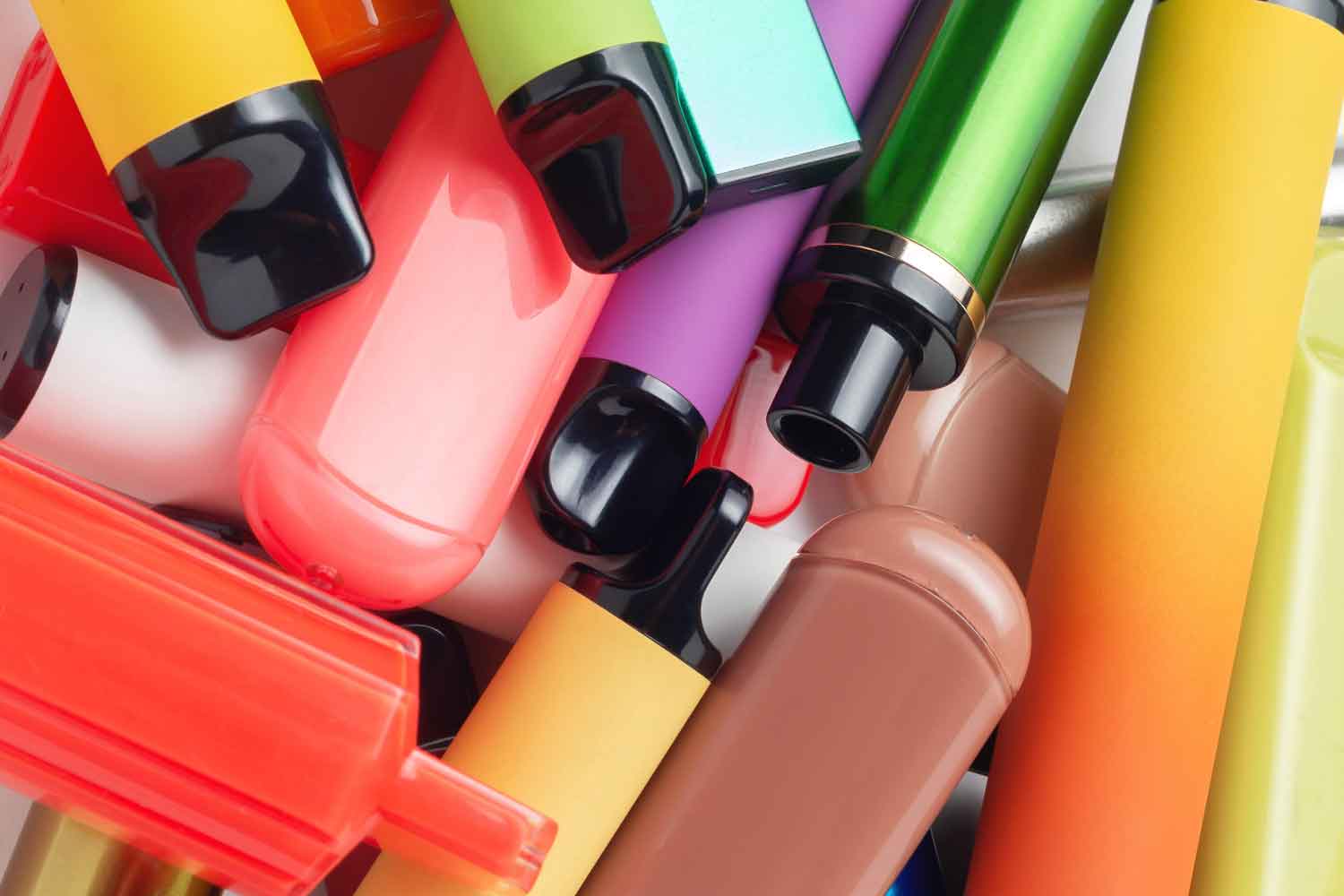
AB 762 is designed to prevent manufacturers from merely adding a charging port to an otherwise disposable product. To remain legal, a vaping device must have a rechargeable battery and use either a refillable liquid reservoir or a replaceable prefilled cartridge or pod.
That distinction means rechargeable disposables with permanently integrated e-liquid reservoirs will not be exempt from the prohibition simply because their batteries can be recharged.
The legislation defines a battery-embedded vapor inhalation device as one containing a battery that cannot be easily removed by the consumer with common household tools and that does not use a refillable reservoir or a replaceable prefilled cartridge or pod.
Violations carry civil penalties of $500 for a first violation, $1,000 for a second, and $2,000 for subsequent violations.
Unlike California’s earlier restrictions on flavored tobacco products, AB 762 is primarily an environmental regulation. Supporters have focused on the combination of lithium-ion batteries, plastics, nicotine residue, and electronic components found in disposable vaping products.
Irwin has argued that the devices are routinely discarded in regular trash or as litter, posing fire and environmental risks. California Public Interest Research Group, which supported the legislation, estimates that nearly 500,000 disposable vapes are discarded daily in the United States.
The issue has become increasingly significant as disposable products have grown in the U.S. vapor market. Their built-in batteries make them difficult to recycle through conventional household recycling systems, while damaged lithium-ion batteries can pose fire risks at waste facilities.
Industry opponents have argued that additional restrictions on legal tobacco retailers could instead shift more sales to illicit channels.
Arkan Somo, co-founder of California’s Neighborhood Market Association, told the Associated Press that the measure would impose another burden on family-owned retailers that sell tobacco products. “If we’re going to take the environment as an excuse to keep banning these products, where is that going to stop?” Somo said. “They’re really putting California at a huge disadvantage.”
The California Grocers Association raised similar concerns during a prior attempt to restrict disposable vaping products, warning that such policies could increase tobacco smuggling. The new law, however, gives manufacturers and retailers substantial time to adjust.