By Timothy S. Donahue
Top Takeaways:
- Seeking intervention: Schwartz E-Liquid wants to join a federal lawsuit defending FDA’s May vape and nicotine pouch enforcement policy.
- Products at stake: The company argues overturning the policy could expose its products to enforcement while its PMTAs are under review.
- Different sides: Public-health groups argue FDA can’t allow unauthorized products to remain on the market just because PMTAs are pending.
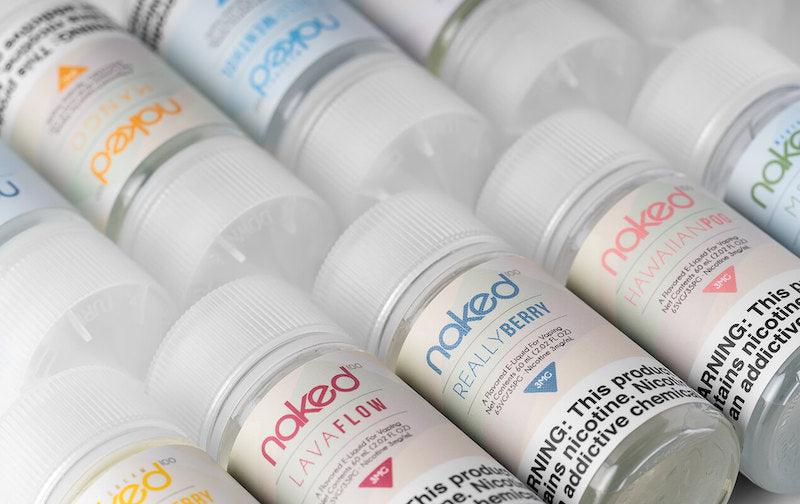
Naked 100 wants a seat at the table in the FDA’s latest vape fight.
Schwartz E-Liquid, which does business as USA Vape Lab and produces Naked 100 flavored e-liquids, seeks to intervene in a federal lawsuit challenging the U.S. Food and Drug Administration’s policy that allows certain unauthorized e-cigarettes and nicotine pouches to remain on the market while their premarket tobacco product applications (PMTAs) are pending.
The company told the U.S. District Court for the District of Maryland that overturning the FDA’s May enforcement guidance could expose its products to enforcement action and potentially force them from the market, according to court records and media reports.
The underlying lawsuit was filed in July by the Campaign for Tobacco-Free Kids, the American Academy of Pediatrics, the American Cancer Society Cancer Action Network, the American Heart Association, the American Lung Association, Parents Against Vaping E-Cigarettes, Truth Initiative, a pediatrician, and a parent.
The groups are challenging the FDA’s May 8 guidance that sets enforcement priorities for unauthorized electronic nicotine delivery systems and nicotine pouch products.
Under that policy, FDA generally does not intend to prioritize enforcement against certain unauthorized ENDS and nicotine pouch products whose PMTAs have been accepted, filed and remain under review.
For non-tobacco-flavored electronic nicotine delivery systems (ENDS), FDA also requires that the pending application include data necessary for the agency to evaluate whether the product is “appropriate for the protection of public health” (APPH).
Products with certain characteristics considered particularly appealing to underage users, including cartoon-like characters or designs resembling toys, phones, or gaming devices, remain enforcement priorities. The FDA can also consider factors such as unusually high nicotine content, adverse events, inadequate child-resistant packaging, and potential fire hazards.
The policy does not authorize the products for sale. FDA explicitly states that products covered by the guidance remain unauthorized and that qualifying for enforcement discretion has no bearing on whether they will ultimately receive marketing authorization.
That distinction lies at the center of the Maryland case.
The public-health groups argue that the FDA lacks authority to create what they characterize as an enforcement “safe harbor” for products that Congress requires to receive marketing authorization before entering the market. They also argue that the FDA adopted the policy without notice and comment and failed to adequately justify the change.
Schwartz now wants to defend the policy because the outcome could directly affect its business operations.
There’s another layer to the dispute. Schwartz has been fighting the FDA over how long the agency has taken to decide on its own applications.
The company filed PMTAs for numerous Naked 100 products before the September 2020 deadline and sued the FDA in November 2025, arguing that the agency had left its applications unresolved for years. Schwartz asked a federal court to require the FDA to complete its reviews and issue decisions. In March, the company also filed a petition for review against the FDA in the U.S. Court of Appeals for the D.C. Circuit.
That leaves Schwartz in an unusual position.
It has challenged the FDA over delays in deciding whether its own products should receive marketing authorization. Now it wants to help defend an FDA enforcement policy that can allow qualifying products with pending applications to remain on the market while those reviews continue.
The broader regulatory landscape is changing at the same time.
On Sept. 28, the FDA announced that it intends to evaluate changes to the PMTA regulatory framework, including initiating new rulemaking to replace the framework established under its 2021 rule.
The agency cited its experience implementing the rule, the growth of the illicit market, the pace of new product introductions, and recent litigation as reasons to reconsider the system. The agency said PMTA reviews will continue in the meantime.