Contributed
A new study has found that Glas Menthol and flavored electronic nicotine delivery system (ENDS) products help heavy combustible cigarette smokers in reducing their smoking and dependence. Over three months, researchers from Applied Research and Analysis Company (ARAC) observed 400 adult smokers who smoked at least 20 cigarettes daily and had no intention of quitting.
“We first examined the data to meet the U.S. Food and Drug Administration’s expectations for a study such as this, but another goal of ours was to go beyond the group averages and really look at the individual journeys of smokers making a transition. This is where the ‘magic’ happens and where we see the real-life impact of a candidate product on the lives of people who smoke.” said Dr. Jessica Zdinak, ARAC’s Founder, Chief Research Officer, and lead author of the study.
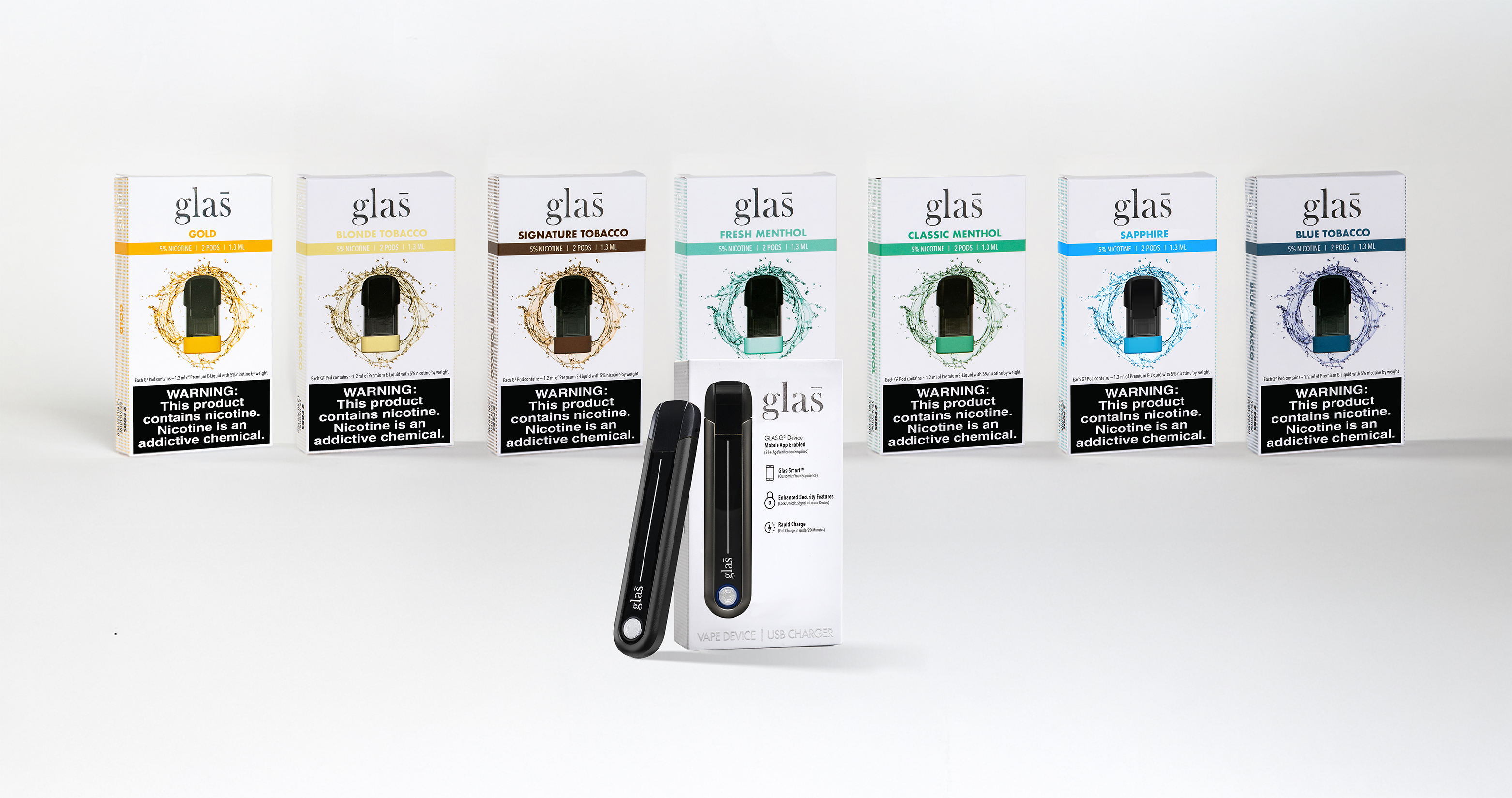
For the study, participants were randomly assigned to one of four product groups: (1) Glas age-gated device with flavored pods, (2) Glas age-gated device with menthol pods, (3) Glas age-gated device with tobacco pods, or (4) NJOY Ace device with tobacco pods. The study used standard, aggregate-level analysis and person-centered statistical methods to examine how each product pairing influenced smoking behaviors over time, focusing on smoking cessation, significant reductions in cigarettes per day, and changes in exhaled carbon monoxide (ECO).
Lead Statistician, Behavioral Scientist Dr. Ian Jones, who co-authored the study, analyzed the robust dataset in two ways, and what the team found was “not only a statistically significant reduction in cigarettes smoked, but also meaningful decreases in cigarette dependence and clinical markers like carbon monoxide exposure.”
Glas Flavors: Greatest Benefit to Public Health
All four groups showed significant reductions in average ECO levels and cigarette dependence, based on the data. However, person-centered analysis indicated that participants using GLAS flavored pods and Glas menthol pods benefited the most, with more individuals in the Glas flavored pods group experiencing a consistent month-over-month decrease in average ECO levels compared to other groups.

The Glas menthol pods group followed closely. In contrast, the NJOY Ace tobacco pods group did not show a steady decline. Instead, it demonstrated the least consistent reductions over time, including occasional increases in ECO levels. Similar patterns appeared for cigarette dependence: a larger portion of participants using Glas flavored pods and Glas menthol pods experienced sustained reductions. In comparison, those in the Glas tobacco pods and NJOY Ace tobacco pods groups showed less consistent changes, with dependence sometimes rising before eventually falling.
When it came to reducing cigarette use per day, the Glas menthol pods group showed the strongest results. This group had the highest percentage of participants who reported a consistent, month-to-month decrease in smoking throughout the study.
“These person-centered findings are crucial,” said Dr. Jones. “When you are trying to understand population-level benefits, you must consider and evaluate the people who comprise the population (i.e., the individual). These findings highlight the real-world benefit that individual smokers may experience when switching to a product that meets their sensory and behavioral needs.”
Implications for Public Health and Policy
Ultimately, the Glas flavored and menthol options consistently outperformed tobacco-only options – including the FDA-authorized NJOY Ace tobacco flavor – across key hard reduction measures.

“At Glas, our next-generation vaping technology and unique flavors are designed with one goal: to help adult smokers move down the continuum of harm,” said Sean Greenbaum, Founder and President of Glas. “Combining advanced age-gating technology with flavors that appeal to adult users – and not adolescents – is essential to supporting reduced dependence.
“Now is the time, after over 3 years under FDA scientific review, for regulators to authorize the proven, and compliant Glas products to protect communities from more harmful alternatives.”
These findings are significant for regulators, particularly amid ongoing discussions about flavored ENDS products, confirmed Dr. Zdinak, who added that there’s often a disconnect between regulatory policy and individual-level outcomes.
“This research adds to a growing body of evidence that flavors matter. Why would regulators not authorize flavors, particularly with a product like Glas that incorporates successful age-gated technology, preventing youth from using the product?” she asked. “Adults like flavors and adults like choice, but what adults don’t like is being told what is best for them.
“I think this psychological phenomenon can be seen by the continued use of illicit flavored ENDS products in the U.S.”
The study highlights the importance of combining statistical methods to identify big trends and behavioral details in today’s smoking research. By sharing this approach, ARAC researchers aim to help the FDA’s Center for Tobacco Products make more informed, evidence-based decisions about approving these innovative products.
“Our findings underscore that meaningful public health benefits start with individual change,” explained Dr. Jones. “When you zoom in on an individual’s journey to quit smoking, it becomes clear that product format and flavor matter.”