By Timothy S. Donahue
Top Takeaways:
- FDA staff told TPSAC that the evidence indicates Swedish Match’s proposed ZYN reduced risk statement is “scientifically accurate.”
- The MRTP request would allow ZYN to claim that switching from cigarettes lowers the risk of six major smoking-related diseases.
- FDA highlighted youth-related findings, saying nicotine pouch use remains “relatively low” while anti-tobacco groups warned of rising social-media appeal.
It was just a formality. There is little chance the U.S. Food and Drug Administration won’t authorize several ZYN products as modified risk tobacco products (MRTPs). The MRTP designation will allow the nicotine pouch brand to claim that it is less harmful than combustible cigarettes.
That’s the most likely direction from the FDA’s Jan. 22 meeting of the Tobacco Products Scientific Advisory Committee (TPSAC), where agency scientists told the panel that the evidence indicates Swedish Match’s proposed ZYN modified-risk statement is “scientifically accurate.”
The review is the next major regulatory step for Philip Morris International (PMI) and its Swedish Match affiliate, following the regulatory agency’s authorization of 20 ZYN nicotine pouch products through the premarket tobacco product application (PMTA) pathway.
For the broader harm reduction debate, the TPSAC meeting seemed to confirm that regulators appear increasingly prepared to say publicly what many studies have already shown: that switching completely from combustible cigarettes to modern nicotine pouches should reduce the risks of serious smoking-related disease.
“While the relatively expedited timeline for this MRTP review is encouraging, the fact that the TPSAC did not vote on a recommendation makes me question the reason for these meetings moving forward,” said Laura Leigh Oyler, Vice President of Regulatory Affairs at Haypp Group. “The science, and the many public speakers who supported the authorization were clear, Americans deserve honest messaging around these products and their impacts on harm reduction.”
The sentence that matters
The MRTP request centers on a sweeping statement Swedish Match wants to use in its marketing of ZYN towards adult smokers. The proposed claim says, “Using ZYN instead of cigarettes puts you at a lower risk of mouth cancer, heart disease, lung cancer, stroke, emphysema, and chronic bronchitis.”
“The FDA’s Center for Tobacco Products’ mission is to make smoking-related disease and death a part of America’s past,” said Keagan Lenihan, PMI U.S. Chief External Affairs Officer. “Smoke-free products, like ZYN, play a critical role in helping CTP achieve this mission and provide adults who smoke with important information to guide their choices and a real opportunity to change.”
But the most important language of the day did not come from PMI; it came from the FDA itself. In its presentation materials, the agency stated that “the evidence suggests the proposed modified risk claim is scientifically accurate.”
That is an unusually strong statement in an MRTP context, where the FDA must apply a strict legal standard and where the agency’s decisions are often shaped as much by population-level public health considerations as by chemistry and toxicology alone.
The FDA’s materials also stressed that ZYN contains substantially lower levels of harmful chemicals than cigarettes, and that biomarkers associated with harmful and potentially harmful constituents (HPHCs) were lower, or in some cases below the limit of quantification, among people who use nicotine pouches compared with those who use combustible cigarettes and other products evaluated in the review.
At the same time, TPSAC members pressed the company on limitations in the research presented, including whether reduced-risk marketing language changes behavior at scale. “There are very few things that are legally available and worse for you than cigarettes, so it’s a pretty low bar to be safer than cigarettes,” said Lisa Postow, a TPSAC member and scientist at the National Heart, Lung and Blood Institute.
Cristine Delnevo, director at the Rutgers Institute for Nicotine & Tobacco Studies and a TPSAC panelist, said the record does not address the most important question regarding the practical impact of the proposed claim. “Whether or not the claim is going to accelerate that switching, there is no data here to answer that question,” Delnevo said.
The FDA is not bound by TPSAC recommendations, and there is no deadline for a final MRTP decision.
Balancing the MRTP
Even if the FDA accepts that Swedish Match’s claim is scientifically accurate, the MRTP designation requires the agency to consider more than adult smokers. The agency must also evaluate whether authorizing reduced-risk marketing will be “appropriate for the protection of the public health” (APPH), including potential effects on non-users and youth.
The FDA’s ZYN research materials appeared to send another important signal. The agency said youth nicotine pouch use remains “relatively low,” and noted that among young adults, viewing the proposed advertising claim did not increase their desire to use ZYN.
FDA documents incorporating 2024 National Youth Tobacco Survey (NYTS) data report current nicotine pouch use at 1.0% among middle school students and 2.4% among high school students. Anti-tobacco speakers and advocacy groups, however, urged the FDA to weigh the rapid rise of online pouch culture and the possibility that a reduced-risk marketing authorization could fuel underage experimentation.
Critics told the panel that videos featuring “Zynfluencers” and other young users have drawn significant attention on social media. They argued that the products’ characteristics, including flavors, concealability, and discreet use, could contribute to youth uptake.
“Zyn has features that enhance its appeal to young people. It’s sold in a variety of flavors. It’s easy to conceal. And it can be used discretely,” said Andrew Tardiff of the Campaign for Tobacco-Free Kids, drawing comparisons to Juul and the youth vaping spike in 2017-2018.
Tardiff and others also criticized PMI’s rewards program, which allows purchasers to earn points redeemable for items such as electronics, gift cards, and apparel. This is the public health math that the FDA will ultimately need to defend. Does reduced-risk messaging help enough adult smokers switch from cigarettes to deliver a net benefit without accelerating youth uptake or the normalization of nicotine use among non-users?
The answer seems likely to be, yes, and that’s positive for the fast-growing nicotine pouch segment, said Oyler.
“Its good for the industry overall to have more MRTP granted on lower risk products; it would be more useful to consumers if the FDA clearly explained PMTA/MRTP to the general public to help them better understand,” Oyler told Nicotine Insider. “Industry messaging alone wont be sufficient to counteract misinformation in this space; the FDA has an affirmative obligation to educate adults who smoke about what these product authorizations mean.”
This one is different
ZYN’s MRTP review follows a landmark FDA authorization from one year ago. On Jan. 16, 2025, the FDA authorized 20 ZYN nicotine pouch products under the PMTA pathway, marking the first such authorization in the category.
In that authorization, the agency stated that its evaluation showed that, because the authorized products contain substantially lower levels of harmful constituents than cigarettes and many smokeless tobacco products, they pose lower risks of cancer and other serious health conditions than those products.
The agency also cited evidence that a substantial portion of adults who used cigarettes and/or smokeless tobacco completely switched to the newly authorized nicotine pouch products.
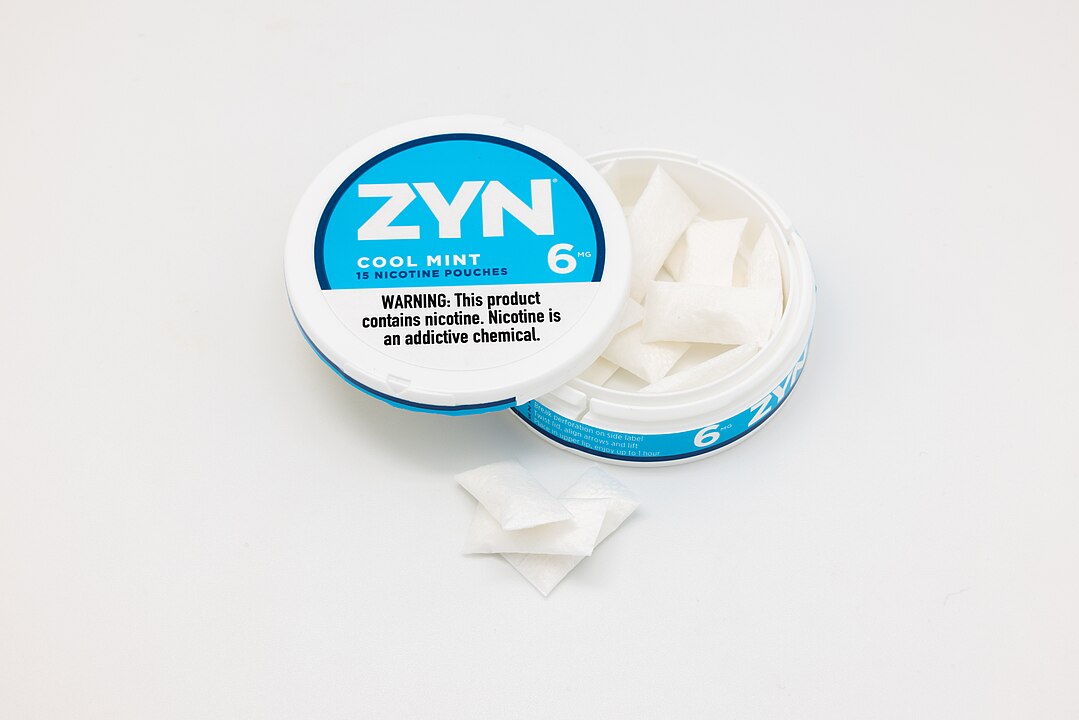
The ZYN nicotine pouch products submitted for the MRTP designation are the same products that received PMTA authorization in 2025, and include:
- ZYN Cool Mint 3 mg and 6 mg
- ZYN Peppermint 3 mg and 6 mg
- ZYN Spearmint 3 mg and 6 mg
- ZYN Wintergreen 3 mg and 6 mg
- ZYN Citrus 3 mg and 6 mg
- ZYN Coffee 3 mg and 6 mg
- ZYN Cinnamon 3 mg and 6 mg
- ZYN Smooth 3 mg and 6 mg
- ZYN Chill 3 mg and 6 mg
- ZYN Menthol 3 mg and 6 mg
Now, PMI is seeking something far more commercially powerful than PMTA authorization. If the FDA grants MRTP status, Swedish Match will be able to use disease-risk comparisons in marketing materials, including advertising, mailers, and online posts. The stakes are high because ZYN dominates the nicotine pouch segment, and the category is one of the few major growth engines in a U.S. nicotine market experiencing significant combustible cigarette volume declines.
Recent Nielsen data analyzed by Goldman Sachs shows ZYN generated more than $3.24 billion in sales last year, representing more than two-thirds of the U.S. nicotine pouch market. That number is about to get a whole lot bigger.