By Timothy S. Donahue
Top Takeaways:
- Revenue trails 2025: Malawi sold 71.8 million kg worth K258.5 billion ($149 million) during the season’s first nine weeks, well below last year’s pace.
- Market stabilizes: Rejection rates have fallen from more than 90% at the start of the season to about 60% as trading conditions improved.
- Contracts dominate: Nearly 61% of tobacco sales were completed through contract farming, underscoring the shift away from auctions.
Malawi’s 2026 tobacco marketing season has become markedly more orderly after a turbulent start, but weaker prices and lower sales volumes continue to weigh on growers’ returns.
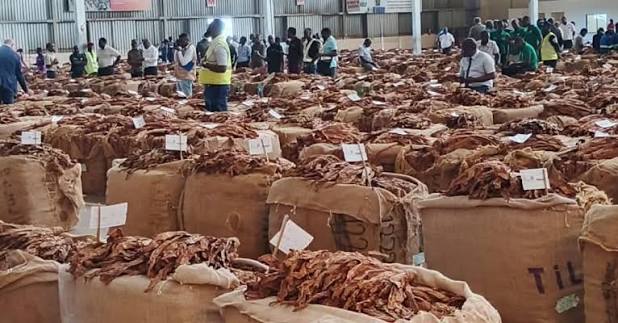
Official Tobacco Commission data show that farmers sold 71.8 million kilograms of tobacco worth K258.5 billion (about $149 million) during the first nine weeks of the marketing season, from April 20 through June 19. The crop averaged $2.07 per kilogram.
Although market operations have improved significantly since opening week, overall performance remains below last year’s pace. During the same period in 2025, Malawi sold 86.5 million kilograms at an average price of $2.48 per kilogram, resulting in revenue down roughly 31% year over year.
The season opened amid widespread disruption, with auction rejection rates exceeding 90% due to quality issues, documentation requirements, and an oversupplied market. Farmers also expressed frustration with weaker opening prices and slow buying activity.
Conditions have steadily improved since then.
According to Tobacco Commission data, auction-floor rejection rates have declined to 60%–62% since Week 7, while overall market uptake has risen to 96%, reflecting more efficient processing of marketable leaf.
The improving conditions come despite a difficult supply-and-demand backdrop.
Before the season opened, Malawi projected tobacco production of about 197 million kilograms, compared with buyer demand of about 170 million kilograms, leaving an estimated surplus of 27 million kilograms. Industry officials warned this surplus could pressure prices throughout the marketing season.
The latest figures also underscore the ongoing transformation of Malawi’s marketing system. Contract farming accounted for 60.6% of tobacco sold in the first nine weeks, while auction sales made up only 39.4%, underscoring the industry’s steady shift toward vertically coordinated production.
Independent growers have repeatedly voiced concerns that contract tobacco moves through the market more efficiently, while auction tobacco faces higher rejection rates and longer delays. Industry groups have called for reforms to improve competition among buyers and reduce rejection rates for auction growers.
Despite improved market efficiency, prices remain under pressure from abundant global supplies and cautious buying. Tobacco remains Malawi’s largest export crop and one of its principal sources of foreign exchange, making each marketing season’s performance critical to both farm incomes and the country’s broader economy.