By Timothy S. Donahue
Top Takeaways:
- Rule stalled: Appeals court kept FDA’s warning requirements on hold.
- Wrong number: Judges said Congress specified nine warnings, not 11.
- Nationwide relief: The postponement applies beyond the plaintiffs.
FDA’s cigarette warnings remain on hold.
A federal appeals court upheld an order delaying the FDA’s new cigarette health-warning requirements, finding that R.J. Reynolds Tobacco Co. and other challengers are likely to succeed in showing that the agency exceeded the authority Congress gave it.
On Aug. 18, the U.S. Court of Appeals for the Fifth Circuit affirmed a Texas federal court’s preliminary relief that blocked the rule while litigation continues.
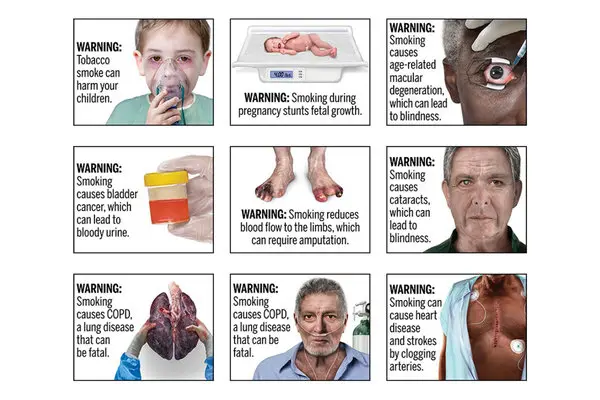
The FDA rule requires cigarette packages and advertisements to display one of 11 graphic health warnings. The tobacco companies challenged the rule under the Administrative Procedure Act, arguing that the 2009 Tobacco Control Act specified nine warnings and did not authorize the FDA to expand that number.
The Fifth Circuit agreed that the companies had shown a substantial likelihood of success on that argument.
Writing for the court, Judge Don Willett said the statute’s requirement that packages carry “one of the following labels,” followed by nine warnings, created an exclusive list.
“The FDA may require the nine warnings Congress prescribed — no more,” the court said.
The FDA argued that its statutory authority to “adjust” warning text gave it the power to add or remove warnings.
The court rejected that interpretation.
“To adjust is to modify something that already exists—not to conjure something new,” the court said, adding that Congress could have expressly granted broader authority if that was its intention.
The judges also rejected the FDA’s argument that another provision of federal cigarette-labeling law provided broader authority to require additional or different warnings. The court concluded that the provision was not an independent grant of regulatory power and instead relied on authority elsewhere in the statute.
The decision does not resolve the underlying lawsuit on the merits. Rather, the Fifth Circuit considered whether the district court abused its discretion in concluding that Reynolds and the other challengers were sufficiently likely to prevail to justify postponing the rule.
The appeals court found it did not.
The court also upheld the district judge’s findings of irreparable harm, concluding that cigarette manufacturers would incur significant compliance costs if forced to implement a rule that could later be struck down.
“Unrecoverable compliance costs imposed by allegedly unlawful agency action ordinarily qualify as irreparable harm,” the court said.
The judges found that the balance of equities favored the tobacco companies because those costs would be “concrete, imminent, and unrecoverable,” whereas the FDA had not shown comparable harm from temporarily delaying the rule.
“The public is not served by a court enforcing a rule that may exceed an agency’s statutory authority,” the court said.
The Fifth Circuit also rejected the FDA’s attempt to limit the postponement to the companies that brought the lawsuit.
The court concluded that the APA allows courts to postpone an agency action itself, rather than merely protecting individual plaintiffs, so the relief can operate nationwide.
It also found that the Supreme Court’s decision in Trump v. CASA, which limited certain universal injunctions, did not change that conclusion because the case addressed equitable injunctions rather than statutory remedies available under the APA.
The litigation is another setback for the FDA’s yearslong effort to implement graphic cigarette warnings mandated by the Tobacco Control Act.
The Fifth Circuit previously rejected a First Amendment challenge to the warning rule. The latest dispute centers on whether the FDA stayed within the statutory authority Congress granted it when determining the number and content of required warnings.
The case is R.J. Reynolds Tobacco Co. v. FDA, No. 25-40137, in the U.S. Court of Appeals for the Fifth Circuit. Jones Day represents Reynolds, while the U.S. Department of Justice represents the FDA.