By Timothy S. Donahue
Top Takeaways:
- Market breakdown: Rejection rates reportedly reach up to 100% at some auction floors
- Oversupply shock: Production far exceeds demand, tightening buyer standards
- Economic risk: Disruptions threaten farmer incomes and national foreign exchange
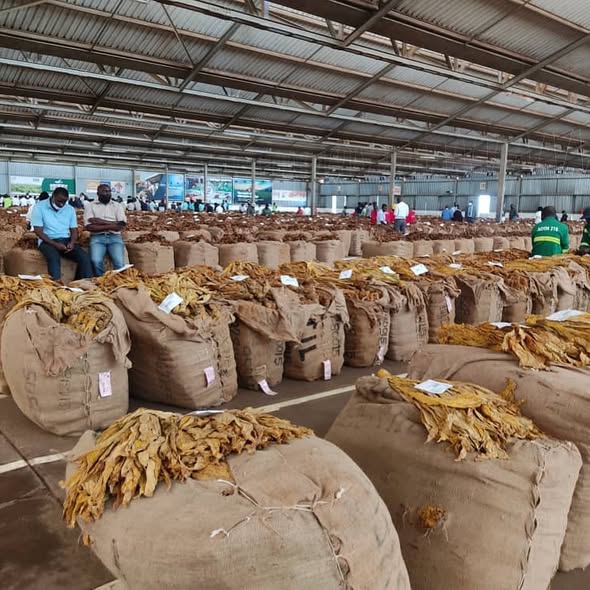
Malawi’s 2026 tobacco marketing season has opened amid mounting pressure, with reports of unprecedented rejection rates leaving growers unable to sell large portions of their crops.
According to local reporting, some auction floors are seeing rejection rates of 96% to 100% as buyers scale back purchases in response to a widening imbalance between global supply and demand.
The disruption is being felt across key trading centers, including Lilongwe and Limbe, where the country’s auction system typically serves as the primary price-discovery mechanism for tobacco exports.
At the core of the issue is oversupply.
The Tobacco Commission initially authorized production of about 140 million kilograms for the season, but output is estimated to have risen significantly—echoing earlier concerns that expanded planting would outpace demand from international buyers.
That imbalance is now translating into stricter purchasing behavior.
Buyers are reportedly tightening both volume intake and quality requirements, rejecting bales that might have cleared in previous seasons to manage inventory and pricing risk.
For farmers, the consequences are immediate.
Many growers rely on auction sales to repay loans for inputs such as fertilizer, labor, and curing costs. With large volumes going unsold, concerns are mounting over income losses and the ability to meet financial obligations.
The situation is particularly acute among smallholder farmers, who dominate Malawi’s tobacco sector and often lack the resources to store tobacco or delay sales in hopes of better prices.
Officials have moved quickly to respond.
The Tobacco Commission said it has begun urgent discussions with buyers and other industry stakeholders to stabilize the market and increase uptake.
The goal is to restore confidence in the auction system, which remains central to the country’s export economy. The stakes extend beyond the farm level.
Tobacco accounts for roughly half of Malawi’s foreign exchange earnings, making it a critical pillar of the national economy. Prolonged disruptions in sales could therefore ripple through government revenue, currency stability, and broader economic planning.
Global factors are also in play.
Weaker international demand, shifting consumption patterns, and inventory adjustments by major buyers are contributing to the current slowdown, while increased production across multiple origin markets has added to supply pressure. The result is a market struggling to absorb volume.