By Timothy S. Donahue
Top Takeaways:
- Retail violations found: inspectors identified widespread compliance failures at vape retailers following the start of synthetic nicotine regulations.
- Age verification weak: More than 40% of inspected vape vending machines accepted fake identification during government testing.
- Advertising concerns: Nearly two-thirds of stores displaying vape advertisements had marketing visible from outside, contrary to tobacco rules.
South Korea’s expanded vape regulations are proving difficult to enforce. A two-month inspection by the Seoul Metropolitan Government found widespread compliance failures involving age verification, required warning notices and advertising after South Korea expanded tobacco regulations to cover synthetic nicotine products.
Between April 24 and June 23, officials inspected 667 vape retailers and conducted 5,956 patrols in smoke-free areas to inform the public that liquid-based electronic cigarettes are now subject to the same restrictions as conventional cigarettes.
The inspections followed amendments to South Korea’s Tobacco Business Act, which took effect in April and expanded the legal definition of tobacco to include products containing synthetic nicotine. As a result, liquid-based e-cigarettes are now regulated the same as conventional tobacco products, with restrictions on smoking in smoke-free areas, advertising, and youth access.
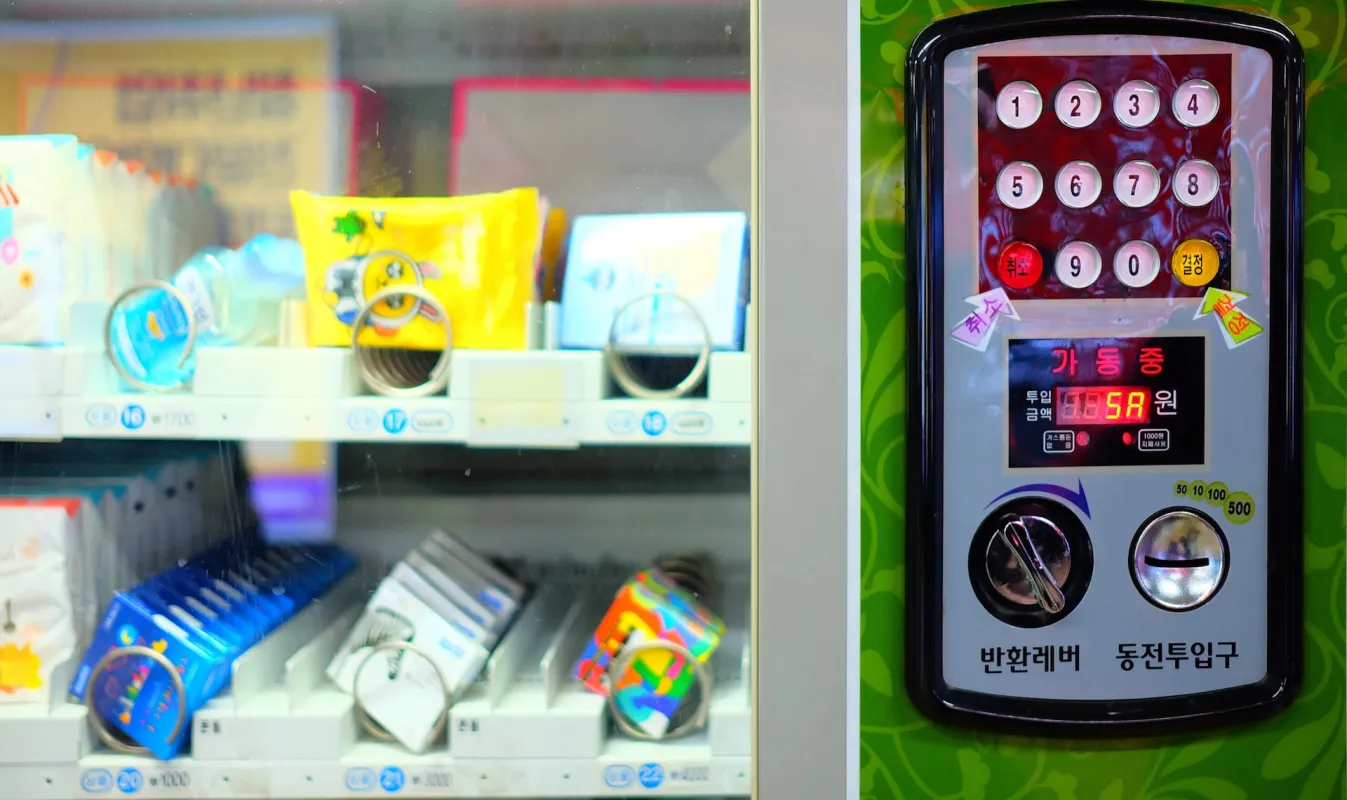
One of the most significant findings concerned vape vending machines. Inspectors found that 190 of the more than 667 retailers (28%) operated vending machines that sold liquid-based e-cigarettes or related products. To test age-verification systems, city officials used five fake identification cards, including altered resident registration cards and counterfeit driver’s licenses.
Among 415 vending machines inspected:
- 339 relied on resident registration cards or driver’s licenses for age verification.
- 168 machines (40.5%) accepted at least one fake ID.
- 112 machines accepted all five fake IDs used during the inspection.
The city also found weak compliance with youth-protection requirements. Only 390 retailers (58%) displayed the legally required notice stating that tobacco products cannot be sold to minors.
Advertising compliance posed another challenge. Officials found 375 retailers (56%) displaying vape advertisements inside their stores. Of those, 254 retailers (67%) had advertisements visible from the exterior, despite regulations that permit tobacco advertising only inside licensed retail shops, where it cannot be seen from the exterior.
“It seems like minors could get their hands on e-cigarettes if they really wanted to,” Kim Se-hwan, a resident of Seoul’s Eunpyeong District, told local media. “E-cigarette vending machines are convenient, but they have many security flaws.”
Cho Young-chang, head of Seoul’s Citizens’ Health Bureau, said that effective implementation will require more than legislative changes. “For the expanded regulations on liquid-based e-cigarettes to be effective, legal and institutional changes must be accompanied by changes on the ground,” Cho said. “Seoul will continue various efforts, from on-site guidance to encouraging industry self-regulation, to create a smoke-free environment that puts citizens’ health first.”
The inspections also highlighted ongoing confusion among some adult consumers. “I didn’t know e-cigarettes weren’t allowed in smoke-free zones,” Park Kyung-seo, a resident of nearby Pyeongtaek, said. “We need to prevent minors from using them, but I’m not sure if it’s right to make it so inconvenient for adult users as well.”