By Timothy S. Donahue
Top Takeaways:
- Major ruling: Fifth Circuit vacates FDA’s NicQuid denial.
- APA violation: Comparative efficacy is a substantive rule requiring notice and comment.
- FDA’s move: Agency must rethink the standard or formally adopt it.
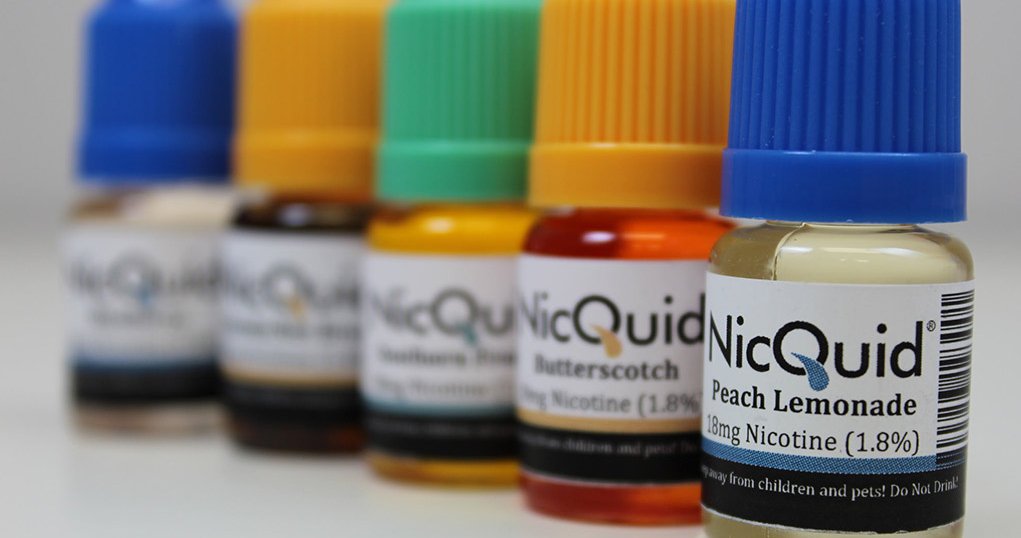
The U.S. Court of Appeals for the Fifth Circuit handed vaping industry manufacturers a significant regulatory victory Wednesday, ruling that the U.S. Food and Drug Administration unlawfully imposed its comparative-efficacy standard for flavored e-cigarettes without following the notice-and-comment rulemaking required by federal law.
The three-judge panel granted petitions filed by NicQuid and several other vapor companies, vacated the FDA’s marketing denial order, and remanded the cases to the agency for further proceedings.
The Aug. 19 decision does not eliminate the FDA’s authority to evaluate whether flavored vaping products provide sufficient benefits to adult smokers to outweigh youth risks. But it directly strikes at the process the agency used to establish the comparative-efficacy requirement, which has played a central role in its review of premarket tobacco product applications.
“We hold that FDA’s comparative efficacy standard amounts to a substantive rule, and that its adoption through informal adjudication contravenes the APA’s notice-and-comment rulemaking requirement,” Judge Jerry E. Smith wrote for the court.
The court said the FDA must now either reconsider the standard, formally adopt it through a process consistent with the Administrative Procedure Act, or pursue other proceedings consistent with the opinion.
Court Finds FDA Created a Binding Rule
At issue was the FDA’s comparative-efficacy standard, under which applicants for certain flavored electronic nicotine delivery system products have been expected to provide evidence demonstrating greater benefits for adult smokers than tobacco-flavored products, which the agency considers less appealing to youth.
Attorney Eric P. Gotting, a Keller and Heckman LLP partner representing NicQuid, argued that the requirement went beyond an individualized evaluation of its premarket tobacco product application (PMTA). Instead, the company said the FDA had established a binding evidentiary standard that effectively required comparative-efficacy evidence, such as a randomized controlled trial or a longitudinal cohort study, without first subjecting that standard to formal rulemaking.
The Fifth Circuit agreed.
The panel said the FDA used informal adjudication to establish a substantive rule that bound the agency, applied prospectively to an unlimited number of applicants, and “amounts to a de facto ban.” In doing so, the panel said, the FDA “sidestepped the notice-and-comment rulemaking requirement of the APA.”
The court pointed to the scale and consistency of the FDA’s decisions as evidence that comparative efficacy served as a rule rather than merely one factor considered in individualized PMTA reviews.
According to figures cited in the opinion, the FDA had issued MDOs covering more than 1.2 million flavored ENDS products while receiving applications for more than 6 million ENDS products overall. The court said the sheer number of affected applications supported its conclusion that the requirement affected “broad classes of unspecified individuals” and applied to future applicants.
The judges were particularly skeptical that more than 1 million MDOs could represent genuinely individualized applications with materially indistinguishable facts.
Instead, the court said the record more strongly supported the conclusion that the FDA had conducted a “check-the-box exercise” under which PMTAs for non-tobacco-flavored ENDS lacking the required comparative evidence were denied.
Internal FDA Memos Bolster Challenge
Internal FDA memoranda also played a significant role in the ruling.
The record included 2022 memoranda from then-Center for Tobacco Products Director Brian King and FDA official Benjamin Apelberg that addressed the agency’s approach to menthol-flavored ENDS. The court also discussed a rescinded 2021 memorandum that the Fifth Circuit had previously criticized for creating a review process focused on whether an application contained a randomized controlled trial or a longitudinal cohort study.
The court concluded that the comparative-efficacy policy was developed internally and then applied prospectively through individual PMTA decisions, rather than being established publicly through notice-and-comment rulemaking.
“Instead of originating in a specific adjudication or order, it is most plausible to say that the comparative efficacy standard was born in internal agency policymaking and was then publicly debuted in an adjudication rather than through notice-and-comment,” Smith wrote.
The panel said the FDA’s use of adjudication could not resolve that procedural problem.
“The nominal process of adjudication cannot conceal or excuse the secretive development of a prospective policy,” the court said, adding that on the APA issue, “This is not a close call.”
The ruling follows the U.S. Supreme Court’s 2025 decision in FDA v. Wages & White Lion Investments, which rejected a separate challenge alleging that the FDA improperly changed its position on the evidence required to obtain authorization for flavored vaping products.
But the Supreme Court expressly declined to decide whether the comparative-efficacy requirement violated the APA’s separate notice-and-comment requirements. The Fifth Circuit noted that its subsequent decision in VDX Distro likewise left that issue unresolved.
“We take up those courts’ invitations,” the Fifth Circuit said in Wednesday’s decision.
The ruling is also narrower than a wholesale rejection of the FDA’s approach to flavored products. Following Wages, NicQuid and Wood Creek Vapory waived their claims regarding fruit-, candy-, and dessert-flavored products. The remaining claims involved menthol, tobacco-flavored, and zero-nicotine products. The court did not decide whether the FDA acted arbitrarily and capriciously in applying its standard to those products because the APA procedural issue resolved the case.
What happens next will be decided by the FDA.
The Fifth Circuit directed the agency to either “rethink the rule,” adopt it through an APA-compliant process that affords affected parties an opportunity to participate, or undertake other appropriate proceedings. The court stopped short of telling the FDA or the companies exactly how to proceed.
“The petitions for review are GRANTED, the order is VACATED, and these matters are REMANDED for appropriate proceedings,” the court concluded. “We express no view on what actions FDA or the petitioners should take on remand.”
For the vapor industry, however, the immediate significance extends beyond NicQuid. The Fifth Circuit’s conclusion that comparative efficacy is a substantive rule directly challenges the procedure the FDA has used to apply that standard to large numbers of PMTAs.
The ruling does not prevent the FDA from pursuing comparative efficacy as part of its regulatory approach. But if the agency wants to impose it as a binding requirement on applicants, the Fifth Circuit says it cannot do so in the context of individual PMTA reviews.